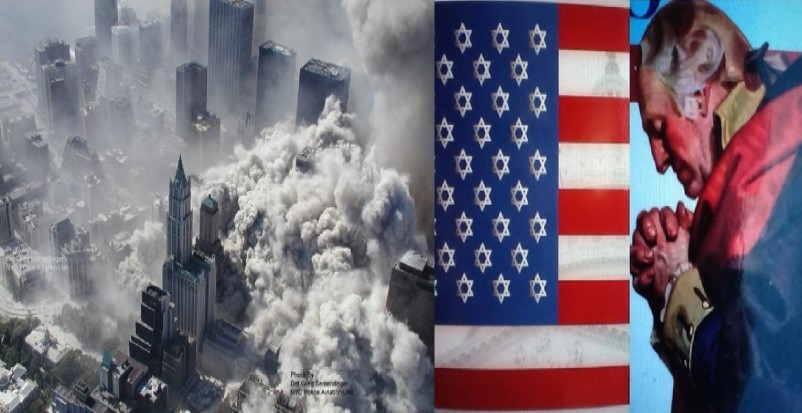
The author’s 10-years’ investigation covers the events leading up to the terrorist attacks on the United States on 11 September 2001, otherwise known as ‘Black Tuesday’. All four parts are published here, on the author’s website. The titles are: 1) ‘Nobody Needs Peace; 2) When the Big City Was on Fire; 3) The Mysticism of Ruins and 4) Clients, Contractors and Insiders’.
In the middle of the 20th century, many European cities were destroyed in a great war. America fought in it, yet not a single bomb fell on its cities and no enemy bullets or shells reached its soil. During the war, almost the entire American population was employed, and industry was operating at full capacity. Memories of the Great Depression of 1929 were fading. Following victory, America’s economic and military power increased rapidly, partly thanks to German technology. America recruited three hundred thousand Germans – all military specialists, including nuclear scientists. In the following years, an era of abundance dawned on the land of freedom, which historians dubbed the ‘golden age’. The population grew wealthy, and the middle class increased and accumulated wealth. Scientists, engineers, and inventors flocked to the country, which had become the envy of the world. Having received an education in their own countries, they sold their expertise for dollars. America paid more. During those golden years, Americans, especially their government, realised that war could be beneficial — provided it was fought on foreign soil.
America offered Europe a recovery plan. In exchange for its aid, however, it demanded payment in gold and stipulated that all political initiatives be agreed with it. Money in exchange for obedience.
During the war, the United States helped Stalin’s Russia defeat the Third Reich, thereby preventing it from becoming a world empire. However, after the Reich’s defeat, America realized that Moscow had imperial plans of its own. Stalin seized control of Europe as though he was a jackal on the carcass of a dead lion. His troops occupied several countries with no intention of leaving. The Bolshevik feudal socialism that emerged behind the ‘Iron Curtain’ was now evolving into a global system spreading the poison of Marxism to Africa and South America. In this redistribution of the world, the former allies fell out completely, with emissaries frequently visiting Europe from across the ocean to maintain control.
Employing the reliable weapons of their order — bribery, blackmail and murder — the emissaries exploited human vices such as greed and the lust for power to their advantage. The European elite were offered military aid and protection from the West against the hordes from the East. No one refused. The time came to bring the participants together to agree on joint action. In May 1954, a secret meeting was held at the Bilderberg Hotel in the small Dutch town of Oosterbeek. Those in attendance included political leaders, members of European royal families, bankers, industrialists, military leaders, and media owners. A program of joint action was adopted at that meeting, and an American–European team was formed to oversee the world’s economy and politics. This European branch of the organisation was named “The Bilderberg Club” after the hotel.

With the establishment of the Council on Foreign Relations in the United States, along with its European offshoot, the Western world as a whole came under the control of a secret global government. The South East region still retained control of its vast natural resources and it was next target.
In 1973, the shadowed government’s third and final department was formed, integrating Asian countries into its structure. Known as the ‘Trilateral Commission’, this new department was tasked with redistributing the planet’s resources. Japan was appointed ‘overseer’ of the region. The monster grew a third head.
Globalization or privatization of the world economy became the main focus of reorganization at the end of the 20th century. This was the brainchild of banker Rockefeller and his associate Brzezinski. The first step in this process was the merger of the North American economies. This treaty was signed by US President Reagan and Canadian Prime Minister Mulroney. To implement the plan, it was necessary to enshrine it in US legislation, given that the USA was the most powerful country. At this point, America needed a president who would amend any obstructive legislation.
However, an event occurred that plunged many countries into chaos and altered their position within the global hierarchy. This delayed the implementation of the bankers’ project until more favourable times.
During the fifty-year-long Cold War, with its diplomatic maneuvering and champagne corks popping instead of gunfire, politicians, bankers, and military personnel on both sides learned how to exploit the advantages of confrontation. Those who conceived the Cold War understood the particular significance of prolonging it. The Cold War was a mechanism designed to frighten their own people with the threat of an external enemy, draw money from state budgets, and build up military potential in preparation for the war they were planning to fight abroad in the near future. It was a time for flexing their muscles and showing off.
The Pentagon’s budget grew rapidly, reaching twice the size of all other countries’ budgets combined by the 1980s. The military industry profited greatly from this, and under the pretext of protecting people from communist expansion, the US established 700 military bases around the world to observe, track and monitor, and expand its imperial influence.
During the Reagan presidency, the US military machine broke away from its competitors by venturing into space. Moderation is good in any business, but here they went too far. The enemy could not compete and gave up, bringing an end to the confrontation of systems. The Pentagon should have celebrated. But there was no joy.

Imagine a fight between two giants. Huge and strong, they pressed their bodies together, each trying to knock the other down. Under the immense tension in their muscles, the giants were sweating and their faces were distorted by grimaces. But one of them could not take it anymore. Losing strength, he fell backwards. As he fell, he dragged his opponent with him. They both ended up on the floor, and it was difficult to tell who had won. They both fell. The American military machine, which had reliably supported financially for decades, came to a standstill losing public funding.
in the USSR following Brezhnev’s death, the head of the KGB Andropov seized power. In an attempt to maintain the regime using Stalin’s methods, he begun to reshuffle the upper echelon and unleashed his agency on anyone who grumbled or showed discontent. There was a hint of a new bloody regime, and Andropov (Fima Feinstein in his youth) seriously offended the head of the Ministry of Internal Affairs Shchelokov, with his reforms. He was shot in the stomach by Shchelokov’s wife and died soon afterwards. Then, amid the confusion, the appointed general secretaries died one after the other — they were old. This period of the regime’s decline became known as the ‘hearse races’. Another Kremlin leader, Gorbachev, attempted to rebuild the system, calling this process ‘perestroika’. Yeltsin replaced him in these efforts, but to no avail: the wind of change swept the party bosses of the dying regime into oblivion. They did not know what to do.
This is what happened when the USSR collapsed. The republics of the former superpower were engulfed in chaos. They fragmented into enclaves, industry stalled due to the loss of connecting infrastructure, and businesses ceased trading. This resulted in widespread unemployment. Money lost its value and became worthless. The former republics of the ‘one and indivisible’ became embroiled in disputes over border territories, with conflicts escalating into bloody skirmishes and civil wars. Amidst this chaos, communists called themselves businessmen and began stealing money from the budget. Crime and corruption emerged like festering pimples. Some people turned to murder and robbery to enrich themselves, while others accepted bribery and corruption as a way of life.
During those chaotic years, Soviet ideologists probably turned to Hitler’s legacy for advise. In a similar atmosphere of chaos which had set in Germany after the First World War, Hitler took drastic measures, saving the country from anarchy by establishing a dictatorship. However, while National Socialism was supported by the German people, the situation in the USSR was different. Here, the regime’s supporters hid their party cards in fear of the people’s revenge, waiting for better times.
When the relatively unknown KGB Vladimir Putin moved into the Kremlin, he did not attempt to intimidate the public by employing Andropov’s methods. Instead, he concealed the flaws in the existing system by introducing a kind of controlled anarchy. People were granted freedom of speech, while speculators and currency dealers were encouraged to become legitimate entrepreneurs. The government also legalized prostitution.
Most importantly, the ‘Iron Curtain’ was lifted, enabling ordinary people to travel abroad. Soviet citizens rejoiced at these liberties, much as children rejoice at presents from Santa Claus. When they had the opportunity to visit countries that had recently been their enemies and compare life there, they noted with surprise that there was law in the West, but not the kind of freedom they had in the new Russia. Having been unaware for centuries that freedom requires consciousness and law, Russians referred to the anarchy they accustomed as ‘freedom’.
Parents sometimes allow their children to misbehave before returning them to the strictness of discipline. In Russia, the population was given a reprieve before the gradual tightening of the screws. Lenin, the first leader of the poor and oppressed, referred to this as ‘letting off steam’ when he replaced the Red Terror and repressions with a new economic policy that permitted limited private enterprise. However, Stalin sent all entrepreneurs to Siberian camps and prisons after him.
So, what did victory over the ideological enemy look like for the West? Unfortunately, this victory was not celebrated with fanfare. The US military machine had to reduce spending as funding for the Cold War was no longer allocated from the state budget. During those years, deserted towns in Southern California were filled with homeless dogs and cats that had lost their owners, as companies working on the Pentagon’s space program were forced to close. People were forced to abandon their homes because they could no longer afford their mortgage repayments. What laced in store for America next? The justification for the presence of 700 US military bases around the world was disappearing. These bases would have to close, and large quantities of equipment would need to be dismantled and recycled. Hundreds of thousands of servicemen would have to be brought home to find employment in industries that no longer existed. The American companies were moving to China and other countries with cheap labor and raw material deposits. The Pentagon and the secret services were facing cuts to all programs and a reduced budget. The very existence of the American empire, Pax Americana, was under threat!
Victory in the Cold War to defeat enemy had created favorable conditions for the realization of a secret world government’s project, the idea of global perestroika. This project of globalization would see the United States oversee the world’s finances and economy, placing all countries under the control of a few corporations and the power of the dollar.
The architects of American perestroika understood that the global power of the dollar depended on military might and that the new economic model could only flourish in a state of perpetual war. This would require America to continue producing the most advanced weapons. However, would these ambitious leaders be willing to abandon their aspirations for global domination and their monopoly on power, not to mention their vision of a global economy in which they could control all the planet’s resources at the touch of a button while relaxing under a palm tree in the Bahamas? Could the militaristic elite of the United States accept the collapse of their military might and retire to live off a pension while tending vegetable on their ranches?

And what about the ordinary people? After the end of the Cold War, millions of Americans suddenly lost their jobs, while hundreds of thousands of middle-class people lost their homes, businesses, and savings in stock market chaos. For many of them, the specter of a new depression loomed on the horizon. History moves in cycles, with each new era bringing events similar to those that have happened before. This is why such events are predictable to those familiar with logic. They can see that without a middle class to act as a buffer, social envy will turn to hatred and provoke racial unrest. This is easily achievable in America — simply raise food prices or cancel social benefits for millions of slackers. The government shares money with the people, not out of love for them, but to buy their obedience and quash the smoldering embers of social unrest. The government needs a lot of money for this. America lends money, and its national debt is already so high that more and more people are predicting a crisis.
Given the situation, politicians, militarists and bankers of America understood that only a new war would pull them out of the debt hole. They were least of all worried about the number of future victims. They understood that no matter how many hundreds of thousands of Americans were killed, the government would still have millions of people happy with their jobs, a bottle of beer on a soft couch, and a TV, far from the bullets and bombs on the battlefields. In order to keep the money flowing from the state treasury, the Pentagon urgently needed to find a replacement for the vanished enemy, to find a new bogeyman for the crowd.
Politicians always drag the people into their crimes. The old adage that a country’s people will rally around their ruler in the face of an external threat remains true today. If there is no such enemy, the ruler will face problems with his own people. Therefore, those in power must identify an external enemy and provoke them into military action. In the current situation, with the end of the Cold War causing the US military machine to stall and the future at stake, it was not only politicians, militarists and bankers who were interested in preserving their state’s power — ordinary workers, employees, slackers, drug addicts and others were interested, too. The people of any country always pay the price for their complicity in the crimes of their elected officials. In return for the privilege of feeding at the trough, the people pay all the costs of war, voluntarily and without complaint.
A criminal plotting a crime prepares a plan. In this plan, they pay special attention to how to escape punishment and prepare an alibi for himself. The state acts in the same way when it comes to aggressive intentions. When planning a war, its leaders do not want to appear to be the aggressors because they know that a treacherous attack would be condemned by the international community, leaving them isolated and subject to sanctions. Therefore, such a state always wants to present itself as the victim of aggression from the state it is about to attack. The aggressor carefully prepares a plan of attack, making the alibi a primary consideration.
If you hit a dog with a stick, it will tuck its tail between its legs, look at you questioningly, and then run away. However, if you hit it again, it might bite you. The person who provoked the dog will complain about the bite marks, demanding that the dog be punished and labelling it mad and dangerous. This seems like a way of defending themselves, and it arouses sympathy in many people. Those who did not witness the initial attack will side with the complainant, resulting in the dog continuing to be beaten.

This tactic has been used by aggressors for centuries. Israel, for example, has used it and has been waging endless wars with its neighbors since its inception. Having lived among other peoples for thousands of years, Jews have considerable experience of political intrigue, conspiracy, murder, coups, revolution and war. The friendship between young America and Israel is akin to a teenager’s friendship with an experienced criminal. It would be naïve to think that the criminal would be reformed by his inexperienced friend. On the contrary, the criminal will seek to tempt the newcomer with the prospect of gain in an attempt to make their accomplice by any means necessary.
History shows that military occupation always ends in defeat for the occupying power. In order to succeed, Israel would need to destroy the entire population of the lands it occupies. From the outset, Israel has drawn America into its wars in an attempt to fulfil this plan. Following the end of the Cold War, American military circles began to question how to identify a new enemy. The shadowed government’ generals proposed uniting Israel’s enemies under the term ‘world terrorism’, which would frighten ordinary Americans. This new enemy turned out to be more widespread than Soviet communism. Such an enemy could not be defeated quickly and would have to be fought for decades, even hundreds of years. This would enable the government to take hundreds of billions of dollars from the state budget indefinitely.
Both the US military and the Pentagon recognized the enormous profit potential of the proposal. They approved the political generals’ proposal. Their interests coincided — they had found a new giant to replace the fallen one. It was a brilliant find — and, most importantly, timely! Inexperienced America swallowed the bait, unaware that her friend had exploited her greed for money. America would now deploy her people as mercenaries to lay the foundations for the Israeli empire in the Middle East, paying for it with the lives of her soldiers in a new war. As in the years of the Great War and friendship with Stalin, America does not realize that, by cultivating an ‘ally and friend’, she is creating another enemy for herself. Throughout history, there have been no examples of two empires coexisting peacefully, even if they do not share borders. One day, they will go to war between themselves over new colonies.
***

ARCHITECTS OF WAR.
In any country aspiring to a leading position in the world and governed by ambitious politicians, there are special centers within the institutions of power where wars are planned. Hidden under the innocuous guise of various universities, these centers analyze the causes and consequences of military clashes. Analysts draw up diagrams and write scenarios of possible provocations and conflicts that could lead to war. Psychologists in these departments study the sources of mutual hostility between peoples, probe public opinion, and assess societal mood. They also calculate how the population would react in the event of a new war. Ideologists develop programs to boost patriotism and brainwashing techniques. In short, everyone is busy; everyone is working. They are preparing the population.
Following the end of the Cold War with the USSR, all such centers in the West were and are inundated with work. According to declassified data from the Federation of American Scientists, the United States has been the aggressor in two hundred military conflicts since 1945, including the Korean War (1950–1953), the Vietnam War (1962–1975), the Cambodian Civil War (1970–1975), the Ethiopian Civil War (1974–1978), the Iran–Iraq War (1980–1988), the Nicaraguan Civil War (1981–1990) and the Lebanese Civil War (1975–1990), to name a few. So the analysts have accumulated a decent amount of experience. Or an indecent amount, depending on your perspective.
The Project for a ‘New American Century’, a plan to redistribute power in favor of the United States and Israel, was developed during the Clinton presidency. While this plan for a new war was being drawn up, President Clinton, a former lawyer, was drafting the USA PATRIOT ACT, which aimed to restrict the constitutional freedoms of US citizens and grant the government unlimited powers. Following the events of 11 September, Congress approved the Act under George W. Bush, who was mistakenly credited as its author. With his limited intellect, Bush could not have written such a document.
In their notes, the architects of the plan indicated that the preconditions for its implementation could take a long time to mature unless events were accelerated by something akin to the attack on Pearl Harbor. In other words, they hinted at how to speed things up.
The names of those ordered to join Bush’s team are listed below:
Paul Wolfowitz – Deputy Secretary of Defense
Douglas Feith – Assistant to the Deputy Secretary (Wolfowitz’s right hand)
Richard Perle – headed the Defense Policy Committee
Lewis Libby – Director of Military Planning (Wolfowitz’s left hand)
Elliott Abrams – member of the National Security Council staff.
All of them were in the rank of advisers to the US Secretary of Defense Donald Rumsfeld. Who did what these advisers ordered him to do.
Also: Kagan, Cohen, Rubin, Pollack, Chertoff, Kristol, Ross, Indyk, Albright, Holbrooke, Berger, and the like – all soldiers of the World Government, Jews and ardent Zionists.
In this respect, Zionism has achieved its long-desired goal of provoking a war between Christians and Muslims. This would pit its enemies against each other, allowing Israel to destroy and subjugate all its neighbours. With the help of the US army, Israel intended to cleanse the territories in preparation for establishing its empire. The intention was to wear out American citizens by deceiving them with propaganda about an endless threat from a new enemy, thereby rendering them submissive and dependent and forcing them to work for food, shelter and entertainment. This would serve its own interests and establish the Jewish dominion on Earth as set out in the Talmud.
Only those with centuries of experience in such matters, accumulated across the countries in which they have lived, could have conceived such a diabolical plan. The Pentagon’s politicians and generals, who were briefed on the plan and approved the idea of war with the new enemy, also expected to benefit from it. However, lacking knowledge of warfare in the histories of different nations, they were unaware of their ‘friend’s’ far-reaching plans.
To justify the new war, the architects needed an act of aggression by the enemy against America. Creating an enemy for a big, bloody feud is not an easy matter; it takes time. The chosen candidate must be worn down patiently. Cities must be destroyed and residents killed in bombings, to cultivate hatred and a thirst for revenge in their relatives and children.
Such an enemy must be cultivated and provoked over a long period in preparation for an attack.
In February 1993, Ramzi Yousef, an Islamic terrorist, detonated a bomb in the underground car park of the World Trade Center in Manhattan. Six people were killed and over a thousand were injured in the explosion. The CIA and the FBI conducted an investigation. Two years later, Abdul Murad, an accomplice in the attack, was arrested in Manila. A plan to hijack several American passenger planes for subsequent use in attacks on CIA facilities was found on his computer. The intelligence services read the information, classified it, and filed it away. The average American quickly forgot about the attack. The scale was not the same. Meanwhile, the architects of war analyzed the terrorist attack on Manhattan, carried out by incompetent fanatics. They decided to adopt the terrorists’ idea, offering them the help of their own experts.

SCAPEGOAT.
While the architects were busy developing the plan, Osama Bin Laden was waging his own war in eastern Afghanistan. A former CIA special agent, he organized the Taliban liberation movement to combat Soviet attempts to occupy Afghanistan in the 1980s. At that time, he was an American ally, receiving financial and military support from the US. With his help, the Americans established new military bases in the Persian Gulf during the Afghan War. However, when the war ended, the Americans had no intention of leaving, and Bin Laden soon became convinced that the corrupting influence of the West was spreading across the East. He believed that the traditions, customs and way of life of the peoples of the East were under threat of destruction. A devout Muslim, Bin Laden dreamed of a pure East, free from Western influence. His former friends had become his enemies, and he was determined to expel them by any means necessary.
In November 1995, militants loyal to Osama bin Laden carried out a terrorist attack on a US military base in Riyadh, killing seven American soldiers. Then, in August 1998, explosions hit US embassies in Kenya and Tanzania. In October 2000, supporters of Bin Laden attacked the US destroyer USS Cole in Yemen, killing 17 American sailors. Bin Laden was branded an enemy of America and a $25 million bounty was placed on his head. Through these attacks, he helped the planners of the new war achieve their aims. For them, the bearded man became a goat. They decided to make him the scapegoat.
Intelligence is the god of war. The more information an army has about the enemy, the greater its chances of victory. Spies and highly qualified intelligence officers are always double agents. Morality is alien to them and patriotism can be detrimental when they must lead a double life, passing themselves off as one of their own among strangers. Top-level spies know the names of their colleagues in the enemy camp and meet them when the opportunity arises to exchange information. Senior figures in terrorist organizations socialize with agents from the CIA, GRU, MI5, SIS and the KGB.
In July 2001, Osama Bin Laden, who was receiving treatment at a clinic in Dubai at the time, was visited by a US Secret Service officer. The French secret services learned of the meeting and leaked the information to the press. The Parisian newspaper Le Figaro published an article entitled ‘La CIA a rencontré Ben Laden en juillet’ (‘The CIA met Ben Laden in July’). A few days after the article was published, the CIA officer was urgently recalled to the United States. The CIA refuted the article, calling it ‘complete nonsense’. Upset by the insinuation of unprofessionalism, the French authorities revealed the agent’s identity. It transpired that the agent in question was Larry Mitchell, the CIA representative in the United Arab Emirates. When governments or their secret services deny a fact, they are effectively justifying their actions.
In light of the account of the CIA agent’s visit to Bin Laden, it is reasonable to conclude that a seasoned intelligence officer would not have risked his career by arranging to meet an adversary of the United States for tea without his superiors’ approval. He had been given permission and instructions for the conversation. Perhaps the CIA officer visited his former combat colleague to warn him about the planned action against him and advise him to take refuge in the mountains of Afghanistan, as the Arabian sands would not shield him from an American missile. Alternatively, maybe the officer asked Osama to provide suicide bombers for his department who were willing to die in the name of Allah.
These are just assumptions, and Bin Laden will never reveal what the two men discussed. The result of the secret meeting was that Bin Laden moved to the mountainous regions of Afghanistan immediately after completing his treatment. This is what the architects of the war needed.
The war plan was ready, the right president had been appointed and the targets of the attack had been identified. Those responsible for planning the attack only had to provide the participants with professional support and backup, and wait for the right moment to carry it out. A squad of kamikaze pilots had been assembled and were undergoing training at American flight schools, learning to fly large Boeing-type aircraft under the supervision of escort services. Meanwhile, the scapegoat was still walking free, unaware of what lay ahead.
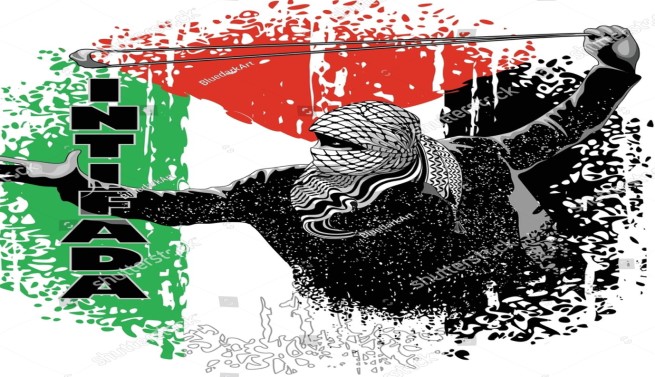
That summer, the situation in the Middle East was tense, with Palestinian resistance to the Israeli occupation reaching breaking point. This was the period of the Second Intifada, which was sparked when supporters of Israeli Prime Minister Ariel Sharon blew up an Islamic mosque in Jerusalem. Clashes between Palestinians and Israelis escalated into a civil war.
At a joint meeting of the foreign ministers of eight developed countries in Rome in July 2001, a resolution was adopted stating that the Mitchell plan must be implemented to resume the peaceful political process in the Middle East. This required a third party to be present in Israel to act as a neutral observer. In response, Raanan Gisin, an adviser to the Israeli prime minister, reiterated that ‘Israel still considered the presence of foreign observers to be unacceptable’. Prime Minister Ariel Sharon stated that he had not seen the text of the G8 ministers’ statement, viewing the provisions within as recommendations rather than demands. In essence, he was saying, ‘You are not our boss, and we don’t care about the world community.’
In early September 2001, a UN conference was held in Durban, South Africa. Delegations from most countries attended in an attempt to stop the genocide and physical destruction of the Palestinian people by Israel through reason and persuasion.
The USA and Israel team attended the conference with one intention: to leave in a demonstrative manner. During the opening discussion, Tom Lentos — the US representative and Zionist — displayed his government’s imperialistic tendencies immediately by disagreeing with the other participants. The Americans then left the conference. The Israelis followed them out of the hall. Later, Israeli delegate Tubia Israeli said, ‘We had to wait for the US delegation to leave and follow them’ (Israeli press, 5 September 2001).
The Durban Conference represented the last hope for Middle Eastern countries seeking to peacefully resolve the region’s problems. For those who wanted war, disrupting the conference was a necessary step in provoking the enemy they had cultivated for so long.
SEPTEMBER 11 WAS SIX DAYS AND SIX NIGHTS AWAY.
© Copyright: Walter Maria, 2025
Publication certificate No. 225091300839
Be First to Comment