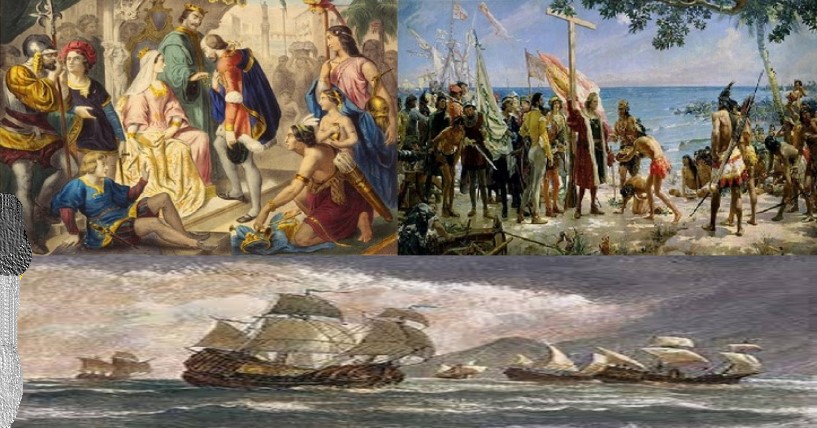
This is the story of a brave admiral and navigator whose name has been passed down through the generations. Five centuries ago, he led an expedition to find the elusive islands located in an unknown ocean. Severe storms and mutinies resulted in the loss of four of the five ships, and disease and death claimed almost all of the sailors. Only one of the five ships returned. Having circumnavigated the globe, the eleven surviving sailors returned home on that ship, bringing their three-year adventure to a close.
This expedition proved that the planet is spherical. Stargazers and soothsayers were discredited, sea charts were burned, and cartographers set to work creating new ones. The brave admiral died in a skirmish with the indigenous people of one of the islands in the archipelago that he had discovered in an unknown ocean. His madness, fanaticism and courage have ensured his immortality in the memory of posterity. Sailors all over the world will remember his name for as long as the ocean exists. May the gods protect his soul!
=========== ==========
Madmen of their era! These intrepid sailors discovered new lands and established sea routes to them. Their exploits live on in the memories of future generations. In 1419, Prince Henry the Navigator of Portugal elevated navigation to a science, opening a new chapter in its history. In his youth, he fought pirates in the Mediterranean Sea, adopting their techniques for creating nautical charts and sail methods. He equipped ships with sails that could exploit headwinds.
By establishing a unique school, the prince secured his place in history. At this school, sailors studied ocean dynamics, astronomy, algebra, geometry, shipbuilding and sailing.
Many brave men, having mastered the science of navigation, set out on daring expeditions. The wildest of all were Christopher Columbus, Vasco da Gama, and Ferdinand Magellan. We sing a song to celebrate their courageous madness!
Spices and seasonings have been important commodities of East Asia since ancient times. The Arabs delivered these spices to northern countries, generating substantial profits. They jealously guarded their monopoly, inventing legends about terrifying monsters that supposedly haunted the lands where the exotic nuts and fruits grew. Anyone brave enough to attempt to find a passage to these lands never returned, and their disappearances gave rise to new myths and a superstitious fear of the unknown.
Cunning traders told foreigners that spices grew in African jungles. In reality, Africa was merely a transit point for aromatic goods from India, Southeast Asia and the islands of the Indian and Pacific Oceans. Over time, Eastern healers and alchemists learned to craft magical extracts and ointments from many tropical plants and fruits. These medicines and potions became commodities used in settlements across the European continent. They were exchanged for gold. In those days, a sack of Eastern spices could guarantee its owner a carefree life.
By manipulating the prices of their most valuable goods, Arab merchants subjugated the rulers of many countries, sometimes wreaking havoc on their economies — much as their descendants do today by manipulating oil prices.
For a long time, merchants used the overland trade route through Byzantium to transport aromatic goods from Asia to Europe. However, after capturing Constantinople in 1453, the Ottomans imposed heavy taxes on imported goods. Spice prices in Europe then skyrocketed. All royal houses sought a way to end their dependence on this route. They equipped and sent expedition after expedition to overseas lands.
As the Portuguese were the most experienced seafarers, it was only natural that they would be the first Europeans to discover the islands in the Indian Ocean.
Henry “Navigator” sponsored fourteen expeditions during his lifetime, dispatching his sailors to search for the Spice Islands in the uncharted waters off the coast of India. Although these expeditions failed to find the Spice Islands, they brought the Portuguese ever closer to their goal. Every sailor setting out from Henry the Navigator’s school into the uncharted waters off the coast of South Africa was required to compile reports on tides, winds, currents, fog, storms, shoals, reefs and prominent coastal landmarks. They also had to update the coastline markings on charts. All accumulated information was considered a state secret, and disclosure was punishable by death.
In 1488, the Portuguese navigator Bartolomeu Dias became the first person to sail around the southernmost tip of Africa. He used the charts and sailing directions of his predecessors to guide him. Beyond a mountainous cape, he discovered the waters of an unknown ocean. A roaring wind from the Forties battered his brig’s sails. Dias named this cape the Cape of Storms. However, amid heavy storms and fog, continuing the expedition in unknown waters was too risky, so he turned back. Dias’s ships spent nearly a year and a half at sea, and it is unclear how many more months their journey to the shores of India would have taken.
Delighted with the results of the expedition, King Manuel of Portugal renamed the cape, beyond which a new ocean opened up, the Cape of Good Hope. However, the next expedition was postponed until better times, as the kingdom had not yet recovered from a recent war with its neighbours.
Until the mid-16th century, Spain did not exist as a unified state. Instead, it consisted of two neighbouring kingdoms on a vast peninsula: Castile and Aragon. In 1516, Charles I of the Habsburg dynasty became King of Aragon. He also became King of León, Castile and Valencia, as well as Count of Barcelona and Archduke of Austria. He later became Holy Roman Emperor Charles V — that’s what it means to have distinguished relatives! He inherited all his titles. However, he was also an intelligent and insightful politician. Yet, at the age of 56 and at the height of his power, the emperor abdicated and retired to a monastery. Following his father’s abdication in 1556, Philip II united Castile and Aragon to form the Kingdom of Spain.
Half a century before the reign of King Charles I, who would go on to become emperor of the most powerful empire, a military conflict erupted in 1475 between Aragon and Portugal over who had the right to inherit the Crown of Castile. The war ended in 1479 with the signing of a treaty recognising Ferdinand and Isabella as the new King and Queen of Castile.
Portugal had won a naval battle and gained a monopoly on Atlantic Ocean trade south of the Canary Islands, which belonged to Castile.
The Vatican ceded all waters off the western coast of Africa to Portugal. This deprived the Spaniards of the right to use the sea route, which was now under the permanent control of the Portuguese crown. Portuguese warships patrolled the entire coast of Africa, mercilessly sinking any invading ships.
***
THE RISK REWARD IS WORTH ANY RISK.
CHRISTOPHER COLUMBUS.
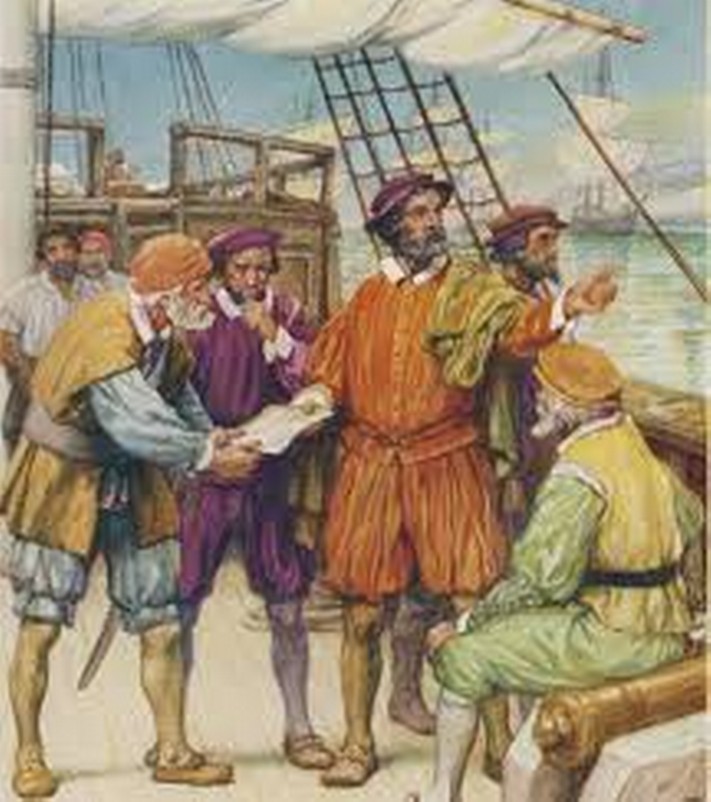
After capturing Constantinople in 1453, the Ottomans imposed a tax on all goods transported along the only trade route between Europe and Asia. The price of Eastern spices then skyrocketed. Monarchs in Europe began launching expeditions to find a sea route to the islands where these spices were cultivated.
Unable to use the sea route around Africa to reach India and China, many Spanish navigators dreamed of finding an Atlantic route instead. In 1485, Cristoforo Colombo, a Genoan who had previously lived in Portugal, where he had become proficient in cartography and navigation, approached the Spanish monarchs. Having sailed the waters of the North Atlantic for many years, he was an experienced sailor.
In 1491, Columbus turned 40. Like many sailors of the time, he dreamed of discovery. However, he knew that to realise his dream, he would need money and the support of patrons. After convincing the royal house of Ferdinand and Isabella of the merits of his project, he received three small ships from the royal house, while Genoese merchants financed his expedition.
In early August 1492, Christopher Columbus’s ships set sail westward from the Spanish coast. The Portuguese King John II immediately dispatched several warships in pursuit, but Columbus managed to evade them. During the expedition, he discovered the Bahamas, Cuba, Hispaniola and Tortuga.
He then returned to Spain, where news of his discoveries caused a stir across Europe. Amidst political disputes between the three kingdoms, the new Pope, Alexander VI (a Spaniard), issued four papal bulls on overseas affairs to please Ferdinand and Isabella. These declared that all seas and lands located west of a line drawn across the Atlantic, 100 leagues (400 nautical miles) west of the Cape Verde Islands and the Azores, would henceforth belong to the two Spanish kingdoms.
Columbus’s second expedition, in September 1493, consisted of seventeen ships. They delivered around two thousand settlers, along with all their belongings, to Hispaniola (which would later be divided into the Dominican Republic and Haiti). During the expedition, which lasted nearly three years, the Antilles, the Virgin Islands, Puerto Rico and Jamaica were discovered.
Columbus’s fame, the exotic goods he brought from overseas and the riches his ships delivered to Europe fuelled the jealousy of Bishop Juan Rodríguez de Fonseca. A politically astute court intriguer and cunning bureaucrat, Fonseca was the ‘grey eminence’ of Ferdinand and Isabella’s royal court. Driven by envy, Fonseca plotted to destroy the explorer.
The bishop had spies among Columbus’s crews who sent him reports and received instructions to sabotage the expedition. Even the admiral’s secretary, Antonio de Torres, became one of Fonseca’s agents. Before the navigator’s second expedition had returned, the bishop had sown such mistrust of Columbus among the monarchs that they were no longer willing to support him. Upon his return, Columbus was informed that the monarchs were severing ties with him. He struggled to convince them that the accusations were baseless. However, Fonseca did not abandon his treacherous plans.
In 1494, the Treaty of Tordesillas was signed, definitively dividing the spheres of expansion in the world’s oceans between Spain and Portugal. Columbus’s next expedition, in 1498, included only six ships. Although the navigator made further discoveries, he did not find the passage to the South Sea. This led Columbus to believe that the route to India lay elsewhere. Nevertheless, he continued his search. During the long months of Columbus’s voyages, the malicious slanderer Fonseca succeeded in revoking Columbus’s patent for discovering new lands, resulting in his arrest and the stripping of his titles. While Columbus was being transported in chains to Spain, Bishop Fonseca sent Amerigo Vespucci, one of his loyal supporters, to the New World as part of an expedition led by Alonso de Ojeda, one of Columbus’s rivals.
As a result of the bishop’s machinations, the American continent was never named after its discoverer. Columbus was forced to prove his innocence once again. In spring 1502, he set out on his final expedition to the New World. On that voyage, he explored Central America, from Costa Rica to Honduras and Guatemala.
The courageous Genoese led four expeditions, during which he lost ships and sailors. He discovered new lands in the Americas for the Spanish crown. However, he never found what he was searching for: a passage to the South Sea and the Spice Islands, both of which were highly sought after at the time.
People do not appreciate their heroes while they are alive. Slandered by the bishop, Columbus died in poverty in Seville on 20 May 1506, forgotten by all. It was only when ships laden with gold, silver, emeralds, sapphires and diamonds from the lands he had discovered were returning to Spain that he was remembered.
In 1503, the Casa de Contratación (Chamber of Commerce) was established in Seville to organise and equip maritime expeditions. It was headed by the same all-powerful schemer: Bishop Fonseca. Using his talent for plotting and slander, he deposed the proud seamen and appointed subservient lackeys, transforming the Chamber of Commerce into a bureaucratic structure that controlled all foreign trade in the Spanish kingdom.
From that point on, no ship was permitted to set sail without the Chamber of Commerce’s — and thus Bishop Fonseca’s — approval. The palace intriguer had triumphed; his power was now greater than that of the king.
***
VASCO DA GAMA.
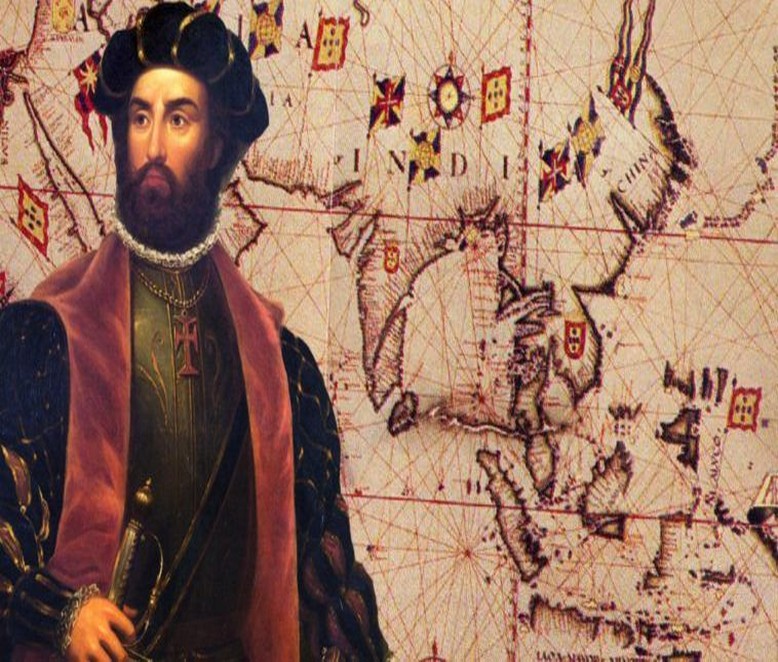
In 1460, a boy was born into the distinguished Portuguese noble family of Esteva da Gama. One of his ancestors had been knighted by King Alfonso III for his bravery in battles against the Moors. Like all Portuguese nobles, the young boy received an education in maritime science, mathematics, navigation, and astronomy.
Following Columbus’s discovery of overseas territories in the New World, the Vatican divided them between Spain and Portugal. Outraged by this papal injustice, King Charles VIII of France, nicknamed ‘the Amiable’, declared, “The sun shines equally for all!” He then blessed his corsairs and sent them to plunder Spanish ships.
The French filibusters immediately set sail in search of plunder. Off the coast of Portugal, they captured a caravel laden with gold from the New World. In response to this insolence, the Portuguese king ordered Captain Vasco da Gama to seize those French ships. The cunning sailor managed to outsmart the French and take back the gold.
For carrying out the king’s will with such decisiveness, Vasco da Gama was showered with the highest honours. From that moment on, time brought him closer to his fateful mission.
Almost ten years after Bartolomeu Dias’s expedition in 1488, the daring sailor received orders from King Manuel I to find a sea route to India. He was given command of four warships, Portugal’s finest navigators, and 150 soldiers, as well as the most advanced secret maps. His expedition was guaranteed full supplies, with all expenses covered by gold from the royal treasury.
Vasco da Gama set sail, following his predecessor’s route to the Cape of Good Hope. On the route, the fleet stopped at various islands to make repairs and resupply. There, they clashed with vicious natives. Vasco da Gama was wounded in the leg by an arrow during one of these clashes. Fortunately for him, the arrow was not poisoned.
By the end of November 1497, the flotilla had rounded the Cape of Good Hope through numerous relentless, debilitating storms along the way. One ship was so badly damaged that it had to be burned, with its contents transferred to the others. They continued along the east coast of Africa. One day, the sailors spotted a caravan of Arab merchants unloading spices from ships on the shore. This began to unravel the mystery of spice shipments to Europe, and Vasco da Gama realised that he was close to solving it. However, when the expedition reached Madagascar, the sailors were met with aggression by the Arab traders, who were jealous that the Portuguese might discover the secrets of the lucrative spice trade. Vasco da Gama proved himself to be a cunning politician. He incited the local tribes against the Arabs by giving the natives trinkets and weapons.
After leaving Madagascar, his ships headed northeast and reached India in May 1498. It was a perilous expedition, with sailors dying in skirmishes with savages and pirates and ships sinking in storms. The navigator fulfilled his king’s orders at great cost. Only two of the four ships returned home to Portugal, carrying just 55 of the original 150 sailors. However, the profits from selling the spices brought from India far exceeded the expedition’s costs. Politicians and merchants do not count the dead. They count the profits.
Nevertheless, the location of the Spice Islands remained a mystery. The navigator’s written report made no mention of them.
King Manuel I of Portugal was an arrogant and vain monarch who lacked a romantic sense of adventure. He preferred to live a life of luxury in the palace, taking all the credit for seamen’s discoveries. Following the successful completion of Vasco da Gama’s expedition, he added the following to his title: ‘Lord of Guinea, Navigation, and Commerce of Ethiopia, Arabia, Persia, and India’.
Although he rarely favoured his subjects, he appointed Vasco da Gama viceroy of India and granted him land there in gratitude for the successful expedition. This generous gift from the usually stingy king confirmed that his seafarer had indeed found the coveted islands. However, Vasco da Gama did not dare commit his discovery to paper, most likely whispering it to the king instead. All secrets eventually come to light, and this one was revealed 20 years later, after Magellan’s expedition.
Vasco da Gama lived a wealthy life and died on his Indian estates at the age of 64. His less fortunate predecessor, Bartolomeu Dias, met a different fate. A couple of years later, he followed Vasco da Gama to India to avenge his unsuccessful first attempt. But he fell into the clutches of the elements at the Cape of Storms, which he had discovered. The ship and crew were lost, along with their captain.
Don’t tempt Fate if you’re overcome by vanity. She might not be pleased.
***
MAGELLAN.
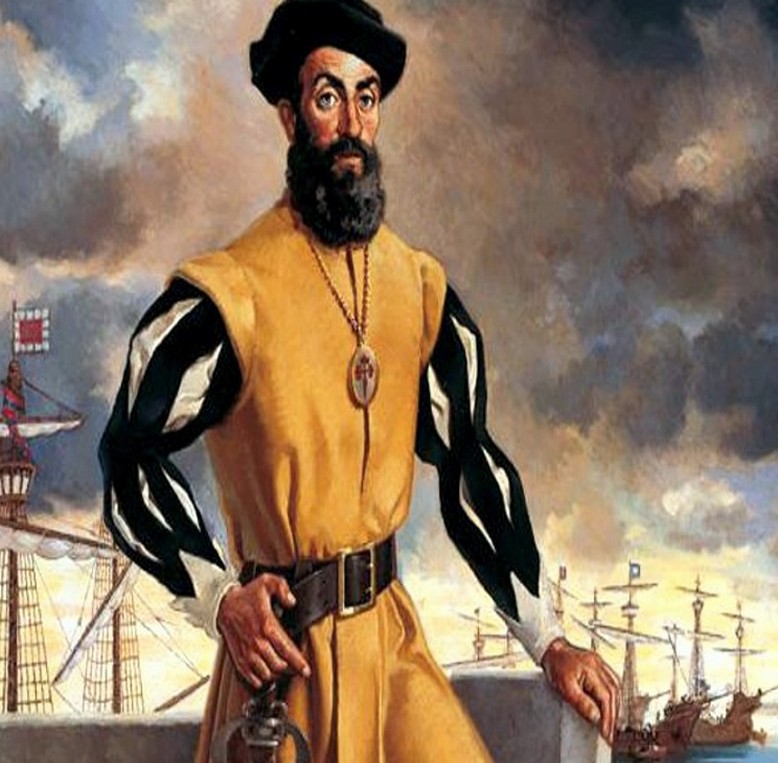
In 1480, a boy was born into a poor noble family in a Portuguese province. His father’s lineage could be traced back to an 11th century ancestor who had participated in the military campaigns of a French crusader named Magalhães. This name was adapted into Portuguese and appeared on the family crest, and the boy was named Fernão after it.
Growing up on the Atlantic coast, Fernão de Magalhães’s companions were the winds and storms of Biscay. When he turned 12, the young nobleman travelled to Lisbon to enter royal service. Although modest, this position enabled him to receive one of the best educations in Portugal. He studied religion and mathematics, received cavalry and military training, and took music and dance lessons.
After enrolling at the school founded by Prince Henry the Navigator, he went on to study astronomy and navigation. Amerigo Vespucci, after whom the Americas are named, was the school’s senior navigator in the early years of the new century.
During the Age of Geographical Exploration, Christopher Columbus and Vasco da Gama were idols and role models to the young Fernão. He spent all his free time in the harbour, helping seamen to prepare for expeditions to India and studying ship rigging and armament in preparation for sea voyages.
However, in 1495, his patron, King João II of Portugal, died suddenly. Manuel I then ascended the throne, succeeding Prince Afonso as heir to the crown. Prince Afonso was King João II’s only legitimate son.
Manuel had grown up amid the conspiracies of the nobility; his older brother Diogo had been killed by the king himself for his involvement in a plot. The young monarch remembered his brother’s fate and distrusted any nobleman of dubious character.
Consequently, the ambitious nobleman Fernão de Magalhães soon fell out of favour with the suspicious king. Over the years, the proud Fernão’s requests for a career in the navy were denied, and his dream of becoming a sailor remained just that — a dream. Ultimately, he fell victim to palace intrigue and was sent to India to serve on Portuguese naval ships.
In 1513, Magellan returned from India after seven years of service, during which he fought in several battles and sustained multiple wounds. He returned home penniless and petitioned the king for compensation for his faithful service. His request was refused, and he found himself fighting the Moors in Morocco, where he was seriously wounded by a spear. Death seemed inevitable. However, fortune favours the brave, and he survived. His only reward was the scars from his wounds. These injuries brought his military career to an end, but the king again refused to grant him any money.
An experienced sailor and nobleman, Fernão de Magalhães spent several years preparing a plan for an expedition across the Atlantic to the Spice Islands, drawing on his knowledge of the oceans and warfare. He presented the finished plan to King Manuel, who rejected it. There was a reason for this, but the king kept it a secret — it was a matter of national importance. Only the king and his viceroy in India, Vasco da Gama, knew this secret.
Having lost hope of gaining the court’s support, Magellan requested an audience with the king in 1517, which was granted.
‘Your Majesty, I humbly ask for your permission to seek service elsewhere, where my knowledge and experience will be valued.’
‘You are free to do as you please,’ the king replied, his mouth twisting into a poorly concealed grimace.
According to court etiquette, Fernão was supposed to kiss the king’s hand while kneeling. However, the king tucked his hands into his robes and turned his back on his vassal.
A month later, Fernão de Magalhães was on his way to Spain. Sitting in his carriage, he reflected on the fact that he was already 37 years old and had lived half his life. Looking at the blue sky, he smiled, consoling himself with the thought that his life in disgrace had finally come to an end. He was so relieved that he smiled throughout the journey.
At the end of October 1517, he arrived in Seville. Shortly afterwards, he received all the necessary papers and instructions from King Charles I, who granted him Castilian citizenship and made him his subject. From then on, he would be known as Hernando de Magallanes.
***
ROYAL CONTRACT.
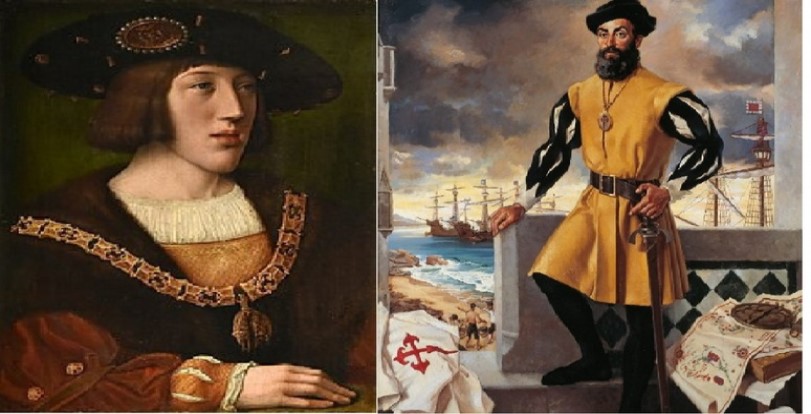
Carlos I, who belonged to the Habsburg dynasty, was born in Flanders and was originally named Charles. His native language was French. His grandparents, Ferdinand and Isabella, ruled the kingdoms of Aragon and Castile. Following Isabella’s death in 1504, her kingdoms passed to her daughter, Juana (Charles’s mother). However, his grandfather, King Ferdinand, ruled as regent. Upon his death in 1516, the young Charles inherited both Spanish kingdoms. The two kingdoms came under one crown. It would be another half-century, though, before they became known as Spain, under the reign of Carlos’s son, Philip II.
On 14 March 1516, Charles adopted the Spanish name Carlos and was proclaimed King of Castile and Aragon. The extensive Habsburg family ties throughout Europe were exploited to secure the throne for Charles. He was promised the entire Roman Empire. Already familiar with the world of behind-the-scenes politics, the young king knew that his relatives would demand compensation for their services if given the opportunity.
What young man doesn’t dream of becoming famous and achieving something that will earn him worldwide recognition? Especially if he is a king! So, when his new subject, Hernando Magellan, proposed that the eighteen-year-old King Carlos add the coveted Spice Islands to his domains, he recognised it as the perfect opportunity. Less than two weeks later, Magellan received an invitation to appear at the palace. The young king saw this as an opportunity to reward his relatives for their protection without becoming dependent on them. Here, the interests of the king and explorer coincided.
Magellan had many advantages over other Spanish seafarers. Not only was he a professional navigator, but he had also served aboard the Portuguese fleet in India for seven years, becoming familiar with all the local waters. Furthermore, he had exclusive access to classified information about the navigational experiences and expeditions of all Portuguese navigators. Armed with this knowledge, he was ready to set out on his own expedition. The dizzying successes of Vasco da Gama and Christopher Columbus beckoned him to the open sea. Magellan knew he had everything he needed to succeed. Except money.
***
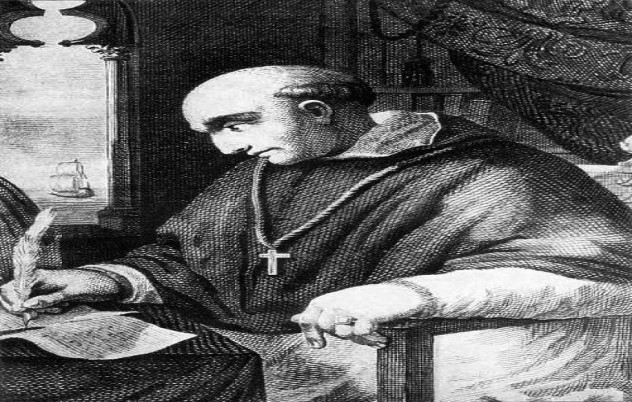
The Chamber of Commerce organised all of the Spanish monarchy’s overseas expeditions. Founded during the time of Christopher Columbus’s discoveries, the institution gradually took control of the monarchy’s entire commercial operation. No new expeditions could be undertaken without its approval. The institution’s powerful manager was Bishop Juan Rodríguez de Fonseca, a skilled palace intriguer and the ‘grey eminence’. He organised all of Columbus’s expeditions and was the royal family’s closest confidant. He wielded absolute power over the entire royal navy. It was Bishop Fonseca who undermined Columbus, who subsequently died in poverty and obscurity.
The bishop was alarmed by the arrival at court of an ambitious and proud Portuguese man favoured by the king himself. Like a hunting dog on point, Fonseca kept a close eye on Magellan, placing spies around him.
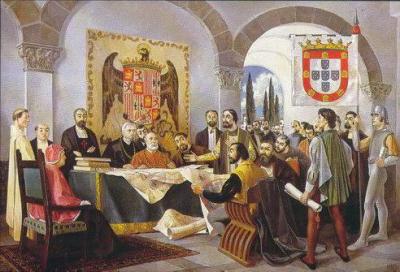
The Treaty of Tordesillas (1494) granted Spain territories in the Western Hemisphere, with Portugal’s holdings lying to the east of the dividing line. As the border was drawn along the ocean, the treaty was as ‘drawn with a pitchfork in the water’.
Following Vasco da Gama’s successful expedition, Portugal colonised part of mainland India and the surrounding islands.
At that time, navigational instruments were far from perfect, so the border could only be estimated. Any attempt by Spain to claim even a tiny island in those waters could have resulted in a military conflict between the neighbouring countries.
Magellan, a victim of intrigue at the Portuguese court, was skilled in persuasion and argumentation. To realise his plan, he needed the support of the bishop and the officials of the Chamber of Commerce. While pondering how to achieve this, the navigator decided to take a risk. On 20 January 1518, Magellan and his associate Faleiro arrived in Seville, the capital, and proceeded to the royal castle. The Royal Council was attended by ministers and, of course, the ever-present Bishop Fonseca. Magellan confidently informed the Chamber of Commerce that the Spice Islands were under Spanish jurisdiction and in Spanish waters. The officials heard what they wanted to hear. They accepted the sailor’s words as fact, stating: “In that case, we have the right to annul all Portuguese claims to these lands and recognise Spain’s exclusive right to trade in spices and precious stones…”
During the council meeting, the navigator was asked many questions, one of the most important concerned the planned route to the expedition’s destination. Magellan replied that his ships would sail along the coast of South America until they found a strait.
At that time, the existence of Antarctica was unknown to Europeans, and the southernmost tip of South America was a blank spot on the map. Magellan assured the ministers that he had information about this area, but that he could not reveal it for reasons of secrecy. He added that it was this secrecy that had enabled Portugal to discover and establish new colonies. This was a gamble on his part, as he had no reliable information. It was important to him to secure the approval of the Chamber’s officials, so Magellan decided to play on their selfish desires. He told the council that the expedition would take no more than two years, and that the ships would return to Spain laden with spices and jewels from the East.
His speech intrigued and won over the ministers. Even Bishop Fonseca was impressed by the sailor’s arguments. Having secured the support of the bishop and the officials, Magellan was ready to meet the king.
Magellan’s ambition at age 38 can be seen in his written petition to King Carlos. The petition read more like a list of conditions a vassal set for his sovereign. The wisdom and insight of the eighteen-year-old king in his decision are reflected in the treaty he concluded with the explorer.
Magellan requested ten years’ exclusive control of the spice trade in the islands he had discovered. He also requested trading privileges on the condition that he pay taxes on this trade to the royal treasury. Furthermore, he requested perpetual ownership of all the islands he had discovered, excluding the first six, for himself and his descendants. The first six islands were to become the property of the Spanish crown.
Magellan was concerned that, should his expedition fail, another expedition might be sent that would reveal all his secret information about the route, which he had shared only with the king. This is why he wanted guarantees that this wouldn’t happen.
The king read the sailor’s petition:
“Your requests are understandable. But aren’t they a little exaggerated?’ He admired the rings on his fingers and glanced amiably at Magellan.
“Your Majesty,” the sailor said, bowing deeply. “Forgive me if my requests were considered excessive. I accept all your wishes and instructions with gratitude and my humblest respect.’
Raising his head, he added with the utmost sincerity:
“Your Majesty, bless me for this expedition, in which I risk my life for the good of your kingdom. In my petition, as a husband and father, I merely expressed my concern for my descendants.’
‘Well, you’ve convinced us,‘ the king said after a short pause, his expression still benevolent. ‘You will receive our answer. There is one absolute requirement and one most important condition.” The monarch became serious. “Under no circumstances must you violate the demarcation terms granted to us by the Vatican’s highest decree of 1494!” With that, the king held out his hand for a kiss, indicating that the meeting was over.
Two months later, on 22 March 1518, the king’s decree was delivered to Magellan by royal mail. The package contained a contract securing the following rights and guarantees for the navigator and his partner:
“You, Bachelor Ruy Faleiro and Ferdinand Magellan, gentlemen born in the Kingdom of Portugal, wish to provide us with this distinguished service by committing to discovering islands and lands rich in spices in our ocean waters, within the limits of our demarcations. We ordered that this contract be drawn up to your satisfaction. Since it would be unjust to allow others to cross your path and you are undertaking this endeavour, we promise that for the next ten years, we will not grant permission for anyone to intrude upon your discoveries in the same regions.”
In the contract, the King reiterated his demand for compliance with the demarcation conditions set out in the Treaty of Tordesillas of 1494, insisting that Portugal’s colonial boundaries be respected. ‘You must ensure that your exploration of new lands never encroaches upon the boundaries of the most tranquil King of Portugal, our dearest uncle and brother, nor harms his interests in any way, except for the protection of our own interests, should they fall within the framework of our demarcation.’
Furthermore, the King granted the sailor a gift in the treaty that he could not have dreamed of:
“Of all the lands and islands that you discover, you will be granted a twentieth part.” You will also receive the title of Lieutenant Governor, ruling over the aforementioned lands and islands — a title for you, your sons, and your heirs forever.” However, the Supreme Authority of Governance of these lands must remain with Us and with the Kings who come after Us.”
King Carlos I granted Magellan a flotilla of five ships, each equipped with artillery and a crew, and two years’ worth of supplies. According to the royal decree, the flotilla was officially named the ‘Moluccan Armada’, after the Moluccas, also known as the Spice Islands.
The king also granted Magellan sole authority to administer justice:
“We authorise you to adjudicate conflicts and disputes between the crews of the ships entrusted to you, should such disputes arise during the expedition of the said fleet, whether at sea or on shore. You are obliged to administer justice, determine the guilt and punishment of the guilty equally, and do so without hesitation or entering into legal disputes…’
This contract was a truly royal gift, the likes of which one could only dream of! Magellan now had everything. The brevity of the orders issued demonstrated the young king’s statesmanship. After all, the king was only 18 years old at the time. Throughout his subsequent life, the monarch proved his extraordinary ability as a politician and ruler of a vast empire. Therefore, it is worth recounting.
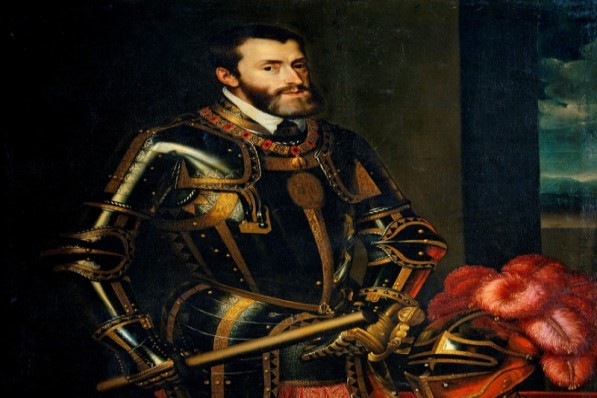
Carlos I of Castile and Aragon, a Habsburg king, later became Emperor of the Holy Roman Empire. An exceptional politician and diplomat, he was the most influential statesman in Europe during the first half of the sixteenth century, making the greatest contribution to the history of any ruler. He is remembered as the most powerful monarch. His empire was so vast that he quipped, “In my empire, the sun never sets.”
Charles was orphaned at an early age. His father died, and his mother became mentally ill when he was only six. He lived under the protection of his aunt, Margaret of Austria, who ruled the Netherlands, for the next ten years. When he turned sixteen, he travelled to Spain to receive the sceptre from his grandfather, King Ferdinand. Through a complex web of dynastic alliances, the young king inherited vast territories in Western, Southern and Central Europe. He held more than a dozen royal crowns, ruling simultaneously as king of León, Castile, Valencia, Aragon, Galicia, Seville, Majorca, Granada, Navarre, the Two Sicilies, Sardinia, Corsica, Hungary and Croatia, as well as king of Germany and Italy, and titular king of Jerusalem.
His titles were as follows: ‘Elected Emperor of Christendom and Rome, ever Augustus; Catholic King of Germany, Spain and all the kingdoms belonging to the Castilian and Aragonese crowns; the Balearic Islands; the Canary Islands; the Indies; the Antipodes of the New World; the Land of the Sea-Ocean; the Straits of the Antarctic Pole; and many other islands in the Far East and West. Archduke of Austria; Duke of Burgundy, Brabant, Limburg, Luxembourg and Guelders; Count of Flanders, Artois and Burgundy; Count Palatine of Hainaut, Holland, Zealand, Namur, Roussillon and Cerdanya; Margrave of Oristania and Gothia; Sovereign of Catalonia; and King of many other European, Asian and African kingdoms.’
He was officially crowned Holy Roman Emperor in 1530 by Pope Clement VII in Bologna. He became Emperor Charles V, the last emperor to be crowned by the Pope. As king and emperor, he lived such a rich and turbulent life that he grew weary of it early on. At the age of 56, he retired from public life, abdicated the throne and entered a monastery, where he spent the rest of his life. He is buried in the royal tomb at El Escorial.
The reason why this great politician and emperor of a vast empire retired at the height of his power and passed the crown to his son, Philip II, remains unknown.
PALACE INTRIGUES.
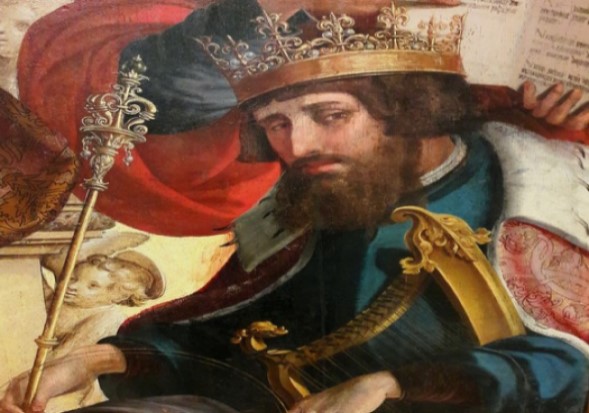
Spies rode sweating horses to deliver news of Magellan’s impending expedition to Portugal. There, the news sent shockwaves through the royal court. The courtiers had recently forced the nobleman to seek a new homeland, but now they had forgotten this fact. Instead, they were accusing Magellan of treachery and betrayal. King Manuel, who had humiliated Magellan for two decades, now plotted to lure the sailor back. He instructed his ambassador, Álvaro da Costa, to promise Magellan royal favour and full support for the expedition. Magellan, who was skilled in political deception, knew that prison, torture and death awaited him in Portugal. He refused the ambassador, informing him that he had sworn an oath to the King of Spain and was henceforth loyal to him. Magellan also pointed out that, during their last meeting, the king had released him from all obligations to the Portuguese crown.
Following Magellan’s refusal, da Costa feared falling into his king’s disfavour by failing to fulfil his most important mission. Therefore, the schemer decided to discredit the navigator in the eyes of his new sovereign. He requested an audience with King Carlos, during which he vilified Magellan as a traitor to his homeland, in an attempt to persuade the king to deport the sailor. After listening to the ambassador, King Carlos replied with a smirk:
‘Our subject, the navigator Magellan, is not a traitor to his homeland because he left with the permission of your king. He does not plan to conduct an expedition in the waters of your kingdom. He plans to conduct it in waters belonging to our kingdom…”
Da Costa was prevaricating. In a letter to King Manuel, he lied by writing, ‘Despite all my efforts, Your Majesty, the insignificant fugitives Magellan and Faleiru expressed a desire to return; however, King Carlos persuaded them not to…’
In reporting on King Carlos, the ambassador probably forgot that the two kings were related. Furthermore, at that time, King Manuel of Portugal was preparing to marry Leonor, the sister of King Carlos of Spain.
The two kings conversed and shared their concerns. Da Costa, the informant, was expelled from Spain. To put an end to the resulting diplomatic uproar, King Carlos ordered the Chamber of Commerce to begin preparations for the expedition without delay. Concerned for Magellan’s safety, the king ordered his secret service to protect the explorer. Magellan was ordered to go to the ships of the flotilla immediately and ensure that the expedition set sail as soon as possible.
Beyond the machinations of the Portuguese king, who was eager to destroy his disgraced former nobleman, Magellan found himself between a rock and a hard place, becoming the object of Bishop Fonseca’s envy at the court of the King of Spain. The generous terms of the royal contract granted to the navigator kept the bishop up at night, and he used all his scheming skills to minimise the benefits granted to the sailor by the king.
The cunning Fonseca plotted to destroy the alliance between the two friends and like-minded partners. He began by attempting to persuade the king that the two Portuguese commanders of the expedition, Magellan and Faleiru, had only recently arrived in the country and would therefore be unable to serve as diplomats and representatives of the Spanish Crown during meetings with officials from other countries throughout the flotilla’s journey. Having received tacit consent from the king, the bishop requested that a trusted inspector be appointed to the expedition. This inspector would ensure compliance with the king’s instructions, oversee all of Magellan’s trade operations and send reports directly to the king. Of course, Fonseca omitted to mention that the king would only receive copies of these reports.
Fonseca recommended his nephew, Juan de Cartagena, for the position, assuring the king of his competence. However, everyone in the king’s entourage knew that the ‘nephew’ was actually the bishop’s illegitimate son, who was merely an accountant with no knowledge beyond arithmetic. The young King Carlos knew nothing of de Cartagena’s competence or experience and simply entrusted the assignment to the bishop.
Following the humiliating expulsion of his diplomat from Spain, King Manuel continued to try to prevent the expedition. This time, he sent a spy named Sebastião Álvares to assist Bishop Fonseca in disrupting the alliance between Magellan and Faleiro.
Ruy Faleiro was an astronomer and navigator who shared Magellan’s vision. Drawing on his knowledge and the experience of Portuguese sailors, he crafted navigational instruments for the expedition himself, including astrolabes and quadrants. He obtained secret maps and plotted the expedition’s route on them. Faleiro equipped the expedition’s ships with all the necessary navigational equipment and instruments, including 35 magnetic compasses of his own design, in addition to the 15 he had purchased.
The spy, Sebastião Álvares, exploited the bishop’s dislike of Magellan by spreading rumours about Faleiro’s alleged mental instability. Upon receiving this incriminating evidence, the bishop hurried to the king, begging His Highness to commission a medical examination. He argued that the progress of the expedition would be unpredictable if commanded by a madman. The examination was conducted and falsified to suit the bishop. By royal decree, Ruy Faleiro was removed from the expedition and sent ashore. The bishop’s trusted accountant, Juan Cartagena, was appointed in his place as astronomer-navigator and vice-admiral.
Juan Cartagena’s dual appointment as royal inspector and vice-admiral meant that he had the power to overrule Admiral Magellan’s decisions. The accountant got his powers so extensive that he effectively acted as commander of the expedition. While Magellan was busy preparing the ships, Cartagena spent his time with the bishop, receiving detailed instructions on sabotage and how to ensure the expedition failed. The Chamber of Commerce, which was responsible for preparing ocean expeditions, equipped the ships with everything they needed, including a crew. Bishop Fonseca used his influence to appoint his loyal supporters as captains of two of the flotilla’s ships. From that point on, at any captains’ council, three out of the five opposed Magellan’s decisions.
Finally, in September 1519, after twelve months of preparing the ships and navigating official intrigue, the Moluccan Armada was ready to depart from Seville. Before setting sail, a mass was celebrated for the crews of the five ships in the flotilla at the local Cathedral of Santa María de la Victoria. An envoy from King Carlos presented Magellan with the royal flag. Magellan took this to be a sign of the king’s complete trust. Kneeling, he swore that all his thoughts and aspirations were dedicated to the glory of Spain and its king.
Meanwhile, back home, King Manuel of Portugal reacted with vicious fury. He ordered the persecution of all of Magellan’s relatives. Vandals tore the noble coat of arms from the gates of their family estate and trampled it into the ground. Relatives, including small children, were stoned. To save their lives, they were forced to flee the country and seek asylum in a foreign land.
THIS WAS THE WILL OF THE ALMIGHTY.
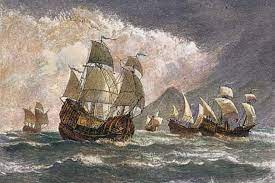
Five ships of the Maluku Armada — the Trinidad, the Santiago, the Concepción, the San Antonio and the Victoria — travelled down the River Guadalquivir from Seville to Sanlúcar de Barrameda, setting sail on 20 September 1519. Bishop Fonseca’s misdeeds became apparent from the outset, when leaks were discovered in the ships purchased by his Chamber of Commerce. Despite the sailors working the pumps, the vessels were worn out, with rotten wood beneath the fresh paint. The Chamber also supplied the expedition with substandard food, including worm-infested flour. Therefore, the admiral decided to purchase fresh provisions and repair the ships’ hulls in the Canary Islands.
Favourable winds enabled them to reach Tenerife on the sixth day and enter the harbour. Eager to profit from wholesale orders, the local merchants were inventive with their invoices, adding fictitious items and including damaged goods. Magellan had to count the crates personally and check the quality of the provisions they had purchased. Meanwhile, a mail boat arrived from Spain to deliver the post. Fonseca’s vassals and spies, of whom there were many on the expedition, received new instructions.
Magellan also received a letter from his father-in-law, who had been left behind with their young son. Magellan’s father-in-law respected him and was his true friend. In the letter, he warned Magellan about Fonseca’s schemes and a potential mutiny, urging him to be vigilant, cautious, and not to trust anyone. He also informed Magellan that the King of Portugal had sent warships to arrest him and bring him back to Portugal. This echoed the actions of King João II, whose ships had chased Columbus.
Magellan abandoned his work and summoned his captains to a meeting. There were two known routes to the shores of South America. The first led southwest to the coast of Brazil. The second route featured favourable currents and winds, and led to the Cape Verde Islands via the western coast of Africa. This route was more appealing. However, the Spaniards were pursued by Portuguese ships along the entire western coast of Africa. Bishop Fonseca urged his confidant, Cartagena, to persuade the admiral to take this route and thus provoke Magellan into violating the Vatican’s verdict, which had awarded those waters to Portugal. The bishop wanted Magellan to be arrested by the Portuguese, chained up and sent to stand trial before King Manuel, even if it meant the end of the expedition.
At that time, due to the lack of reliable charts and navigational instruments, captains did not risk sailing at night; instead waiting out the darkness in ports or drifted if the weather permitted. However, during a council meeting, Magellan ordered his captains to sail day and night. The Armada left the Canary Islands at midnight on 3 October, setting a course due south. The admiral led the ships on an unknown third route to evade pursuit. When an agent of the Bishop of Cartagena objected to this decision, Magellan told him not to ask questions. Magellan was laconic and categorical. He was the only person aware of the King of Portugal’s hostile intentions, and he kept the captains ignorant of the reason for his decision to avoid rumours or panic on board the ships.
Out in the open ocean, the ships were hit immediately by relentless storms. At times, the situation became so critical that the sailors stood by with axes, ready to cut down the masts if necessary. This continued for several weeks until the stormy winds gave way to equatorial calm. The ships’ hulls, battered by the waves, were in a deplorable state. Magellan ordered rations to be reduced, and the sailors suffered from the heat and lack of drinking water. At the next council meeting, Cartagena showed further disrespect by breaking protocol and addressing the admiral as ‘captain’ instead of ‘admiral’. He blamed Magellan for both the storms and the calm. In front of everyone, he arrogantly declared that he had equal rights to the admiral and refused to obey his orders. The
The official accountant forgot that he was dealing with a professional sailor and warrior who made tough decisions yet was fair in his assessment of those who carried them out. Furthermore, Magellan had been authorised by the king to administer justice alone. The door swung open, and officers entered the cabin, sabres drawn.
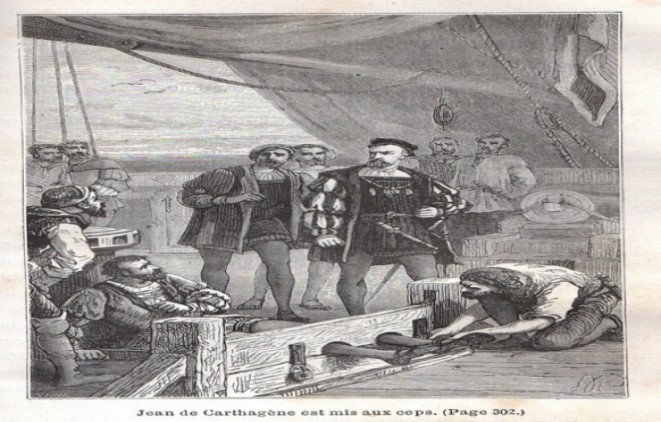
‘This is treason! In the name of the King, I strip you of all ranks. You are my prisoner!” The admiral ordered the arrest of Cartagena, who was taken to the deck and tied to the torture rack. His accomplices, Captains Mendoza and Quesada, begged for forgiveness and declared their loyalty to the admiral. They begged not to execute Cartagena, but to keep him under house arrest instead. Although the royal contract required Magellan to administer justice without hesitation or legal dispute, he took pity on the traitor. Thus, the sting remained. Magellan handed the disgraced Cartagena over to Captain Mendoza.
The troubles didn’t end there. The admiral discovered that Solomon, the sail-master of the Victoria, who was from Sicily, had been caught sodomizing his steward. Under Spanish law, homosexuality was punishable by death. Solomon was chained up until they arrived at the first port, where he was due to be executed. The victim of his liaisons disappeared. Whether he jumped overboard or was helped remains unknown.
Soon, the wind picked up, and the ships set course for South America. The admiral had a pilot who was familiar with the area. In mid-December 1519, the Armada ships entered Santa Lucia Bay. Through the heavy rain, buildings on the shore could be seen. Portuguese Rio de Janeiro lay before the sailors. The flagship, the Trinidad, dropped anchor, followed by the others.
IN THE NEW WORLD.

Following the Treaty of Tordesillas in 1494, which divided the oceans and all the lands within them between Portugal and Spain, Portugal was granted part of South America. Five years later, the area was visited by the first European, the Spanish navigator Añez Peisano. He was followed by Portuguese explorers, including Pedro Álvares Cabral, who created the first maps and navigation charts of the coast. The land remained unnamed for a long time. While searching for something profitable, the colonisers discovered many aromatic, oily trees with dark red, almost black wood. They named the land Brazil after the word ‘braza’, meaning black coal.
In 1502, Amerigo Vespucci visited the area. His descriptions of the flora and fauna, as well as the indigenous people’s way of life, are intriguing: “This land is covered with evergreen, aromatic fruit trees, the fruits of which are incredibly useful.” Their fields and mountain valleys are full of fragrant flowers. When brewed, their roots cure all ailments. “If there is an earthly paradise, it must be nearby,” wrote the Italian enthusiastically. He vividly described the natives’ way of life and customs: “There are no laws or private property — everything is communal. Their lands are not divided among tribes, and they have no kings — everyone is their own king. The men pierce their lips and cheeks and insert bones or stones to intimidate their enemies. They are warlike, and when there is no external enemy, they fight amongst themselves. They are all cannibals, either eating captured men or enslaving them and taking their women as concubines and wives. They beat their wives for any offence, and each man has several wives. They also eat their slaves and wives, along with the children they bear them. These were the Guarani Indians: short and plump. Their weapons were bows, spears and blowpipes, which they used to fire poisoned arrows at the enemy.
Magellan’s expedition included an Italian passenger named Antonio Pigafetta. He quickly learned the local dialects, conversed with the natives and kept a travel diary. According to his notes, the natives offered their daughters to the sailors in exchange for knives and fishhooks. At night, the sailors held drunken orgies on the beach and shared the women.
From Pigafetta’s diary: ‘One day, a local beauty came aboard our ship. Her attention was drawn to a nail the size of a finger. Grabbing it, she bent low, pierced her vaginal lips with it, and quickly retreated, carrying off her prize in such a barbaric manner.” The reason for her actions was later discovered. Among the Guarani Indians, all metal objects were considered weapons and were valued more highly than gold, or perhaps even life itself.”
One of the sailors, seduced by a local woman, escaped. Magellan sent sailors to search for the deserter. He was found, dragged aboard the ship and locked in a cage. He was forbidden from going ashore for the rest of the voyage. The admiral ordered his prelates to celebrate Mass on land to discipline the sailors. The locals knelt eagerly alongside the Europeans, singing psalms and clapping their hands. They were convinced that the strangers had come from heaven since their ships had arrived during a rainy period. One day in December, Solomon, a paedophile, was executed. The executioner, his face hidden by a hood, strangled the man in front of the assembled crews amid the terrifying pounding of drums.
By Christmas, the ships had been repaired and stocked with provisions, and the admiral ordered the crew to prepare for departure. Alvaro de Mesquita was appointed captain of the San Antonio. Following Cartagena’s dismissal, temporary command of the ship was given to de Sosa. Now insulted by his dismissal, he became an accomplice of Cartagena’s, even though the latter was under arrest. Two weeks of joyful anchorage ended in a tragic parting of the ways. The admiral ordered a thorough search of all the ships. Several young women were found and sent ashore. As the flotilla departed the bay, dozens of women followed the ships in their canoes, weeping and wailing and begging the sailors to stay with them forever.
The Armada sailed south and soon encountered treacherous shallows and reefs. They anchored at night and continued sailing at dawn. Two weeks later, they were overtaken by a violent storm off the coast of Montevideo. According to legend, when the first European sailor spotted mountains on the horizon from the top of the mast, he cried out, ‘Monte vide eo!’ (I see mountains!).
Magellan then led the ships into the Gulf of La Plata. The bay was wide and extended far to the west. The captains initially mistook it for the long-sought passage to the South Sea. Accepting their pleas, Magellan sailed south of La Plata in the San Antonio, while his trusted captain, Serrano, travelled upriver in the Santiago. However, the rivers flowing into the bay narrowed and shallowed, and there was no sign of a westward current in the freshwater. After three weeks of fruitless searching, both ships returned, and in early February, the Moluccan Armada continued south.
Despite the heavy, continuous storms and poor visibility, the ships crossed the 40th latitude south. Magellan steered the ships close to the shore in the hope of finding a gap in the mountain range. On 13 February, the Victoria struck the seabed. Fortunately, it was soft soil rather than rock, and the hull remained intact. However, this forced them to steer further out to sea. Storms and rain obscured the horizon, and fearing that he would miss the entrance to the strait, Magellan took risks manoeuvring between shoals and reefs. The nights were terrifying, with howling winds and heavy waves pounding against the ship’s sides. The sailors prayed to God for salvation while the priests sang psalms.
Ten days later, the ships entered the Bay of San Matías. Magellan surveyed the bay and decided to spend the winter there, waiting for calm seas. He assembled the crews on the shore. He saw faces worn out by hardship and storms. Everyone was plagued by lice in their dirty clothes, which were impossible to wash in the icy seawater, as well as by cockroaches and rat droppings contaminating their rotten food supplies. The sailors grumbled, calling for a return to Spain. A few of them still hoped to find the elusive passage to warmer seas. The admiral reminded the sailors that the expedition had been commissioned by the king himself, urging them to fulfil their oath to the monarch by completing the voyage for the glory of their homeland. He succeeded in calming the sailors, but only temporarily.
At the end of March, the ships dropped anchor in Saint Julian Bay, named after the saint by Magellan. The bay was deep and teeming with fish. On the rocky shores, the sailors spotted numerous penguins and plump walruses, which they could hunt for food. Magellan planned to stay for a while and reduced his already meagre daily rations accordingly. Had he known that he was only a few days’ sail from the strait he was seeking, he would have continued on his way. Then he would have avoided what happened next.
REBELLION.

Easter fell on 1 April. Magellan invited his captains to Mass, followed by a simple meal. However, none of them attended, claiming to be unwell. Alarmed, the admiral ordered the crew of the flagship to be on high alert. That night, a mutiny broke out on three of the armada’s ships. The mutineers were led by Cartagena, Mendoza and Quesada, who had previously shown Magellan arrogance at the start of the voyage, despite later pledging allegiance to him. Having won over several dozen officers and sailors, the mutineers seized three ships and disarmed the crews. Captain Juan Serrano, commander of Santiago, refused to join them. To avoid causing a stir, the mutineers decided to postpone his execution.
The following morning promised nothing unusual. The ships lay at anchor, their decks seemingly deserted. Magellan sent a boat to the San Antonio, which was commanded by his trusted captain, Mesquita. It returned with a letter from the mutineers, informing the admiral that Juan de Cartagena was once again the captain. They issued an ultimatum for Magellan to return to Spain. Magellan decided to ascertain the mutineers’ intentions. He invited them to appear on board the flagship for a meeting. In response, they asked him to do so aboard the San Antonio. Much to their surprise, the admiral agreed.
Magellan was aware of the dangers he faced. Three of the five ships in the flotilla had been seized by mutineers, who had taken the crews prisoner. The admiral, therefore, resorted to a ruse. He sent a delegation in a boat to Victoria, hoping that Captain Mendoza, who had recently sworn allegiance to him, would come to his senses. If Mendoza refused, the admiral had a second option.
Before boarding the boat, he instructed five of his most trusted sailors to persuade the mutinous captain to surrender. If he resisted, they were to kill him. Their weapons were concealed in their clothes. As the boat approached Victoria, the crew’s attention was focused on the delegation. Meanwhile, Magellan sent a second boat carrying fifteen armed sailors to reinforce the first. This boat circled the mutinous ship unnoticed from the other side and quickly approached.
According to an eyewitness account, Captain Mendoza allowed the delegation to board and accepted the admiral’s surrender. Mendoza burst into laughter and threw the ultimatum overboard. The next moment, a dagger plunged into his laughing mouth, and a second sailor smashed his head with his own weapon. Mendoza was dead. The sailors from the second boat, which had arrived just in time, then rushed to board the ship. Frightened by this sudden attack, the mutineers offered no resistance, allowing the admiral’s flag to be raised on Victoria’s mast.
The Trinidad and the Santiago, under the command of the admiral’s loyal captain Serrano, now blocked the exit from the bay for the two remaining rebel ships, alongside the recaptured Victoria. The situation had changed in Magellan’s favour, and he expected the mutineers to realise this. However, Cartagena and Quesada remained stubborn. They took the captured ships, the San Antonio and the Concepción, deep into the bay and anchored them side by side. The rebels were probably planning to escape the bay at night. But they didn’t know their admiral.
Magellan decided to lure the mutineers into a trap by taking advantage of the night. His boat approached the Concepción undetected in the fog, and sailors cut its anchor cable with sharp knives. Meanwhile, Captain Quesada had gathered his accomplices for a meeting, instructing them to escape the bay. Both ships were already slowly drifting towards the bay’s mouth, carried by low tide. Magellan was prepared to meet them there. And when Quesada ordered his sailors to weigh anchor, they hauled only a stump of the cable onto the deck.
As Concepción and San Antonio approached the flagship, the mutineers were fired upon with shrapnel, and Magellan ordered his men to board the ships. The sailors leap onto the decks of the mutineers’ ships with sabres drawn. There were no casualties, however, and Quesada himself was arrested. Cartagena, the terrified accountant who had never smelled gunpowder in his life, surrendered to the admiral without resistance. Both ringleaders were chained and placed in a cage.
Magellan was furious about the mutiny, and the next day, the expedition’s sailors learned that their admiral’s anger was more frightening than the worst storm.
(Translation in progress)
МЕСТЬ АДМИРАЛА.
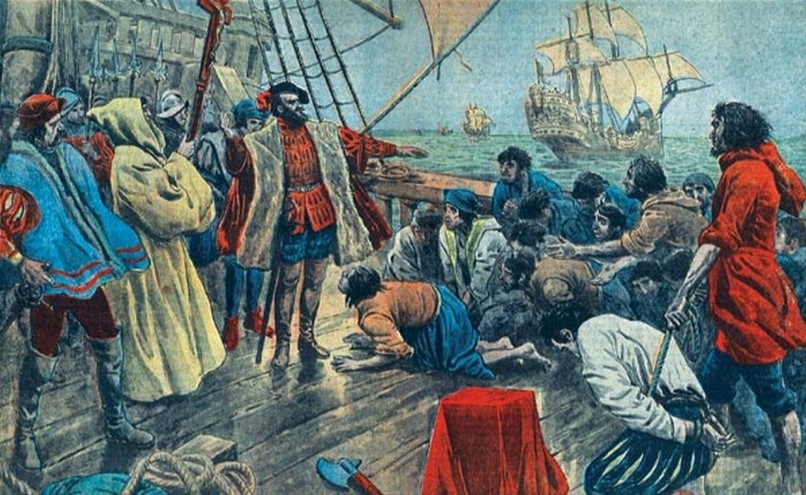
В экипажах кораблей были отважные и преданные адмиралу моряки и благодаря им Магеллану удалось справиться с бунтом. Но были и преступники, такие сбегали в море, спасаясь от тюрьмы. Закон давал им право выбора и они этим правом воспользовались. Нанявшись в экспедицию, они планировали сбежать при удобном случае. Наслушавшись историй о заморских богатствах, они намеревались остаться в жарких странах, спасаясь от кредиторов. Эти личности с мутным прошлым и оказались пособниками бунтовщиков.
Магеллану было нелегко набрать экипажи в Испании, ибо он был португальцем, ему не доверяли, подозревая в двойной игре. Торговая Палата и ее глава епископ Фонсека отправили на его корабли всякий сброд. За месяцы плавания Магеллан успел убедиться в этом не раз. Теперь он решил расправой над мятежниками устрашить этот сброд и выветрить из их мозгов любую мысль о бунте.
Семь лет сражений в колониях Индии, в битвах с персами Морокко, полученные ранения и опыт боевых операций сделали Магеллана бесстрашным воином, презиравшим смерть и ценившим свою честь как высшую награду судьбы. В его военные годы изменников казнили четвертованием, привязывали к хвостам лошадей, разрывая предателей на части. То были годы инквизиции в Испании, когда сжигание на кострах и четвертование были публичными казнями, собирали толпы народа. Публичная казнь преступника – лучший урок для тех, кто задумал грязное дело.
Магеллан выстроил всех моряков на палубе своего флагмана. Он зачитал приговор изменникам и приказал отрубить голову мертвому предателю Мендосе. Затем, обезглавленное тело привязали за конечности к двум мачтам и брашпилем труп был разорван на части. Настал черед остальных. Адмирал приказал пытать изменников, вырвать из их глоток признания, а из их голов корни мятежа. Им ломали кости на дыбе и резали плоть. Так были выявлены еще несколько, среди них навигатор-астроном Мартин. Этот тоже был доверенным лицом епископа, им Фонсека подменил смещенного Рюи Фалейру, партнера мореплавателя. Когда за астрономом пришли, тот выбросил за борт навигационные карты, на которых вероятно вершил свой злой умысел, препятствуя планам Магеллана. Он умер под пытками.
Гаспар Квесада выдал своего сообщника Луиса де Молино. Этому де Молино адмирал предложил выбор: казнить Квесаду или быть казненным вместе с ним. На палубе флагмана «Тринидад», перед всем экипажем, де Молино отрубил голову своему патрону. Тело Квесады четвертовали, разорвали на куски. Были выявлены еще пособники и участники бунта. Они все заслуживали смертной казни, но Магеллан, нуждавшийся в матросах, оставил их в живых. Пленников содержали в кандалах, их рацион сделали минимальным, они исполняли самые тяжелые работы, связанные со смертельным риском.
Магеллан приказал выставить останки тел мятежников на берегу, на высоких кольях, в назидание тем, кто вздумает повторить попытку. Вымазанные корабельной смолой чтобы их не пожрали птицы, останки изменников еще долго оставались там.
Решимость, с какой Магеллан подавил мятеж, утвердила его абсолютный авторитет, а жестокость расправы с зачинщиками исключила проявления недовольства в будущем. В ожидании весны, адмирал занялся ремонтом своего потрепанного флота. Содержимое трюмов и камни килевого балласта кораблей были вытащены на берег. Дерево корпусов тщательно промывалось уксусом, щели конопатились и заливались смолой, после чего балласт возвращался на место. Эти тяжелые работы выполняли штрафники, принимавшие участие в мятеже.
Все запасы провизии подверглись проверке, и эта предусмотрительность адмирала спасла многих моряков от голодной смерти в дальнейшем. В ходе ревизии выявились мошенничества чиновников Торговой Палаты; бочки с солониной были наполовину заполнены костями животных. Обещанного на два года провианта едва хватило бы на год. Магеллан отправил часть моряков на охоту и мясо добытых ими моржей, а также пойманная рыба засаливались выпаренной из морской воды солью.
Однако и эта прибавка к рациону не была существенной, таявшие запасы провианта подталкивали Магеллана к действиям.
В начале мая на поиск пролива был отправлен «Сантьяго», которым командовал верный Серрано. Они спустились на 70 миль к югу, где их настиг шквал. Волны сломали руль и выбросили корабль на скалы. «Сантьяго» был разбит в щепки, 37 моряков чудом спаслись. От корабля не осталось ничего, океан сожрал все… Они возвращались по суше, питаясь мясом ракушек и корнями растений. Путь им преградила глубоководная река. В ней было много рыбы и они выжили, питаясь ею. Капитан Серрано назвал ту реку именем Святого Круза. Суеверные моряки, моля небо о спасении полагались только на чудо, поэтому все те места они называли именами своих святых, моля их о защите. Они связали из поваленных деревьев плот и отправили на нем двоих, за помощью. Еще через неделю те добрались к месту зимовки кораблей и Магеллан снарядил отряд спасателей. Вскоре измученные моряки погибшего «Сантьяго» были спасены и вернулись назад к кораблям.
В лишениях и борьбе за выживание прошли еще два месяца и однажды моряки увидели на берегу огромную фигуру человека. Он не проявлял агрессии и привел с собой племя. Все туземцы были высокого роста, до двух с половиной метров, включая женщин. Спасая ноги от обморожения, они обматывали ступни сухой травой и Магеллан дал им название от испанского patacones (большие собачьи лапы). Отсюда позже вся местность получила название Патагония.
Поначалу отношения были дружественными, туземцы учили пришельцев охотиться на диких животных; привязывая к дереву пойманного детеныша зверя, они ждали в засаде, пока его жалобные мычания привлекут взрослых особей, убивая затем этих своими стрелами. Однако, между двумя мирами конфликт всегда неизбежен и однажды индейцы напали на моряков и убили одного отравленной стрелой. На том дружба и кончилась. К тому времени закончилась и зима, прекратились бури и штормы. Отремонтированные корабли были готовы продолжать плавание и в августе 1520 года флотилия покинула бухту Сан Хулиан.
Оставался зачинщик мятежа Хуан де Картахена. В ходе допросов выяснилось, что его сообщником в заговоре был некий Педро Санчес де ла Рейна, священник. Этот был французом и принял испанское имя, чтоб команда ему доверяла больше. У адмирала была сложная ситуация. Он не мог казнить священника, наказание монаха было прерогативой церкви. Он не стал казнить и Картахену, побочного сына епископа Фонсеки. Магеллан принял решение высадить этих двоих на берег. Они были высажены на малый островок, на котором не было даже сушняка, чтоб развести костер. Им оставили немного провизии, достаточной, чтобы просуществовать пару месяцев. Несчастные молили о пощаде до тех пор, пока паруса четырех кораблей не скрылись за горизонтом. У них был выбор – замерзнуть в холоде, или попытаться добраться до суши и стать добычей голодных каннибалов, которыми кишели те места.
ПРОЛИВ ВСЕХ СВЯТЫХ.
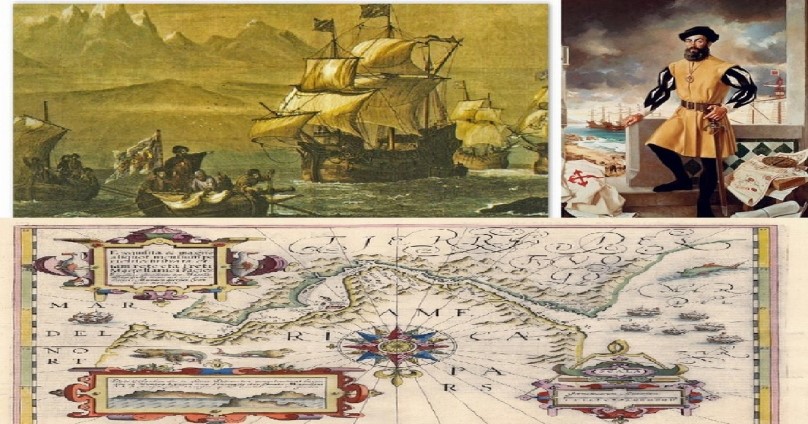
Пройдя десятки миль на юг корабли Молуккской Армады попали в тяжелый шторм. В тех местах погиб их корабль «Сантьяго» и Магеллан последовал совету капитана Серрано, увел флот по глубоководной реке Санта Крус, как можно дальше от свирепствовавшего океана. Как оказалось, зима еще не кончилась. В реке была рыба, в лесах зверьё и они решили там дождаться лета. За шесть недель они пополнили запасы мяса, заготовили вяленой рыбы и Магеллан снова вывел корабли в океан. Это был день 18 октября 1520 года, католический праздник Святой Урсулы, когда за очередным мысом взорам моряков открылся широкий залив, уходящий за горизонт.
Тот мыс Магеллан назвал Мысом Одиннадцати Тысяч Девственниц. Воды залива оказались глубокими и чистыми и корабли продолжили движение вглубь. Вскоре залив стал сужаться, они встретили встречное течение с запада. Скалистые берега казались безжизненными, их склоны были покрыты льдом и редким кустарником. Мокрые отметки на скалах показывали пугающую цифру колебаний прилива в 7 метров, глубина под килем была бездонной. В накрывшей их темноте корабли двигались с минимумом парусов, матросы на палубах освещали путь факелами, готовые в любой момент столкнуться с опасностью.
С рассветом они оказались в огромной, шириной в несколько миль лагуне, в которой были острова. У берегов одного из них корабли встали на якорь, для короткого отдыха. Навигаторы и астрономы вычерчивали карту, стараясь наносить на неё все, что видели их глаза. Флотилия продолжила движение на запад и вскоре лагуна закончилась еще одним сужением, в котором вода оказалась такой ледяной, что упавший за борт не прожил бы в ней долго. Со скалистых ледников сползали или срывались глыбы льда. Одна такая глыба, упади она на палубу, похоронила бы корабль в считанные минуты. Место наполняло души моряков страхом и холодом.
Дни становились длиннее, туманы были такими густыми что их не пробивали лучи солнца. Ночами мгла затягивала небо и было невозможно определить координаты по светилу, лишь компас указывал им направление. Иногда небо прояснялось и видя в разрывах туч горящее над головой созвездие Южного Креста, Магеллан принимал его за благословение Высшего Божества.
Они снова оказались в широкой лагуне. По правому борту тянулись заснеженные вершины гор. Ночью на левом берегу моряки увидели много огней, которые они поначалу приняли за костры аборигенов. Но днем местность была совершенно безлюдной, это оказались огни лесных пожаров, зажженных молниями. Магеллан назвал те места Огненной Землей. Пролив уходил на юго-запад и в том направлении корабли шли еще несколько дней, останавливаясь на ночь в укромных бухтах, которых вдоль берега к счастью оказалось множество. Вскоре перед ними открылось раздвоение пролива, два водных рукава уходили за горизонт. Не зная какой из них верный, Магеллан отправил на разведку корабль «Сан Антонио», которым командовал его кузен Альваро де Мескита. Остальные корабли остались ждать, на якорях.
Два дня прошли в ожидании и налетевший штормовой ветер вынудил их искать убежище. Корабли укрылись в бухте, названной ими Ломас Бэй, но разбушевавшаяся стихия грозила выбросить их на скалы, пришлось уходить назад в лагуну, подальше от берега, ставшего опасным. Сплошной дождь закрыл горизонт и ветер выл в снастях, забрасывая корабли ледяной пеной. Они ждали возвращения «Сан Антонио», но дни шли, а их товарищи не возвращались. Все думали что корабль погиб. Но он не погиб. Он был похищен.
Перед тем, как послать «Сан Антонио» в разведку, Магеллан созвал капитанов на совет. В экипаже каждого корабля был пилот-навигатор, деливший с капитаном вахты, работавший с картами и инструментами для вычисления координат, определения места корабля. Эти помощники всегда присутствовали на совете, но без права голоса. Пилотом «Сан Антонио» был португалец Эштеван Гомеш, профессиональные качества которого сам Магеллан оценивал выше других.
В 1517 году Гомеш уехал из Португалии в Испанию, одновременно с Магелланом. Он был капитаном у себя на родине и получив испанскую лицензию, стал пилотом в экспедиции Магеллана. Опытный навигатор, он ревниво ценил свой опыт, не довольствуясь позицией пилота. Но на испанском корабле капитаном мог быть только испанец. Португалец мог рассчитывать лишь на место помощника. Магеллан в этом оказался исключением, ибо ни один испанский мореплаватель не предложил своему королю то, что предложил ему португальский моряк.
На совете амбициозный Гомеш высказал свое мнение. Он предлагал вернуться в Испанию и переоснастить экспедицию. Он убеждал, говоря что главная задача экспедиции была достигнута, они нашли пролив. Но в ходе поисков пролива корабли и экипажи флотилии претерпели такие лишения, что предстоящее путешествие в неизвестный океан, со скудными запасами провианта, на протекавших кораблях было неоправданной авантюрой. Безусловно, в его аргументах звучал здравый смысл. Его позицию разделяли другие моряки. Но все помнили недавнюю расправу адмирала с мятежниками, поэтому молчали.
Решение осталось за тем, у кого была власть. Магеллан закрыл совет, сказав что будет продолжать поход, даже если морякам придется жевать кожу своих ремней и сапог. Они не знали того, что знал их адмирал. Магеллан помнил козни могущественного Фонсеки. Он понимал что если они вернутся епископ не промедлит найти способ расправиться с ним за смерть своего фаворита Хуана Картахены. И в этом случае о повторной экспедиции Магеллану пришлось бы забыть.
На отправленном в разведку корабле «Сан Антонио» случилось вот что. Большинство моряков были за возвращение и в команде зрело недовольство. Вспыхнула ссора между капитаном Мескита и пилотом Гомешом. Кончилось поножовщиной, раненый капитан стал пленником, а раненый Гомеш, воспользовавшись штормом и густым дождем, увел «Сан Антонио» незамеченным из пролива в Атлантику. Они бежали назад, в Испанию. На борту «Сан Антонио» находились основные запасы провианта. Теперь они были утеряны.
Шторм наконец утих, Магеллан отправил на разведку бот. Вернувшись через трое суток, разведчики сообщили что обнаружили впереди огромное водное пространство.
Под командованием адмирала оставались три корабля. После всего что случилось, Магеллан понимал, что по возвращению ему придется держать ответ перед своим королем за потерянные корабли, доказывать правоту своих действий в подавлении мятежа, оправдываться, чтобы не впасть в немилость. Магеллану были нужны письменные доказательства его преданности монарху. Он также осознавал, что корни мятежа не выкорчеваны и теперь они давали новые ростки. Кораблем «Консепсьон» командовал преданный ему Хуан Серрано, но капитан третьего корабля «Виктория», Дуарте Барбоса, не внушал доверия; на последнем совете своим молчанием он явно поддерживал позицию изменника Гомеша.
Перед тем как продолжить экспедицию, Магеллан снова созвал капитанов на совет. Он вручил Барбосе и его офицерам ноту:
«..Я, Фердинанд Магеллан, Рыцарь Ордена Сантьяго и Адмирал Молуккской Армады, которую Его Величество Король Испании снарядил и послал на поиски Островов Пряностей, и далее… прочее… Я уведомляю Вас Дуарте Барбоса, капитан корабля «Виктория», а также ваших пилотов и боцманов в том, что я осведомлен о ваших сомнениях в успехе нашей экспедиции…».
Далее адмирал уведомлял капитана «Виктории» о своем абсолютном решении достичь цели похода и ставил ему ультиматум – высказать в письменной форме преданность своему королю и наделенному полномочиями его адмиралу, либо обосновать свои сомнения в достижении цели экспедиции, если таковые имелись. Адмирал напоминал Барбосе о наказании, которое понесли зачинщики мятежа и предупреждал, что сомнения в его адмиральском решении могут быть расценены как измена клятве королю. Свою ноту адмирал заканчивал тем, что его решение о лояльности экипажа «Виктории» будет принято на основании полученных ответов.
Адмиральская нота была датирована 21 ноября 1520 года, написана в Проливе Всех Святых (так его назвал Магеллан), в бухте Рио де Ла Ислета, на 53-м градусе широты.
Само собой разумеется, офицеры «Виктории» в своем ответе выразили адмиралу свое полное повиновение. Возможно они были напуганы жестокостью расправы над зачинщиками мятежа и потому не были искренними. Не верил в их искренность и сам Магеллан.
Откровенный, искренний и смелый ответ адмирал получил от главного астронома Армады Андреаса де Сан Мартина. В те времена наука кораблевождения основывалась на предсказаниях астрономов и веру в Божий Промысел. Практическая навигация была вторичной и опиралась на карты и лоции уже исследованных берегов. Перед кораблями Магеллана лежали абсолютно неизведанные воды, никто из моряков не знал, что их ждет впереди. Поэтому Главный Астроном Армады был личностью с абсолютным авторитетом. Как доверяются умелой гадалке предсказывающей судьбу по картам, так вверяли свои жизни корабельному астроному, предсказывавшему курс по звездам.
В те века, в монарших домах всех государств, придворный звездочет, как никто другой, имел возможность смело выразить свое мнение в предсказании тех или иных событий, без опасения впасть в немилость, даже если события имели иной конец. Все неведомое страшит, потому религиозным монархам, умевший читать их судьбу по звездам, внушал трепет. Для многих такой провидец был как бы наделен потусторонней магией Высшего Существа. Религиозный Магеллан безусловно учитывал предсказания Главного Астронома в своих расчетах и почитал его.
Вот как Главный Астроном флотилии ответил своему Адмиралу:
«…Основываясь на Вашем желании знать мое видение судьбы нашего Предприятия, продолжить ли его или повернуть назад, я позволю себе выразить свое мнение, что поиск выхода из пролива, в котором мы оказались Провидением Божьим и Вашими усилиями, а также поиск путей к Молуккским островам может быть продолжен, но лишь до того времени, когда дни будут становиться короче и это случится после месяца Января, когда стихия снова преградит нам путь штормами. Вы знаете лучше меня, мой Адмирал, что экипажи наших кораблей истощены и запасы еды недостаточны для восстановления сил больных моряков. Вам известно и то, что вверенные Вам корабли потеряли много оснастки и их мореходность значительно утрачена. Потому Вы может быть сочтете оставить эти места до наступления зимы и вернуться в них после пополнения запасов в Кадисе или в Санлукар де Баррамеда, откуда мы пришли..».
Далее астроном советовал Магеллану не продолжать движение ночами, давать морякам несколько часов для сна, чтобы они могли восстановить силы. Признавая авторитет Адмирала и выказывая ему свое абсолютное почтение, Астроном просил Всевышнего указать Адмиралу путь к решению.
В своем ответе астроном Андреас де Сан Мартин выразил желание большинства. Впереди их ждали большие опасности, шансы на успех были ничтожны.
Конечно, Магеллан почитал своего главного астронома и считался с его мнением. Но он больше верил в себя и в то, что Всевышний укажет ему путь к островам, как указал Он ему пролив. Магеллан был одержим достижением цели и это было той одержимостью, без которой ничего гениального в мире никогда не происходило и не происходит! Он приказал своим капитанам с рассветом сниматься с якорей. Всю ночь ветер выл в снастях и казалось что это выли все Одиннадцать Тысяч Девственниц, прощаясь со своим Адмиралом.
Днями моряки были заняты рыбной ловлей, охотой на моржей и пингвинов, пополняя запасы еды. Им попадались малые острова, на них была редкая растительность и морякам удалось собрать какое-то количество корневых клубней, очень кислых на вкус. Если бы они знали что эти кислые корни растений спасут их жизни, то набили бы ими трюмы своих кораблей! Но о волшебных свойствах тех растений люди узнали лишь через сотни лет…
Шли дни, пролив перед ними расступался, небо становилось чище и в нем стали появляться морские птицы. Магеллан уже не спал. Он все время находился на палубе, ждал. Это была среда 28 ноября 1520 года. Обогнув очередной мыс, корабли оказались на водной глади и марсовый с мачты закричал, что видит простор, без берегов. Это был последний мыс, за которым открывались безбрежные воды неизвестного океана.
Моряки не могли поверить в случившееся, они впервые видели улыбку на истощенном лице своего Адмирала. Да, их суровый Адмирал улыбался. Свершилось! Триста миль пролива были пройдены за тридцать восемь дней и ночей. Моряки упали на колени в молитве. Тот мыс Магеллан назвал Желанным. В бухте якоря полетели в воду. Получив вино и полный рацион мяса они праздновали событие целую неделю.
КОНЕЦ ПЕРВОЙ ЧАСТИ.
Excellent write-up
Excellent write-up
I was studying some of your articles on this website and I conceive this internet site is rattling and informative! Keep posting.
Aw, this was a very good post. Taking the time and actual effort to make a top notch article… but what can I say… I put things off a whole lot and don’t manage to get nearly anything done.
You need to be a part of a contest for one of the highest quality sites on the internet. I am going to recommend this website!
Good post. I learn something new and challenging on blogs I stumbleupon every day. It’s always useful to read content from other authors and use something from their web sites.
Excellent blog you’ve got here.. It’s difficult to find good quality writing like yours nowadays. I truly appreciate individuals like you! Take care!!
I wanted to thank you for this great read!! I absolutely loved every bit of it. I’ve got you saved as a favorite to check out new things you post…
Saved as a favorite, I really like your blog.
Hello there! This blog post could not be written much better! Many thanks for sharing!
Howdy! I could have sworn I’ve visited this web site before but after browsing through some of the posts I realized it’s new to me. Regardless, I’m definitely happy I found it and I’ll be book-marking it and checking back regularly.
Hi! I just would like to give you a huge thumbs up for your great information you have here on this post. I am returning to your web site for more soon.
I used to be able to find good info from your blog posts.
bookmarked!!, I really like your blog!
It’s nearly impossible to find experienced people in this particular topic, but you seem like you know what you’re talking about! Thanks
Good post. I learn something totally new and challenging on blogs I stumbleupon everyday. It’s always exciting to read content from other writers and practice something from other sites.
Great info. Lucky me I recently found your site by accident (stumbleupon). I’ve saved as a favorite for later.
bookmarked!!, I like your web site.
Good day! I just want to give you a huge thumbs up for your great info you’ve got right here on this post. I am coming back to your site for more soon.
I was extremely pleased to uncover this page. I want to to thank you for ones time for this particularly fantastic read!! I definitely enjoyed every little bit of it and i also have you book marked to look at new information on your blog.
Way cool! Some very valid points! I appreciate you writing this write-up plus the rest of the website is really good.
Hi there! This post could not be written much better! Going through this post reminds me of my previous roommate! He constantly kept preaching about this. I’ll forward this article to him. Pretty sure he’ll have a great read. Many thanks for sharing!
I blog often and I truly appreciate your information. This article has truly peaked my interest. I am going to book mark your blog and keep checking for new information about once a week. I opted in for your Feed too.
That is a really good tip particularly to those new to the blogosphere. Brief but very accurate information… Appreciate your sharing this one. A must read post!
This is a topic which is close to my heart… Many thanks! Exactly where are your contact details though?
Hello there! This blog post could not be written any better! I appreciate you for sharing!
Having read this I believed it was very informative. I appreciate you taking the time and energy to put this article together. I once again find myself personally spending way too much time both reading and leaving comments. But so what, it was still worth it!
Everything is very open with a very clear explanation of the issues. It was truly informative. Your site is very useful. Thank you for sharing.
Everything is very open with a very clear description of the issues. It was truly informative. Your site is useful. Thanks for sharing.
Everything is very open with a precise description of the issues. It was definitely informative. Your site is extremely helpful. Thanks for sharing!
After going over a handful of the blog articles on your site, I honestly like your way of blogging. I bookmarked it to my bookmark webpage list and will be checking back soon.
After reviewing several articles on your website, I like your blog-writing technique. I have saved your website to my bookmarks and will be checking back soon.
Good write-up. I absolutely love this site. Stick with it!
I’m very pleased to discover this great site. I need to to thank you for ones time due to this wonderful read!! I definitely savored every bit of it and I have you book marked to see new things on your website.
An interesting discussion is worth comment. I think that you should publish more on this topic, it might not be a taboo matter but usually folks don’t speak about such issues. To the next! Many thanks.
You’re so cool! I don’t suppose I’ve truly read a single thing like this before. So nice to find another person with some unique thoughts on this subject matter. Seriously.. thanks for starting this up. This site is something that is needed on the internet, someone with a little originality.
Hello! I simply wish to give you a huge thumbs up for your great information you’ve got here on this post. I’ll be coming back to your site for more soon.
I needed to thank you for this good read!! I absolutely loved every bit of it. I have got you saved as a favorite to check out new stuff you post…
After looking at a number of the blog articles on your site, I honestly appreciate your technique of blogging. I added it to my bookmark webpage list and will be checking back soon. Please check out my web site as well and tell me your opinion.
Having read this I believed it was rather informative. I appreciate you taking the time and energy to put this content together. I once again find myself spending a lot of time both reading and commenting. But so what, it was still worthwhile.
I was excited to find this page. I want to thank you for ones time just for this fantastic read!! I definitely enjoyed every little bit of it and I also have you bookmarked to see new stuff on your blog.
I’m impressed, I have to admit. Rarely do I encounter a blog that’s both equally educative and interesting, and let me tell you, you have hit the nail on the head. The problem is something that too few people are speaking intelligently about. I am very happy I found this in my search for something concerning this.
This website was… how do you say it? Relevant!! Finally I have found something which helped me. Many thanks!
Good post! We will be linking to this particularly great post on our website. Keep up the good writing.
I needed to thank you for this good read!! I absolutely enjoyed every bit of it. I have you book marked to check out new things you post…
You should be a part of a contest for one of the finest websites on the web. I most certainly will recommend this website!
Great information. Lucky me I found your blog by chance (stumbleupon). I have book marked it for later.
I blog frequently and I really appreciate your information. This article has really peaked my interest. I will take a note of your website and keep checking for new information about once per week. I subscribed to your Feed too.
Good day! I could have sworn I’ve visited this website before but after looking at many of the articles I realized it’s new to me. Anyhow, I’m certainly happy I stumbled upon it and I’ll be book-marking it and checking back often.
You are so interesting! I do not think I’ve read through something like this before. So good to find somebody with some original thoughts on this subject. Really.. thanks for starting this up. This site is something that is required on the internet, someone with some originality.
I’m impressed, I have to admit. Rarely do I encounter a blog that’s both equally educative and amusing, and without a doubt, you have hit the nail on the head. The issue is something that not enough people are speaking intelligently about. I’m very happy I stumbled across this in my hunt for something relating to this.
Way cool! Some extremely valid points! I appreciate you writing this article plus the rest of the website is extremely good.
I blog quite often and I really thank you for your content. The article has truly peaked my interest. I will take a note of your site and keep checking for new information about once a week. I opted in for your RSS feed as well.
Hey there! I simply wish to offer you a big thumbs up for your great information you’ve got here on this post. I am returning to your web site for more soon.
I’m more than happy to discover this page. I need to to thank you for your time for this wonderful read!! I definitely enjoyed every part of it and i also have you book-marked to look at new stuff on your website.
Hello there! This article couldn’t be written any better! Thanks for sharing!
Pretty! This has been an incredibly wonderful post. Thank you for supplying this info.
I quite like reading through a post that will make people think. Also, many thanks for allowing for me to comment.
You ought to take part in a contest for one of the greatest websites online. I’m going to highly recommend this web site!