In January 1671, two thousand pirates and buccaneers led by the legendary privateer Henry Morgan plundered Panama City. After looting the city, they returned to their ships with their spoils. During the raid, the pirates freed four thousand slaves, some of whom chose to join them. Many of the freed slaves travelled to the Yucatán Peninsula, where there was a high demand for lumberjacks at that time. Armed with an axe, they could earn a living without risking their lives. During their long journey north, they had to hide from Spanish persecution and escape wild animals and poisonous snakes. We can only imagine what that time was like by reading old books.
My library contains books written by pirates. And the family legends of their descendants living in a Caribbean paradise inspired me to write a series of stories that you might enjoy. So, make yourself comfortable in your chair with a glass of your favorite punch. I will tell you one story.
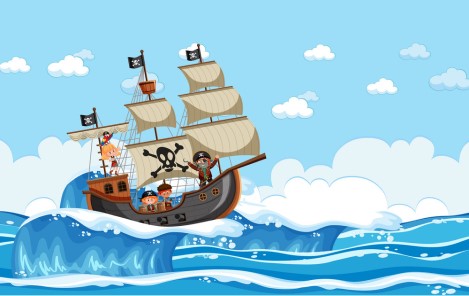
A pirate schooner at sea was in search of prey. Beyond a long reef stretching along the shore lay a lagoon, and forested mountains on the horizon. The pirates spotted sandy coves nestled amongst the mangroves, with birds circling the coconut palms above. Where there are birds, there is fresh water, fish, and animals to hunt! Their ship slipped through a narrow passage between the reefs, and soon the sails were lowered and the anchor was thrown into the water. A dinghy carrying a dozen sailors was sent ashore. Among them was a man with such a long African name that he was nicknamed ‘Lazy’ because he was incredibly lazy. He was so lazy that even the ship’s rat would steal food from his bowl without fear of being kicked. Despite this, the pirates kept him aboard because he was strong. ‘Lazy’ quickly became accustomed to his nickname and was responding to it.
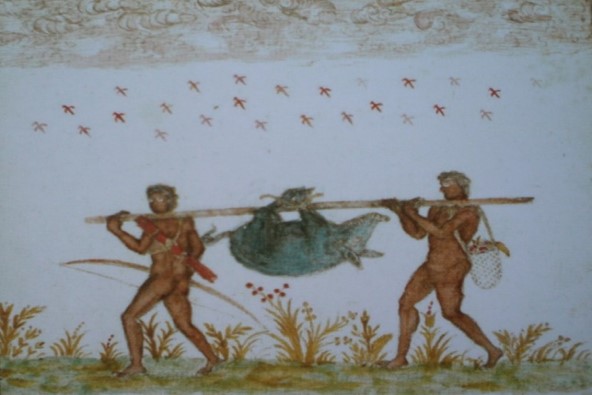
They spent the whole day hunting wild boar and pigeons. At the sunset, they were returning to the boat, tired and laden with their catch and water kegs. ‘Lazy’ lagged behind and stopped to rest in the shade of a tree. There, he fell asleep. He awoke in the darkness of the tropical night and ran ashore. However, he could not find the boat, and when the sun came up, it was nowhere to be seen. Perhaps his comrades thought he had been eaten by the crocodiles in the river from which they had been drawing water. They forgot about the poor fellow and moved on to new adventures.
What did Providence have in store for our ‘pirate’? Hoping that his legs would lead him somewhere, he walked along the shore day and night. He took shelter from the sun in coastal thickets, rushed from the mosquitoes and ate whatever he could find.
One day, a local fisherman found an emaciated stranger and brought him to the village. The villagers gave him food and a place to sleep. When they offered him more, he fell on his knees and thanked God for making him lazy, for it had saved him from a life of piracy from which there was no escape. Expressing his gratitude, he exclaimed: “Lord, what a blessing it is that you allowed me to be born lazy! I am happy to be lazy!
Word of this spread throughout the neighborhood, and the next day the local children saw the new man and ran after him, shouting, “Belazy! Belazy! They teased him, made faces and laughed. With tears of happiness on his cheeks, Sloth smiled at the children and rejoiced at the sun and his new life.
Soon he married a local woman and was so prolific that the village began to fill with chocolate and curly-haired boys and girls. And when the locals saw another curly-haired baby taking its first steps, they laughed: ‘Look, another “Belazy”…’.
Hundreds of slaves from Panama, rescued by Morgan’s pirates who were on their way to the Yucatán, also ended up on this land. They found many fruit trees around and the sea teeming with fish. A coral reef protected them from the Spanish ships hunting for runaway slaves. So they decided to settle here. And thanks to the Belazy, soon all the inhabitants of this region were called ‘Belazians’. This becomes evident when we consider the racial diversity of this small country, whose inhabitants differ from those of neighboring Mexico, Guatemala and Honduras.
WHO GAVE THE COUNTRY ITS NAME?
Centuries have passed and new generations have been born. Time changes everything, and a country’s history lives on in the stories and folklore of its people, regardless of the accounts recorded by conquerors and colonists. The history of the small country hidden behind the long Caribbean reef is shrouded in mystery. Nobody knows where the name ‘Belize’ comes from. There are several theories, but none of them have been proven. Here are a few:
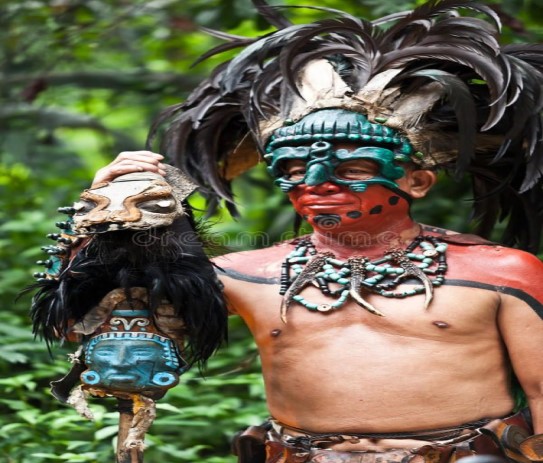
-The earliest records of the settlement were found in a diary written in 1677 by a Dominican priest named José Delgado. As the Mayans were the area’s original inhabitants, some believe that the name comes from the Mayan word ‘balix’, meaning ‘muddy waters’, in reference to the region’s rivers and swamps.
-According to the Encyclopedia Britannica, the name was given by the Scottish buccaneer Captain Peter Wallace. He established the settlement around 1638, and it is said that he or his followers changed the spelling from ‘Vallis’ to ‘Balize’ by dropping the ‘V’.
-The Belize Archives & Records Service has reported that the name originates from a document donated by Stephen Fairweather which came from a book. However, the name of the book, its author and the creator of the image remain unknown.
-Photocopied records from Spanish archives refer to the settlement as ‘Wallix’.
In summary, this is how the country of Belize got its name:
- Balis (1677)
- Bullis (1705)
- Bellefe (1720)
- Valis (1724)
- Valiz (1780)
- Walis (1785)
- Wallix (1790)
- Belize (1790)
(References: Belize Archives & Record Services; Encyclopedia Britannica 12th ed. NY; The Britannica Publishing Company 1892; Twigg, Alan (2006); Understanding Belize: A Historical Guide; Madeira Park, BC: Harbor Publishing.
*** - Dear readers, I mention these sources above to demonstrate how we can learn about the history of any country by consulting reputable publications. I will use the history of this 350-year-old country to illustrate how historians and politicians can overlook historical facts.
I will give you A-B-C, a knowledge of proven facts:
A) During his raid on Panama in January 1671, Henry Morgan freed four thousand African slaves. Most of them chose to travel to Yucatán, where there was a high demand for lumberjacks at the time. En route, they encountered all sorts of dangers and were harassed by the Spanish, who were hunting down escaped slaves. However, before reaching Yucatán, they found a place where they could hide. There were no Spanish soldiers around, and there was plenty of fish in the sea and fruit in the trees. Feeling safe, the refugees decided to settle there. The indigenous Maya were already living there, farming and fishing. They called their area ‘Baios’. There were many swamps and mosquitoes, especially during the rainy season. Some maps labelled this area the ‘Mosquito Coast’.
B) According to officials, “… the earliest records of the settlement were found in a 1677 diary of a Dominican priest, Jose Delgado…”. So that priest traveled to this area and asked the local Mayans what the name of their land was. And their answer to him was “BAIOS”, which means “boggy lowland” (or marshy lowland). This name is closest to the one that priest recorded as “BALIS” in 1677. The priest was Spanish, and he simply wrote it down as his Spanish ears heard it.
To those ‘historians’ who have seven (!) versions of the transformed name of the country in the official record, all without a single proof other than guesses… I would suggest them to find a Mayan village and ask the elders about it.
And the story offered by the Encyclopedia Britannica about the Scottish buccaneer Wallas and how his name became the name of the country is just another joke…
C) And why did the people freed by Henry Morgan on their way from Panama to Yucatan decide to settle here and not in Guatemala or Mexico? The answer was given by Mother Nature: they settled in the swampy areas of Baios because the coral reef protected them from the Spaniards’ navy ships chasing escaped slaves. And there is no reef in the waters of Guatemala or Mexico…
Now, reader, you know all A-B-C life-proven facts, that are ignored by those who call themselves historians. In my personal opinion, this country deserves the name “Morgana” in honor of the English privateer who gave freedom to the people who settled on this land. Because this name is linked to real history, unlike the myths invented by pseudo-historians.
AFTER WORK.
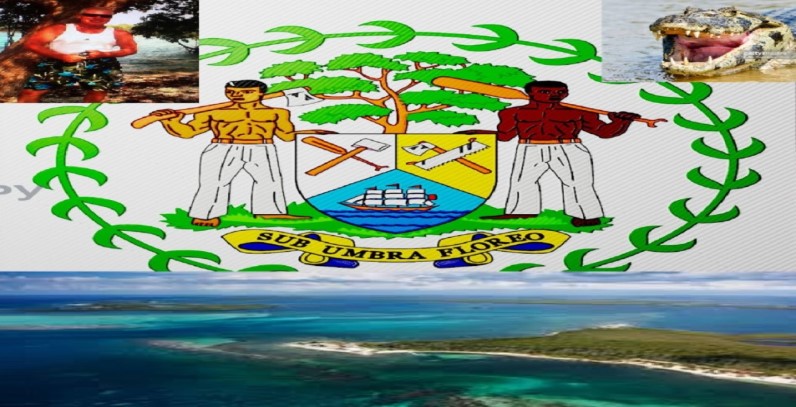
Would you like to see an image of a man who found his piece of heaven on earth? Take a look at the Belizean coat of arms.
You will see our Belazy alongside his saviour, a Mayan fisherman who is one of the land’s original inhabitants. Behind them stands a huge tree under which our hero fell asleep to escape the vicissitudes of pirate life. There is also a logger’s tool.
Below that is a pirate ship that carried our hero to this blessed land. A red flag flies from the stern mast of the ship. In those days, the red flag (the colour of blood) was a pirate flag. Beneath that is the Latin inscription ‘Sub Umbra Floreo’, meaning ‘In the shade, I rest’.
This phrase became the national motto and reflects an event that once saved our hero from the dangers of pirate life. He fell asleep in the shade and woke up to a new life! It’s a unique example of how laziness can lead to happiness!
Are you trying to set up a business in Belize, but finding that your calls and letters are going unanswered? Have you been waiting for months for certificates and permits? If so, you’ve come to the right place! You should know that your documents have fallen into the hands of a local Belazy!
He specialises in laziness. In fact, his business called ‘Beliznes’! And he is probably resting in the shade of a palm tree, just as his ancestor did. Sub Umbra Floreo!
But wait! Don’t be too quick to accuse him of laziness. Remember, this officer is looking after you! If he had acted more promptly, like his counterparts in more advanced countries, this Caribbean paradise would have been overrun long ago, and someone else would have taken your place under the palm tree.
So don’t be nervous. Turn off your computer — or better still, throw it in the sea! Follow the example of Belize’s laid-back locals! Just lie down in a hammock under a palm tree, enjoy the caress of the sea breeze and sip a cocktail.
Everything in this world is temporary. But in this earthly paradise, worldly vanity is useless. Doesn’t it?
As the ancients said, all things pass and disappear. Your problems will pass with time. But what about the paperwork? It will come to you one day — or perhaps the day after.
Everything passes and disappears, as the ancients said. Your problems will pass with time. But what about the paperwork? It will come to you one day — or perhaps the day after.
© Copyright: Walter Maria. Certificate of Publication No. 214061800068
Very interesting information! Perfect!
Thanks for sharing. I read many of your blog posts, cool, your blog is very good.