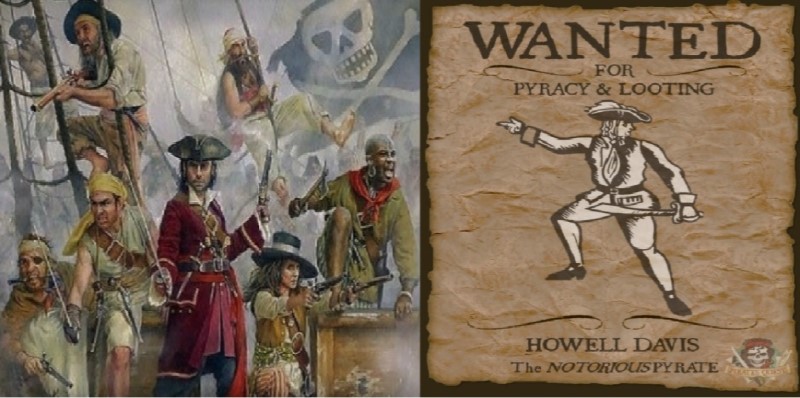
In spring 1718, the two-masted Bristol brig ‘Cadogan’, commanded by Captain Skinner, was loading slaves at Port Gambia on the coast of Sierra Leone. Eighteen-year-old Howell Davis was Skinner’s first mate. While the ship was preparing to sail for the West Indies, it was attacked by pirates just inside the harbor. The captain of the captured brig was ordered to report to the pirate ship with his ship’s papers. There, he was recognized:
‘Ah, Captain Skinner! How I longed to see you!’ the bosun roared. ‘You owe me a debt, and I will collect it from you now!’
Some years ago, the bosun had been a sailor on Skinner’s ship. After an argument, the captain sent some sailors to a warship for disobeying orders and did not pay them. Discipline in the Navy was strict and punishments severe, so troublemakers had a hard time. In the Bahamas, they fled to the pirates. Now, as these fugitives stood before Skinner, reprisals awaited him. The pirates stripped him naked, tied him to a mast and began pelting him with broken wine bottles. They inflicted terrible wounds, competing to see whose shards would penetrate his body the deepest. Having enjoyed this bloody spectacle, the bosun finished off the captain by shooting him in the head.
The pirate captain invited first mate Davis to join the brotherhood. Davis replied that he would rather die. Impressed by his courage, the pirate released him and appointed him as the new captain of the brig, replacing dead Skinner. The pirate handed Davis a sealed envelope, ordering him to open it on the third day.
The brig left port with its cargo of black slaves, and on the third day, the new captain revealed the contents of the envelope to the crew. The document gave Davis ownership of the brig. It also instructed the crew to sail to Brazil, sell the cargo, and divide the proceeds equally among themselves. The prospect of making good money was tempting, and Davis urged the sailors to obey the pirate’s orders. However, the crew resisted, demanding that they continue the voyage to the West Indies instead.
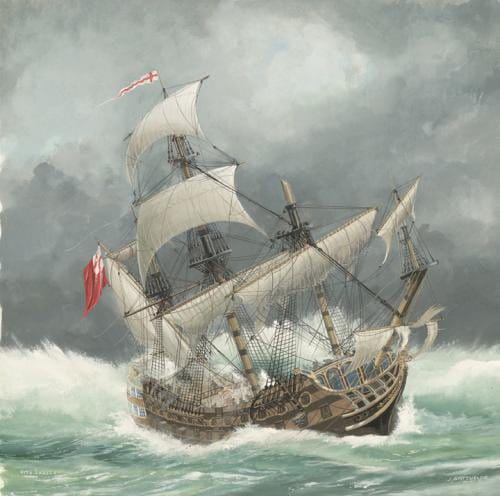
Upon arrival in Barbados, the sailors reported the incident, including the pirate’s offer to Davis, to the authorities. Davis was arrested and spent three months in prison. However, because he had not yet become a pirate, he was able to avoid a harsh sentence. Nevertheless, his career was over. Feeling humiliated, but without losing his ambition and pride, he took a job as an ordinary sailor on a merchant ship bound for Providence Harbor in the Bahamas, a former pirate stronghold. There Governor Woodes Rogers had already dispersed the pirates, and Davis took a job on one of two merchant ships bound for the French island of Martinique, which was still teeming with fortune seekers. Once at sea, he gathered a group of men who had previously been pirates before surrendering to a proclamation from the English king. At Martinique, mutineers captured both ships. The council unanimously elected Davis as captain.
As the youngest pirate captain, Davis decided to impose discipline on the ship by drawing up a set of rules that all his crewmates had to sign. However, some dissented, so he told them to leave. He gave them the second ship, stripped it of anything that could be used. In his declaration, the pirate declared war on the world. Such is the ambition of a proud man!
Accompanied by three dozen men, he sailed the brig to Española Island. There, they captured a French ship armed with twelve guns. While searching the ship, they spotted another vessel on the horizon. The captured French captain informed Davis that it was most likely the 24-gun ship with a crew of 60 that the they had encountered the previous day. The captives probably hoped that this information would scare the pirates away. However, despite the unequal odds, Davis offered to attack that ship. He proposed a plan that had just occurred to him to his crew.
He left half of his men on the captured ship and forced the French crew to work on the sails. They pursued another target, but the captured ship was slow and fell behind. Once they had caught up with their intended target, Davis raised the pirate flag and ordered the French crew to surrender.
However, after counting fewer than twenty crew members on the deck of the pursuing ship and seeing that the pirate ship’s armament was much weaker than their own, the French crew laughed and suggested that the pirates surrender instead. Davis responded by threatening to blow the French ship to pieces with thirty cannons of his second ship, which could be seen on the horizon. He accompanied his ultimatum with a volley of gunfire.
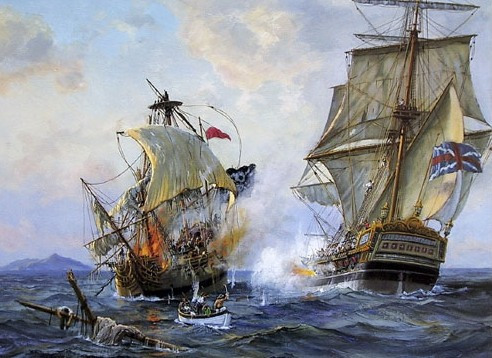
As the French returned fire and attempted to escape, the second ship arrived. At Davis’s order, the ship was under the pirates’ Jolly Roger with all the prisoners onto the deck, ostensibly to demonstrate their superior numbers. This was Davis’s bluff. A cannon was fired from the approaching ship, and the two vessels seized the French ship in a pincer movement. Overwhelmed by the pirates’ aggression, the French surrendered. Davis ordered the captain of the captured ship to come aboard with the cargo documents. Those who arrived with the captain in the dinghy were immediately locked in the hold. Davis declared them to be hostages and led the three ships out to sea.
During the two-day voyage, Davis found that the captured ships were too sluggish to manoeuvre and too slow for his purposes. After taking their valuables, supplies, and weapons, he returned the ships to their captors and set them free. Some of the French crew admired the pirates’ tactics and said they wanted to stay with them. Their captain, unable to bear the disgrace, attempted to throw himself overboard, but was restrained. Davis has been called the master of the pirate trick ever since. He decided that it was better to rob settlements on land than chase ships at sea. So he sailed his brig to the African coast.
En route, the pirates captured a Spanish two-masted brigantine, thereby doubling the size of their fleet and crew. In January 1719, they appeared off the coast of Cape Verde, the main port of the Portuguese island colony. Davis introduced himself to the governor as an English privateer and pirate hunter. His crew were warmly welcomed and permitted to sell their goods. The pirates were so pleased with the easy money, safe anchorage, and the hospitality of the local women that some of them escaped. Fearing that the fugitives would talk and expose his activities to the authorities, Davis raised the sails and left the harbour at the first sign of wind. Within a few weeks, they had robbed several merchant vessels and captured a large, fast frigate. Davis fitted this with 26 guns, made it his flagship, and named it the ‘King James’. He now had three ships with their holds filled with goods and a hundred cutthroats under his command.
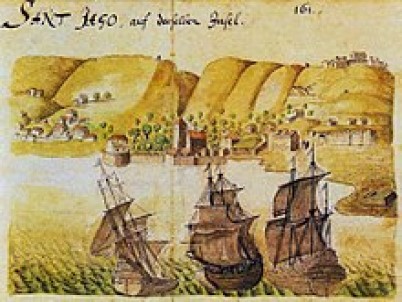
At the end of February, their pirate fleet entered a port in Sierra Leone to take on water and provisions. Davis introduced himself as an English privateer, but the governor did not believe him. He whispered to the head of the garrison, instructing him to be on alert. Seeing the suspicious looks on the guards’ faces, the pirates sensed trouble and their ‘diplomats’ left. At midnight, the pirates attacked the fort. However, the entire local population had been alerted, and a gunfight ensued. Leaving two dozen comrades dead on the shore, the pirates fled to their ships and escaped from the harbor.
They spent several months at sea, teaming up with the French pirate Le Vass. Together they captured six ships carrying goods. After dividing the booty, the pirates scattered. The loot sold well in the coastal settlements, and Davis continued to be lucky. In May, he captured two slave ships off the Ivory Coast. One of them was so well liked by the pirates that Davis included it in his fleet and named it the Royal Hunter.
He planned to raid a fort in the port of Gambia on the coast of Guinea. Having started his career on a ship carrying slaves from Africa to the Americas, Davis knew the area well. The port had a large slave market, and the fort’s treasury was always full of silver and gold. However, his crew knew that the fort was armed with cannons and had a large army of soldiers. None of them wanted to risk their lives. So Davis devised a plan to capture the fort by stealth. This plan appealed to everyone. They sank two of their worn out ships, leaving only the reliable ones.
They reached their destination in June 1719. Davis left one ship in a secluded cove nearby. The pirates hid cannons on the second ship to give the impression that it was a peaceful merchant ship. All but a few sailors, who were left on deck to manage the sails, were ordered to hide in the hold. The ship entered the harbor. The authorities did not suspect the strangers and allowed them to anchor. The captain, dressed in a gentleman’s camisole, went ashore in a dinghy with an assistant, a doctor and six oarsmen, all wearing English naval jackets. Once ashore, the delegation was taken to the fort to meet the governor. Having satisfied the governor’s curiosity, Davies informed him that their ship had come from Liverpool and that they were on their way to Senegal to exchange goods for elephant tusks. On the way, however, they encountered French pirates and miraculously escaped by fleeing to Gambia, where they hoped to sell or exchange their goods. Davis said that the hold of his ship was full of roofing iron, which was the most sought-after commodity in the colonies at the time. The interested governor naturally agreed to the exchange and invited the delegation to dinner. He asked if they had any good liquor. Davis replied that he had some excellent Scotch whisky and would bring a case for the meal. With these words the delegation left.
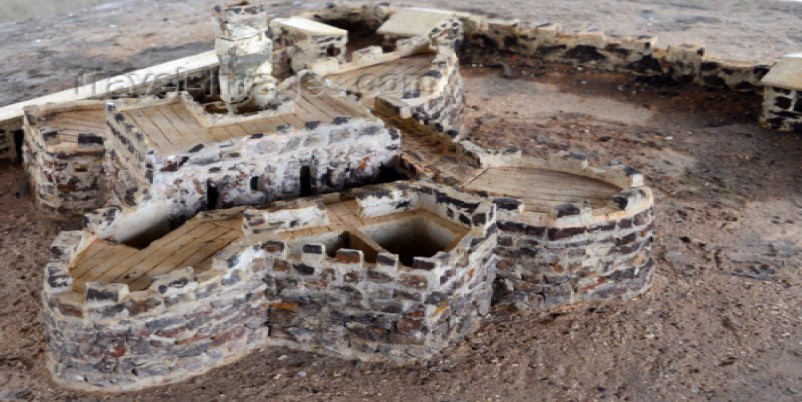
While at the fort, Davis took in every detail, and when he returned to the ship, he drew a map showing the location of the posts and guards. The crew discussed the plan. The captain took twenty men with him, ordering each of them to hide two loaded muskets under their clothes and wait for his signal to fire from the governor’s office window. Those accompanying him were to disarm the guards at this signal, while those remaining on the ship were to start firing on the fort with all the cannons and send men ashore immediately.
Davis returned with a case of whisky. Delighted with the gift, the governor invited his guest to drink punch with him in his office. Meanwhile, the pirates who had arrived with the captain explored the fort with friendly curiosity, talking to the soldiers as they scattered about. At the appointed time, Davis held a musket to the governor’s head and ordered him to surrender the fort. He fired a shot through the window and, at this signal, the ship’s cannons began to fire, sending cannonballs into the fort’s walls. The pirates who had arrived with Davis attacked the guards killing those who resisted. Others were locked in the casemate by the pirates, who threatened to blow it up. The garrison surrendered. However, the pirates then discovered that they were too late; the money had sailed a few days before their attack. They were left with only a few thousand pounds sterling. Enraged, they hauled the cooking utensils onto the ship and left the harbour. Had Davis tortured the governor, he would have revealed that a hundred bags of silver coins were hidden in a secret cellar in the fort. In order to safeguard this cache, the governor was pardoned by his government.
At sea, Davis encountered the French pirates La Bouchet and Coquelin. They plundered together for some time, but when it came to sharing the spoils, greed clouded their judgement. Ultimately, Davis found his companions guilty of fraud. ‘Coquelin and La Bouchet! I offered you my friendship, but you exchanged it for money! I’m leaving you!’
Youth is naïve. What kind of friendship is it when the sparkle of jewels blinds the eyes and the clinking of gold coins deafens the ears…?
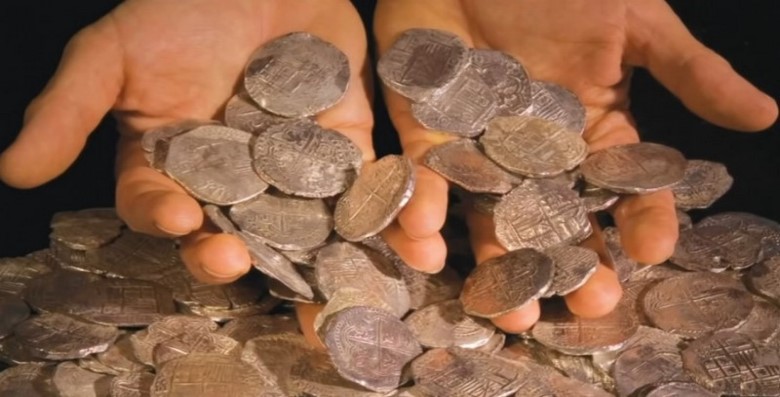
In July, the pirates visited the Portuguese colony of Príncipe in Central Africa. Davis decided to lure the governor onto his ship for dinner, tempting him with fine Portuguese wine and a musical performance. The next step was to take the governor hostage and demand a ransom from the local authorities. Davis had previously done the same thing on another island, receiving a ransom of two thousand gold coins for the governor. However, this time things did not go according to plan.
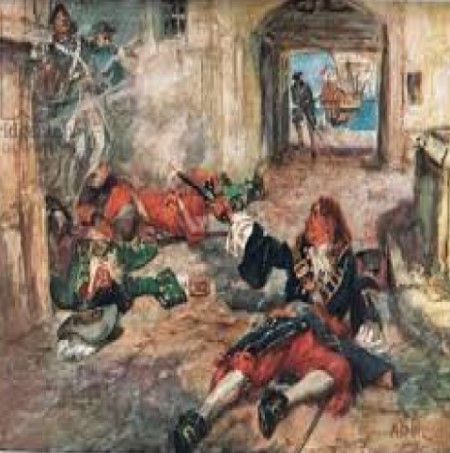
Davis introduced himself to the governor as an English privateer and presented him with a gift as a token of friendship. The guests were received with honors. What Davis did not know was that one of the slaves he had captured had escaped from his ship. This person was familiar the pirates’ language and had overheard everything they had discussed. The officials were now informed of the visitors’ intentions. After a hearty meal, the drunken pirates sang songs as they returned to their ships. The soldiers ambushed them and shot them all. However, one pirate escaped and returned to the ships with the news. The pirates left the harbor. Their revenge was brutal. That’s what our next story is about.
(continued in the story “Black Bart”)
I was examining some of your posts and I think this site is rattling instructive! Keep on posting.
Very interesting details you have observed, thank you for posting.