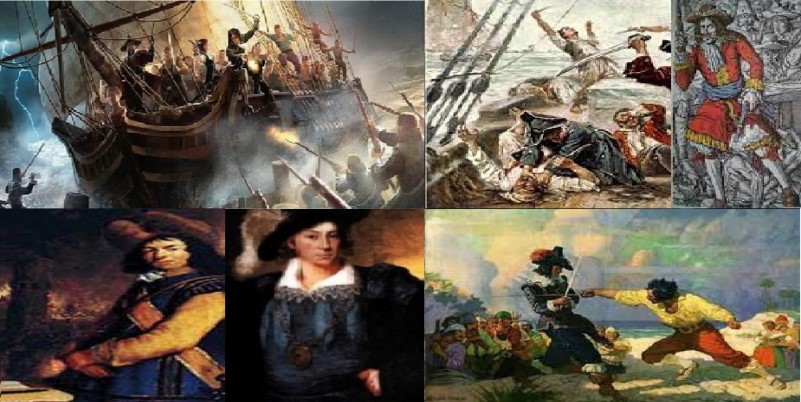
Piracy dates back to ancient times, when people first started using sails on boats. These sea robbers were known as pirates and criminals. However, in the Middle Ages, some monarchs began to employ them. In 1243, for example, King Henry III of England granted his sailors licenses to operate as privateers and seize enemy vessels. This guaranteed the privateers protection from the gallows in exchange for a share of the spoils. During the conquest of the New World, all European monarchs resorted to this kind of partnership. They needed a fleet at home to defend their European territories. So they hired captains and granted them licenses to plunder in the New World. One of the most famous English privateers was Francis Drake, who was knighted and appointed admiral by Queen Elizabeth I in recognition of his exploits. However, when the warring parties made peace, the privateers lost their licenses. Accustomed to easy money, some of them continued to plunder illegally. In other words, they were becoming pirates. The king, who had previously granted his vassal a license to plunder, was now branding him a criminal and ordering his execution.
Pirates were adventurers, and men of fortune valued freedom. No monarchy guaranteed that. Therefore, many were tempted by the forbidden fruit and joined the pirate trade. Soon the monarchs realized that piracy was a growing threat to their crown. Eventually all the kings put aside their differences and declared war on the pirates. But could cannons stop the wind?
Modern writers and historians tend to portray the pirates of this period with sarcasm, seeing them as despicable criminals. Perhaps this is due to the well-established view that all pirates were thieves and criminals. There was certainly some truth in that. However, there was another side of the coin. In the waters of the New World, some pirates were educated sailors and officers from wealthy families, even gentlemen. They had reputations in society, large estates and lots of money in the bank. So why did they throw themselves into adventures, risking their lives, choosing danger and hardship? This story is about such people.
***
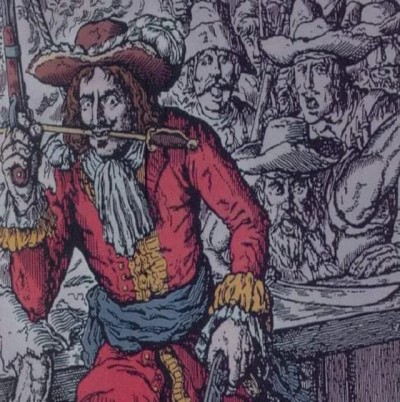
CHEVALIER.
Michel de Grammont’s sixteen-year career was so eventful that his exploits in the New World achieved legendary status. Born in Paris, he was the son of a royal guard officer. Following his father’s death, his mother remarried. His beautiful sister was courted by a guard officer who frequently visited their home. Young Michel watched his sister’s affair with jealous eyes and once advised her admirer to visit less often. When a scandal erupted, the officer became furious and insulted de Grammont.
‘If I were older, my sword would teach you a lesson,’ the young man replied. The affair ended in a duel, which de Grammont won mortally wounded his insulter. In those days, honor was more valuable than gold, and the dying man left part of his fortune to de Grammont in his will. He also admitted that it was his fault and asked that the young man not be punished.
Upon learning of this incident, King Louis XIV ordered the duelist to be sent to a naval cadet school. There, the young Gascon learnt the science of naval navigation and gained a reputation as an excellent fighter and brawler. In the West Indies de Grammont served as a junior officer on a French warship. Skirmishes and the capture of enemy ships were commonplace, and after surviving several such events, the ambitious de Grammont wanted to take on a leadership role.
Taking advantage of borrowed funds, he outfitted an old frigate and set sail, capturing a Dutch merchant ship laden with treasure. He generously divided the booty with the crew, keeping 80,000 francs in silver for himself. This quickly acquired wealth turned the head of the young man. De Grammont spent the money on expensive clothes, parties and gambling. However, his command decided that such behaviour was unworthy of a royal officer. De Grammont was dismissed.
But the young pirate’s adventures had only just begun. They continued on the island of Martinique, where he soon obtained a privateer’s license from the local authorities and became the captain of his own ship. How the disgraced officer came to be among the buccaneers — the first pirates of the Caribbean — remains a mystery. Among his new comrades, the vain de Grammont insisted on being called ‘Chevalier’, a nickname that would soon become recognizable along the coasts of all the Caribbean colonies.
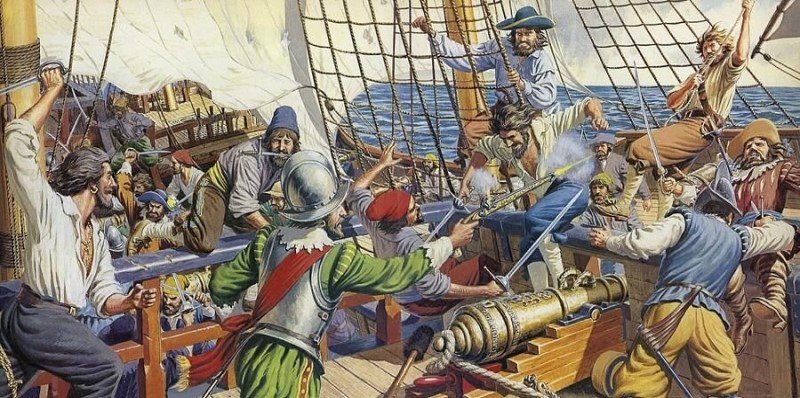
THE RAID ON MARACAIBO.
Meanwhile, the struggle for overseas territories continued in Europe. In 1678, war broke out between France and the Netherlands. In the New World, the French planned a joint naval attack on the Dutch colony of Curaçao. The expedition was led by Admiral d’Estre. De Grammont commanded an army of 1,200 buccaneers from Tortuga and Saint-Domingue (now Haiti).
However, en route to Curaçao, a storm drove several ships from the squadron onto the reefs of Bird Island. The expedition was a failure, and d’Estre sailed back to Martinique with the remains of the fleet. De Grammont, however, decided to plunder the Spanish settlements in the Maracaibo Lagoon instead. The 6 ships fleet and 700 brigands were with him.
They attacked the Spanish fort that guarded the entrance to the lagoon and seized it. However, the settlements were empty. Pirates Olone and Morgan, the leader of the buccaneers, had already looted the area. De Grammont left part of the fleet at the lagoon entrance and sailed three ships south to the town of Trujillo, located ten miles inland. En route, the pirates captured a village whose inhabitants fled in terror.
“Captain, we have a hundred horses and now have meat,” reported the chief of the detachment.
‘We have no meat yet,’ replied Chevalier, staring at him without blinking. ‘Where are you from?’
‘I grew up in Jamaica,‘ the pirate replied proudly.
“I see you are not from Paris,” said Chevalier, smiling as he lit his cigar. ‘And what other wild animals have you encountered besides boars?’
‘The Spaniards, captain! Spaniards!’ – laughed the pirate.
‘These horses must not be touched!‘ De Grammont became serious. ‘Gather everyone who can ride. These horses will help us take the city! The Spaniards are no fools if they could find and conquer these lands. They’re just not trained to fight,‘ he said, puffing on his cigar.
Trujillo was defended by 350 soldiers and a battery of 30 cannons. Pirate cavalry attacked the town in small groups from behind, causing panic among residents. The pirates returned to their ships with rich booty.
By transferring his men onto captured horses, de Grammont created a new type of army, the flying cavalry. Soon such units would appear in the armies of all European powers.
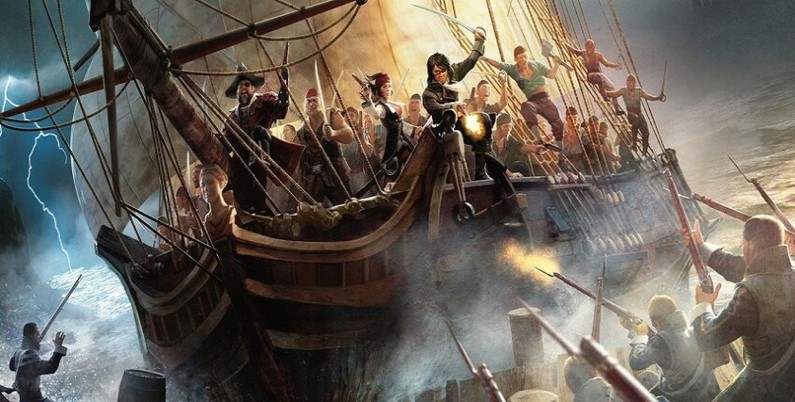
In 1680, de Grammont travelled with 180 pirates to the coast of Cumana. There they attacked Puerto Cavallo, capturing and destroying two forts and seizing all the cannons. They were opposed by an army of two thousand Spanish soldiers and natives. During the battle, de Grammont was severely wounded in the neck, after which the pirates carried off their wounded captain. The pirates fought with such ferocity that the Spanish were forced to retreat. They took 150 prisoners, including the governor of the town, and left the harbor in their ships. While waiting for ransom, they were caught in a hurricane off the coast of Goaiva, their ships were wrecked, the wreckage washed ashore. Among them was the 52-gun flagship that held all of de Grammont’s wealth.
It took Chevalier a long time to recover from his injury. He became quite impoverished. One day, however, his old friend Nicholas van Hoorn visited him and suggested that they should raid a Spanish colony rich in gold. He added that the gold would solve all of Chevalier’s financial problems. De Grammont found the offer so tempting that he expressed his desire to join the expedition as a sailor. He no longer had a fleet.
“My friend,” replied Van Hoorn, “everyone here knows that you are a brave man and an experienced sailor. In addition to all your virtues, you are a nobleman and honour means a great deal to you. I appreciate your qualities and your bravery. I offer you a frigate with three hundred men at your disposal.’
Nicholas Van Hoorn smiled as he puffed on a cigar.
The Mexican port city of Veracruz lay at the heart of his plans. Founded by the conquistador Hernán Cortés, it was a secure fortress equipped with 60 cannons and defended by a garrison of 3,000 men. The nearest ports also had garrisons totalling 15,000 men. Although Veracruz was a promising target, they didn’t have enough men for such a dangerous mission. They needed one more partner.
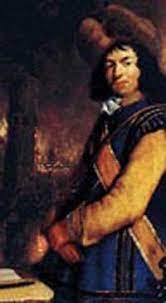
NICHOLAS VAN HOORN.
He was a Dutchman who had started his career in maritime robbery in the Netherlands. He had a fishing license, owned a fishing boat with three dozen armed thugs. They robbed their compatriots as well, which eventually brought them into conflict with the authorities. Before fleeing to France, Van Hoorn bought a load of weapons in Ostende. There he was helped by relatives of his French wife, mademoiselle Leroux. Her father was an agent of the West India Company, and it was probably through his patronage that Van Hoorn was appointed chief commissioner for receiving cargoes in the Spanish port of La Coruña, and was in service of the French king. Looking at the untold treasures delivered from the New World, Van Hoorn remembered his pirate life and applied for a privateer’s license. He crossed the ocean and within a few years had amassed a small fleet. His adventures soon became well known to many.
One day, his audacity nearly proved fatal. Van Hoorn had attacked a French merchant ship. When news of this reached Versailles, the governor of the overseas colony was ordered to arrest the privateer. Admiral d’Estre sent a warship after Van Hoorn. Realizing how things might end for him, Van Hoorn made an attempt to resolve the situation. With a dozen loyal crew members he came on board of warship and made up a story about some of his crew who had supposedly escaped on that French ship. He therefore tried to retrieve them by force. However, the French did not believe him and were intending to take him into custody.
Van Hoorn was furious.
‘Are you going to do this?’ Do you think my men will allow you to take me away from them? You should know that they are quick and obey my orders without question. They have faced worse dangers and are not afraid of death!’
The determined expressions on the guests’ faces made it clear to the commander that their leader was serious. He had orders to arrest the privateer, but not to endanger the lives of the king’s men. For political reasons above all else, he therefore decided to let Van Hoorn go.
One day, Van Hoorn learned that a convoy of Spanish galleons was waiting in Puerto Rico for a military escort to accompany them on their journey. As he held a privateer’s license from the French governor that permitted him to attack Spanish ships legally, he seized his opportunity. He travelled to Puerto Rico and offered the governor the use of his fleet to escort the caravan across the Atlantic to Spain. The naïve Spaniards agreed. Once on the high seas, Van Hoorn plundered and sank several galleons, taking the most valuable cargoes — gold, jewelry, and precious stones.
During the boarding fights, he killed any of his own crew who showed signs of fear or cowardice. The crew both feared and respected their captain. They knew they would die for their transgressions. But they also knew that if the operation was successful, the captain would share his wealth. This fierceness of temperament, coupled with a peculiar coquetry, was a defining feature of Van Hoorn. He wore luxurious clothing and adorned himself with a string of large oriental pearls around his neck and a ring bearing a large ruby on his finger.
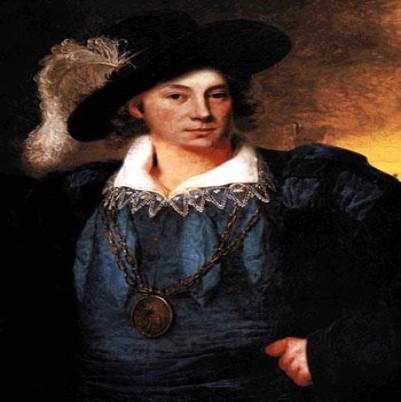
LAWRENCE DE GRAAF.
Lawrence de Graaf was a Dutchman who always seemed to get his own way. An artillery expert, he initially served the Spanish, fighting against pirates. After being captured and sold into slavery, he escaped and became a pirate in the New World. He lived among the buccaneers and married the renowned hunter Pierre Long’s widow, who was the founder of Port-au-Prince in Santo Domingo. De Graaf’s experience and bravery soon made him a terror to the Spanish.
One day, his small ship was pursued by two Spanish galleons, each armed with sixty guns. One was an admiral’s flagship, while the other was commanded by a vice-admiral. The galleons had 1,500 men on board and were firing all their guns. Outnumbered, the pirates were threatened with boarding from both sides by the Spaniards. Many of the pirates thought their end was near.
However, de Graaf convinced his crew that they would all face a shameful and agonizing death if they were captured. His words inspired the crew to fight to the death.
He ordered one of his bravest pirates to stand by the open hatch of the powder chamber with a burning fuse, waiting for the signal that would be given when all hope was lost. Meanwhile, his skilled buccaneers fired their muskets, killing dozens of Spaniards crowded on the decks of the enemy ships in preparation for boarding.
De Graaf was wounded in the thigh, but still managed to utilize all his artillery skills. His cannonball broke the main mast of a Spanish ship, causing panic among the enemy.
Seeing their opportunity, the pirates broke free and sailed away with the wind at their backs. Once again, luck was on de Graaf’s side!
Madrid was so furious at this disgrace, that the captain of the warship who had dishonored its flag was beheaded. De Graaf gained fame and notoriety.
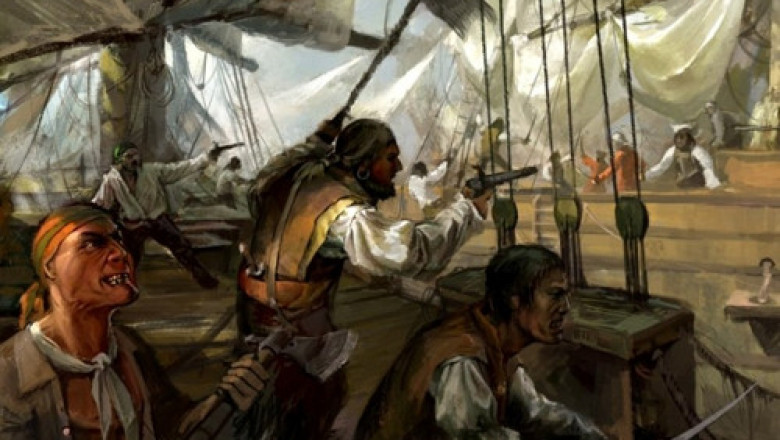
A year later, while searching for a prize, he prowled the waters off Cartagena. There, his two ships were attacked by three Spanish warships. The pirates proved to be more determined and captured all three Spanish ships. De Graaf had a sense of humour and sent a letter to the governor of Cartagena thanking him for this generous Christmas gift. The whole pirate world laughed, and de Graaf’s victory fuelled the ambitions of his crewmates. Van Hoorn and de Grammont invited De Graaf to take part in the attack on Veracruz.
De Graaf at first refused their offer. Despite his fondness for such ventures, he felt that a raid on Veracruz might not be successful. He preferred to plunder Spanish ships at sea rather than get involved in a land war. However, Nicholas van Hoorn did not want to lose such a valuable ally, so he reminded de Graaf of de Grammont’s successful raids on Spanish settlements. Moreover, van Hoorn had royal authorisation to plunder Spanish ships and settlements. He added that such opportunities were unlikely to arise again in the foreseeable future. This dispelled de Graaf’s doubts about the success of the forthcoming mission, and he finally agreed.
After assessing all the risks, the three hotheads started thinking about how they could carry out their plan. Van Hoorn had just received some valuable information: two merchant ships loaded with cocoa were about to arrive in Veracruz. Trinity planned to take advantage of this by disguising their own ships as the merchant vessels.
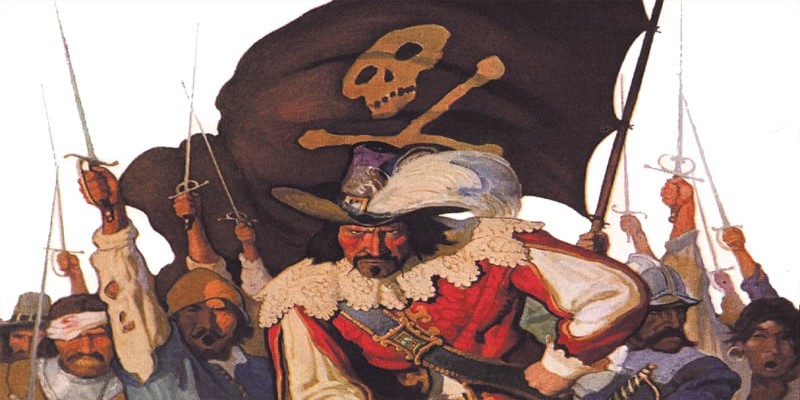
VERACRUZ
Veracruz was an impregnable fortress, capable of withstanding an attack by an entire army. But that didn’t deter the trio. They believed that, with cunning and determination, anything was possible. They had a fleet of twelve ships and an army equipped with 1,300 sabres and muskets. For the time, this was an impressive force — the largest since Morgan’s raid on Panama in 1671.
However, attacking the fortress, which was surrounded by 15,000 Spanish soldiers, was still madness. But night was a pirate’s best friend! The Spanish always ended up on the losing side because they didn’t take pirates seriously, relying instead on their own soldiers.
When the people of Veracruz saw the long-awaited Spanish ships, young and old alike rushed to the port, rejoicing at the prospect of drinking cocoa again.
The people were surprised to see the ships staying away from the harbour. Many became suspicious and reported the matter to the governor, Don de Córdoba. However, the governor assured them that these were indeed the ships he had been informed about and that their description matched the information he had received. The commandant of the fort received the same response, but advised the governor to exercise caution. As night fell, the people dispersed to their homes.
In the darkness of the southern night, the remaining pirate ships emerged from behind the horizon and joined the three that were already there. The fleet headed for the shore, where the pirates landed on an unguarded headland near the old town. They immediately captured and killed the sentries on the shore. One of the sentries agreed to guide the pirates to the unguarded city gates in exchange for his life. The pirates entered the city and the massacre began.
De Graaf led his detachment to the fortress that protected the town from attacks at sea, capturing it. His pirates then turned the twelve cannons, which had originally been set up to defend the town against pirate ships, towards the town itself. They fired these cannons directly at the town’s buildings.
Awakened by the explosions, smoke and flames, the Spanish soldiers were unable to think straight. As it was a Catholic feast day the following day, many soldiers thought that some citizens had started the celebrations early. Even the screams of the pirates’ victims were mistaken for expressions of joy. Ultimately, the city’s defenders were the last to realize that there was nothing left to defend — the city was already in the hands of the filibusters.
Realizing what was happening, the soldiers shouted with all their might that ‘las drones’ — thieves and robbers had entered the city. Enraged by the soldiers’ resistance, the pirates killed everyone they could reach. By dawn, all the soldiers had either been killed or fled, and the city’s officials and wealthy inhabitants had been captured.
The prisoners were locked in the cathedral, whose entrances were barricaded with barrels of gunpowder. Guards with lit fuses were posted outside, ready to blow up the church and everyone in it at the slightest attempt at escape.
They plundered all day and all night, taking the booty back to their ships. At a cursory count, the value of the booty was six million in gold and silver coins, including much jewelry encrusted with precious stones. Time was running out, however, and the pirates feared an attack by troops from nearby garrisons. They drove the captives to their ships, expecting to get as much for their souls as they had already taken in coin.
But when it came to dividing the spoils, two of the companions, Van Hoorn and de Graaf, disagreed. They also disagreed on how to get the ransom.
Van Hoorn insisted on burning the merchant ships in the harbor and executing some of the captives, arguing that this would intimidate the Spanish and speed up the ransom payment. De Graaf disagreed, insisting that they should flee with the booty and prisoners without waiting for the arrival of Spanish troops and ships, and then safely negotiate diplomatically for ransom. The disputing parties did not shrink from verbal abuse, and the dispute degenerated into a duel.
De Grammont was on Lawrence’s side, but did not intervene in the dispute between the two Dutchmen.

The duel took place on a neighbouring island on 29 May 1683. According to the rules, the winner would be the first to draw blood from their opponent. De Graaf was fortunate in this duel. Van Hoorn was confined to bed in his quarters after being wounded. The pirates received their ransom and left.
Van Hoorn died from his injury and was buried on the small island of Loggerhead Cayo. Thus ended the life of one of the cruelest and most cunning pirates.
Meanwhile, the French king tried to end the destructive feud and make peace with Spain. However, the Spanish continued to capture French ships even though a truce had been declared.
The governor of Martinique, de Cussy, praised de Grammont for his bravery and ability. He presented de Grammont’s candidacy to the French government in the most favourable light, suggesting that he be appointed governor of the southern part of Saint-Domingue. Paris consented and de Grammont was honoured by the confidence placed in him. However, he decided to mark the end of his pirate career last raid in the Gulf of Mexico. Like a gambler, he wanted to go out with a splash!
CAMPECHE.
Early in 1686, the leaders of all buccaneers and pirates gathered on Cow Island, southwest of Española, for a council. Chevalier proposed a raid on Campeche, a Mexican port on the Gulf coast. But his comrades, remembering the losses of the raid on Veracruz, considered the undertaking too risky and spoke against it. No one wanted to die.
The Spanish hanged captured pirates without trial. However, with privateers, politics were involved. The privateers were vassals of their king; they weren’t hanged, but rather imprisoned. They had a chance of surviving through a prisoner exchange or simply escaping.
De Grammont appealed to Governor de Cussy to issue him a privateer’s charter. However, the European monarchs had already agreed to a truce, so de Grammont’s request was denied. De Cussy informed him in a letter that the French government forbade any attacks on the Spanish and would soon send warships to enforce the terms of the truce.
This news enraged the pirates, thus increasing de Grammont’s chances of success. He persisted, repeating his request to the governor and claiming that the king did not know the true state of affairs in the colonies. The governor, however, could not disobey his sovereign. Knowing de Grammont’s authority among the buccaneers, the official promised him a special reward from the government if he would renounce his ties with the pirates and return to public service.
De Grammont replied: “There are no traitors in our brotherhood. If my comrades in arms agree to abandon their plans, I am prepared to do the same.”
The pirate leaders, exhausted by the diplomatic process, declared that if the governor did not grant them a privateer’s charter, they would forgo the paperwork. Their objective remained unchanged and one thousand two hundred cutthroats saluted with their sabres.
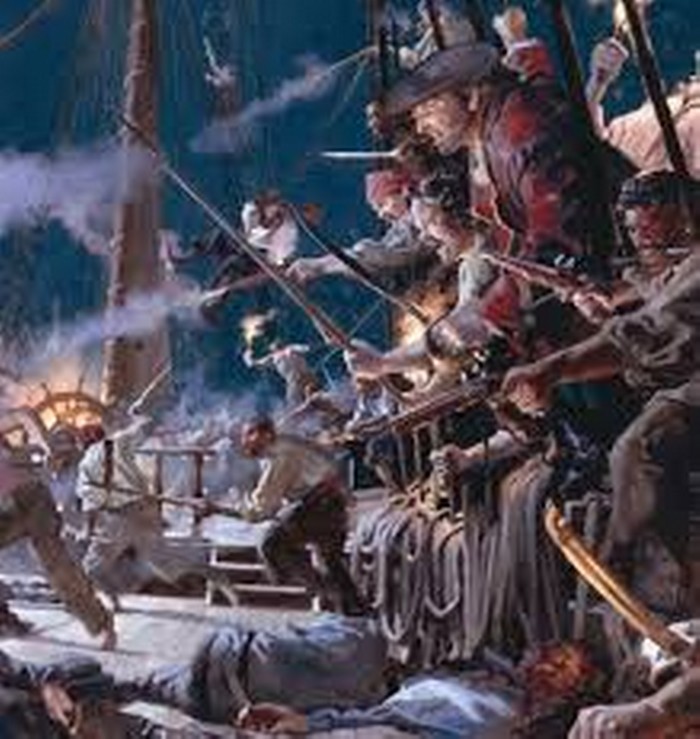
On 5 July 1686, their ships were fifteen miles from Campeche. Here, 900 of them jumped into the boats and took up their oars. In the rainy twilight, they approached the shore. A few hundred unsuspecting guards were warming themselves by fires on the beach. The pirates snuck up and attacked them, hacking many to pieces.
They then infiltrated the town, where the sound of the church bell had already caused panic. The fort garrison began firing cannons at the attackers, but de Grammont ordered his best marksmen to kill anyone who came near them. The cannons fell silent.
Having captured the fortress, the pirates turned their cannons towards the city. After the first shells blew holes in buildings, the town surrendered. Within hours, the pirates had seized control of the city. Despite having been fortified by all the rules of military art and boasting a large garrison and cannons, the city was defenceless against pirates’ sabres. Among the prisoners was an Englishman who had served the Spaniards as an artilleryman. The young officer chose to face death rather than flee the battle. Impressed by the prisoner’s courage, De Grammont released him.
While the pirates were plundering Campeche, reinforcements arrived from a neighbouring town. The governor himself led an army of 800 men. Some of the pirates were ambushed, losing two dozen men, while the Spaniards captured several.
De Grammont began negotiations, proposing that all the captured officials and wealthy townspeople be released in exchange for the prisoners. He added that, should the army commander refuse this generous offer, he would order the prisoners to be chopped to pieces and the city to be burnt down.
The army commander replied haughtily:
‘The pirates are free to burn and kill. We have enough money to rebuild the city and enough troops to destroy you all — that is the main purpose of my campaign.”
Enraged by this boastful response, de Grammont led the governor’s envoy through the city’s streets and ordered several houses to be set alight. He also had five Spaniards executed before the envoy’s eyes.
‘Go to your master and tell him that I have started to carry out his wishes, and that I will do the same with all the other prisoners,’ he said to the governor’s envoy, smiling.
The governor did not risk bringing his army into the city, and the Spaniards had left.
While they waited for the ransom money to come through, the pirates spent two months drinking and indulging in debauchery. God only knows how many children of French descent were conceived during that time. The women know, of course. But they always keep quiet about their sins. When the pirates did not receive the ransom they had demanded, they burned the town and returned to Tortuga. De Grammont didn’t kill the prisoners; he set them free.
His friend, Lawrence de Graaf, also took part in the raid. On the way back, the two ships separated, with de Graaf’s ship being chased by two Spanish warships. They exchanged fire all day, and at night, the pirates managed to evade their pursuers. De Graaf was lucky again!
Having given up piracy, de Graff pursued a career in politics, becoming a government official and helping to organise French Louisiana in America in 1699. Unlike most pirates, de Graff died peacefully, surrounded by his family. He left them a considerable fortune, including a sugar factory and over 120 slaves.
In contrast, his friend’s ship was caught in a hurricane off the coast of Florida, killing everyone on board. No one ever heard of the pirate nicknamed ‘Chevalier’ again.
What more can be said? Never play cards with Destiny, no matter how high your ace is.
© Copyright: Walter Maria, 2023 Certificate of Publication No. 223021802023
Hey There. This is a very well written article. Thanks for the post.
Thank you, I’ve just been looking for information approximately this topic for a long time and yours is the best I’ve came upon till now.
Hi, მინდოდა ვიცოდე თქვენი ფასი.
მე ფასი არ მაქვს. მე შეუფასებელი ვარ.