
From the author:
Shortly before the outbreak of the Second World War, a spy network was set up across Europe to collect intelligence and send it to Moscow. Radio operators in Belgium, the Netherlands, Germany and France were responsible for operating the transmitters. This network of spies operating in enemy territory was one of the most successful in the history of secret warfare. It was an orchestra of informers. In German, ‘orchestra’ is ‘Kapella’.
***
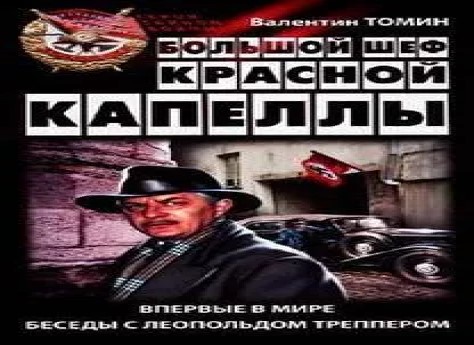
In December 1942, Leopold Trepper, the ‘conductor’ of the ‘orchestra’, was arrested by the Gestapo. The organization was dismantled and many of its members were killed. However, Trepper himself survived and returned to Moscow.
Although Stalin’s investigators failed to prove that Trepper was a traitor or a double agent, no one in the intelligence agencies believed that a Soviet spy released from Gestapo custody escaped being recruited there. Trepper was considered ‘spent material’ by soviets — such individuals were deemed expendable.
Nevertheless, Trepper survived, serving ten years of a fifteen-year sentence before being granted amnesty following Stalin’s death. In 1957, he was allowed to return to Poland, his homeland. From there, he travelled to Switzerland and then to Israel. He remained silent all those years.
Inspired by the portrayal of Trepper as a hero in French historian Gilles Perrault’s book, he decided to write his memoirs. His book, ‘The Great Game’, was published in 1975. It was published in many countries, but not in the Soviet Union. Perhaps this was because the truth about the death of the ‘Red Capella’ remained undisclosed. This may be because Trepper described the harsh conditions in Soviet prisons, the abuse of prisoners, and the tyranny of the guards.
Alternatively, the book may not have been published in the USSR because the author was biased in his judgement of Soviet life and the events of those years. For example, he claimed that ‘…the Stalinist regime distorted socialism beyond recognition…’. However, socialism did not exist in Russia or anywhere else before Stalin, so he could not have distorted something that did not exist. First came the years of the Trotskyite-Bundist dictatorship, which seized power in 1917, followed by Lenin’s ‘red terror’ and the civil war. Only after all this did Stalin appear.
Stalin distorted the Zionist idea voiced by Trotsky in a 1918 speech in Petrograd: “We will turn Russia into a desert populated by white Negroes, to whom we will inflict tyranny beyond the wildest dreams of the most terrible despots of the East…”
Stalin expelled Trotsky, disappointing those who had dreamed of finding a promised land within the Russian Empire. Instead, Stalin decided to create their own paradise behind barbed wire. Having been a criminal accustomed to life in prisons and labour camps, Stalin knew no other form of socialism. Moreover, there were no other examples of socialism in the world at that time.
On 23 August 1939, a non-aggression pact was signed in the Kremlin by representatives of the German and Soviet governments. To celebrate this event, champagne was served, and Stalin raised his glass making an unforgettable toast: ‘I know how much the German people love their Führer, and therefore I will drink with pleasure to his health!‘, according to Soviet spy Trepper’s book.
A month later, following the joint invasion of Poland, the Soviet Union and Germany signed a treaty of friendship and established a shared border. Once the formalities had been completed, Molotov raised his glass and declared, “We have always believed that a strong Germany is essential for lasting peace in Europe!“
Isn’t it strange that these champagne drinkers weren’t hanged in Nuremberg alongside the Nazis?
=== === ===
CONDUCTOR FOR THOSE WHO ORDERED THE MUSIC.

Books have been written about the ‘Red Chapel’ in the West. In modern-day Russia, a fifteen-part series, similar to the nonsense surrounding Stirlitz, was even produced.
However, the Hollywood-trained russian directors of this series have simply copied the techniques of their Western counterparts.
For example, they decided to lure viewers with ‘strawberries’, intriguing the average person with the characters’ love lives rather than their espionage activities. Nevertheless, they demonstrated sensitivity towards the moral character of the protagonist even here. After revealing the identity of Trepper’s assistant’s lover, they modestly omitted that of Trepper’s own lover, Georgie de Winter.
The series puts a Hollywood twist on the arrest of the Brussels Group.
After watching it, Anatoly Gurevich — Trepper’s assistant, also known as ‘Kent’, who escaped from a Gestapo prison and lived out his life in St Petersburg — revealed what really happened:
‘When Trepper arrived from Paris, he threw a party. Contrary to the laws of conspiracy, liaisons, radio operators and cipher operators were all present. While people were making noise, drinking wine with prostitutes in one room, there was a radio transmission session in another. The Germans searched for the transmitter by switching off the electricity in each house in the targeted neighborhood one by one. They switched off the electricity in one house, and when they heard the transmitter, they moved on to the next house. Once it became silent, they knew the broadcasts were coming from there. That’s how they caught all company, drunk. Trepper himself managed to escape that time.
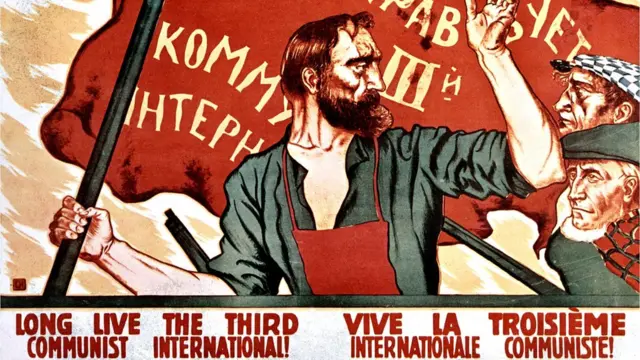
Towards the end of the 1920s, in response to the threat of war and world revolution posed by the Trotskyist ‘Comintern’, all European countries signed the ‘Anti-Comintern Pact’.
Fascism emerged in Italy and National Socialism in Germany as a reaction against the spread of Marxism. Stalin also saw the ‘Comintern’ as a threat to his authority, so it was only logical that he began collaborating with the Gestapo at the start of Hitler’s rise to power in Germany. They shared a common goal: the destruction of the ‘Comintern’.
By 1934, repression in the Soviet Russia was already in full swing. The first victims were ‘Comintern’ members (for more information about the agreement between the Gestapo and the NKVD, see the publication ‘The Cleaners’).
And in Europe, the transmitters began operating. The German secret services tracked the spying activities of the ‘Kapella’s’ radio operators by intercepting their encrypted radio messages. Within the Abwehr intelligence service, these radio operators were known as ‘pianists’. According to the repertoire, the radio interception service determined that the ‘pianists’ were transmitting towards Moscow. Consequently, the network became known as the ‘Rote Kapella’. It was organized and led by the Soviet spy Leopold Trepper.
***

Trepper was born in 1904 into a large Jewish family in a town on the outskirts of the Austro-Hungarian Empire. After the First World War ended in 1918, the town became part of Poland. After his father died in 1921, the family moved to Upper Silesia. There, Trepper worked as a mechanic in a factory and traded vodka in Krakow. Two years later, he was arrested for participating in a workers’ uprising and placed on a ‘blacklist’. He then joined ‘Gehalutz’, a Zionist organization financed by American Jews, and moved to Palestine. There, he worked on draining swamps and lived in a kibbutz. Ultimately, he aligned himself with the Communists by joining the ‘Comintern’, after which he was arrested. He was imprisoned in a high-security prison in Haifa and subsequently exiled to Cyprus.
The ‘Comintern’ then sent Trepper to France to work as a labor correspondent for the communist press. These ‘worker correspondents’ were permitted to enter various institutions under the pretext of documenting the lives of French workers and the issues they faced. In reality, however, they were informants who supplied the French Communist Party with vital information. Trepper soon found himself hunted by the French authorities and escaped to Moscow in 1932. There, he enrolled at the military academy, where General Orlov (real name Leiba Feldman) taught a special course for prospective intelligence officers. This was followed by ‘practical training’ in the Red Army Intelligence Service Directorate, marking the beginning of Trepper’s career as a spy.
In the autumn of 1937, General Berzin was recalled from Spain, where he had been serving as a military adviser to the Republican Army, in order to take charge of Stalin’s spy network. As Trepper spoke German, French, Polish and Russian, Berzin suggested that he establish an intelligence network in Western Europe. Trepper liked the idea and proposed running the network legally under the guise of a Belgian export-import firm with branches in several countries. They agreed on everything, but never saw each other again. Berzin disappeared in the cellars of the Lubyanka.
Trepper was sent to Belgium posing there as the Canadian industrialist Adam Mickler, . There, he reunited with two old friends from Palestine: Leo Grossfogel and Hillel Katz. The former lived in Brussels and the latter in Paris. They both became his aides, but he later betrayed them to the Gestapo when his own life was at risk. Grossfogel headed the rubber trading firm ‘King Rubber’. This firm would become the commercial ‘umbrella’ of the future organization. Soon, staff began to arrive from Moscow, including the radio operator Makarov, two ‘Uruguayans’ named Carlos Alamo and Sukulov, and the scout Gurevich. Trepper’s wife, Lyubov Broyde, helped her husband by training the spies sent from Moscow in the peculiarities of behavior abroad and teaching them French. In short, it was a family affair — proletarians of all countries, unite!
The Rote Kapella’s espionage network in Europe was organized as follows: The Big Chief was at the top, assisted by a team of regional chiefs. Each of these chiefs had their own network of spies and informants. While the Big Chief knew everyone, the regional chiefs did not know their counterparts or subordinates. This meant that, in the event of failure, enemy counterintelligence could not destroy the entire network by creating a gap in it.
Unless they got the Big Chief.
Trepper had infiltrated the Belgian business world, presenting himself to the authorities as a wealthy businessman and inspiring confidence. He passed particularly important secret reports on to Jacques Duclos, the head of the French Communist Party, who had communication channels with Moscow. During the years of close friendship with Hitler, Stalin ordered an end to intelligence activities against the Third Reich and halted the creation of a spy network in Europe. Trepper was repeatedly summoned to Moscow, but remembering the fate of General Berzin, he avoided returning on various pretexts. He left Brussels for Paris, leaving Anatoly Gurevich, also known as ‘Kent’, to remain in the Belgian capital.
***
EDEM DAS SEINE.
On 10 May 1940, the Germans launched an offensive on the Western Front. France, Belgium and the Netherlands were subsequently occupied. In his eighty-page report, Trepper provided a detailed description of the organisation of the German bombing methodology and the tactics employed by the Wehrmacht to destroy the enemy’s anti-tank defences. The report essentially detailed Hitler’s new strategy of lightning warfare, or blitzkrieg, which had been developed and tested. This strategy was later halted in Russia due to the off-road terrain and frost. The United States’ entry into the war also brought an end to the blitzkrieg.
In August 1940, the Germans were preparing for Operation Sea Lion, which involved an invasion of Britain by land, sea and air. Around this time, Hitler received reports from military intelligence and diplomats that Stalin was deploying his troops to the border regions. Of the 151 infantry divisions, 96 were already stationed on the German border. There were also 23 cavalry divisions and 28 mechanized brigades concealed in the forests. More troops kept arriving to join them.
For the Reich’s military top brass, the accumulation of Soviet offensive artillery units on the border that were not required for defense purposes was the decisive factor in determining whether Stalin was preparing to attack Germany. The Germans did not have any such troops. Hitler realized that his ‘friend’ in the Kremlin was planning to exploit the situation by invading Europe while the majority of German troops will be stationed on the other side of the English Channel. He cancelled ‘Operation Sea Lion’, redeployed the Wehrmacht to Poland, and ordered the General Staff to develop ‘Operation Barbarossa’.
When Stalin learned of Hitler’s new plan, the need for an intelligence network arose once more. In 1940, the Kremlin ordered Leopold Trepper to set up a spy network in Western Europe. Networks were set up in France, Belgium, the Netherlands and Switzerland, and then expanded.
Trepper recruited several high-ranking Germans from the Third Reich.
Harro Schulze-Boysen, for example, was born in Kiel in 1909 to Erich Schulze and Maria-Louise Boysen. His father was a career naval officer who held the rank of frigate captain (Captain 2nd Rank). Harro was the grandnephew of Grand Admiral Alfred von Tirpitz, a personal friend of Kaiser Wilhelm II and the creator of the doctrine of the German Navy. Harro married the granddaughter of Prince von Oylenburg, whose family lived next door to Hermann Göring. Göring was invited to the wedding. It was these connections that led Harro to an institute where important military technology research was carried out. From December 1940 onwards, Schulze-Boysen began passing secret military information to the Soviet Union, including details of Germany’s preparations for an attack.
On 16 June 1941, a telegram was sent from Berlin to Moscow warning that ‘German aggression could begin at any moment’. According to a source working in the German Ministry of Economy, the heads of the military-economic departments in the territories that would soon be occupied in the USSR had been appointed.
This information was immediately reported to Stalin and Molotov. Stalin wrote the following on the report: “To Comrade Merkulov. You can send your ‘source’ from the headquarters of the German air force to fuck his mother. This is not a source, but a disinformer. I.St.’
***
In July 1942, the Germans deciphered a radio message sent from the GRU (the Soviet military intelligence agency) in Moscow to Brussels. The message contained the name and address of Harro Schulze-Boysen.
On 19 December 1942, the Reich Military Court sentenced Schulze-Boysen, his wife Libertas and his spy partner Arvid Harnack to death. Schulze-Boysen was hanged in Berlin’s Plötzensee prison, while his wife was beheaded. Harnack was born in 1901 in Darmstadt into the family of the renowned German historian Otto Harnack. He studied law at the universities of Vienna and Hamburg, earning a Doctor of Laws degree. He also studied economics in the United States, where he was awarded a PhD. Following the Nazi takeover, Harnack was appointed scientific adviser to the Reich Ministry of Economics. This gave him access to the most secret plans for military production.
In 1935, Harnack was recruited by the Soviet intelligence service and given the operational alias ‘Corsican’. In 1937, he joined the NSDAP in order to create a cover story for himself. He made contact with Schulze-Boysen and began collaborating with the Soviet residency. Harnack and his wife, Mildred, were arrested by the Gestapo alongside Schulze-Boysen. Arvid was hanged in Plötzensee prison alongside Harro Schulze-Boysen. Mildred was initially sentenced to six years’ imprisonment, but Hitler ordered that her sentence be commuted to death, resulting in her beheading.
In December 1941, the Abwehr intercepted one of the transmitters operating in Brussels. The entire group was apprehended. None of them knew their fellow conspirators; they only knew the name of their boss. One of those arrested could not withstand the torture and revealed Trepper’s identity.
Trepper was arrested on Christmas Eve 1942 while sitting in the dentist’s chair. He had planned to go into hiding the following day, hoping to have time to get his teeth fixed. During the initial interrogations, it became clear that Trepper was well-informed, his impeccable logic leaving the Gestapo baffled. They sent him to Berlin to see the chief of the Gestapo. General Müller in his diaries marked, Trepper noted that the initial interrogation conducted by him resembled a mutually engaging conversation.
Müller was a shrewd psychologist. Unlike his colleagues at the Lubyanka, he did not torture those he interrogated. He gained their trust by being friendly and sometimes treating them to excellent cognac and cigars. By the end of the conversation, the spy was becoming Müller’s agent — voluntarily and forever. Müller did not kill clever spies. After all, they were his resources, his material and his tool in the game with the enemy. The secret police general built his spy network, and each recruited spy was a valuable asset. And what fisherman would cut his net?
The Gestapo did not kill Trepper. After Müller had a ‘mutually interesting’ conversation with him, the ‘Rote Kapella’s’ spy network was dismantled through mass arrests. Those arrested were taken to a concentration camp between Brussels and Antwerp, where they were interrogated and tortured. Most of the ‘Rote Kapella’s’ members disappeared in this camp. By October 1943, more than 30 men had been hanged or shot there and 18 women beheaded. Seven people committed suicide, while dozens more were sent to concentration camps, forced labor camps or the front. Decades after the war, the Israeli literary and journalistic magazine ‘Lehayim’ published a moving account of how, after being arrested, Trepper tried to persuade the Gestapo to cooperate by organizing a radio game with Moscow to misinform the Soviet leadership and command. The brave spy allegedly managed to deceive the Gestapo, escape from prison, and report to Moscow about the failure of the network. He continued his intelligence activities, supplying the Centre with important information.
INeither Israeli nor Russian sources mention the significant agreement that was reached between Trepper and the Gestapo chief. Müller, who later became an advisor on Stalinism to US President Truman, recounted the details of the deal during recruitment talks with the American Secret Service in Switzerland in 1948.
Müller kept all of his department’s documents on microfilm and gradually sold them to the Americans after the war. He knew that the CIA needed his information on spy networks around the world, and that he was the only person with such knowledge. He also realised that he could not give all the microfilms to the Americans at once. The smaller the portions of information he sold, the longer he would live. He was made a general in the US Army and became a personal advisor to the president. He helped FBI Director Hoover by providing compromising information on Senator McCarthy in his fight against communists and Stalinist spies within the US government.
And then in 1942, Mueller forced Trepper into a radio game with Moscow. However, Trepper managed to send a message to Moscow that he was working for the Germans. Having caught the spy in a double game Mueller bluntly told the cunning man that his life was no longer of any value to the Reich and that the consequences would be “consequential”, literally. The Gestapo man slammed the folder shut, signalling to Trepper that the co-operation was over.
And then saving his life, Trepper offered Mueller the most valuable agent of the Kremlin, resident of the spy network in France, Switzerland and England.
In the main archives of Germany there are Gestapo documents confirming this fact presented in Mueller’s memoirs. Trepper himself this fact of his betrayal in the book naturally hushes up, and directors of the film about it are silent and at all. After all, if they told it, there would be no one to make a film about.

Henry Robinson (born Arnold Schnee) was born in Belgium in 1897 to Polish-Russian Jewish parents. He acquired French citizenship in his youth. During the First World War, he studied in Switzerland, where he became involved with the Communist Party. He went on to join the ‘Comintern’ during a trip to Moscow. While there, he worked under Osip Pyatnitsky in the International Relations Department, which was at the heart of espionage activities. He organized anti-war activities in Germany and opposed the French army’s occupation of the Ruhr. For these activities, he was sentenced to 10 years in prison by a French court in absentia in 1923. However, he escaped. From 1929 onwards, while serving as an officer in the 4th Division of the Soviet military’s counterintelligence department, he ran a spy network in France. He was responsible for sabotage and counter-sabotage operations. He also collaborated with similar organizations in Switzerland and England. By 1936, he had risen through the ranks to become part of the Soviet military attaché group in Paris. Using a diplomatic passport as a cover, he controlled spy branches in France, Switzerland and the United Kingdom.
Robinson was arrested in Paris on 24 December 1942. After the Christmas holidays, he was interrogated by Müller in Berlin. The Gestapo chief was not at all formal. After listing everyone who had already been arrested by the Gestapo, Müller told Robinson that he should either inform on others or be shot that same day. Müller added that Clara Schabbel, the mother of his son, had been arrested alongside her son Leo, and that they would suffer the same fate. In exchange for his life and that of his relatives, Robinson agreed to cooperate. He revealed that lists of spies and informants recruited in France, Switzerland and England were kept in a secret hiding place in his Paris flat. The Gestapo agents searched the flat thoroughly and found what they were looking for. As Müller began to look through Robinson’s papers, he realized what a valuable asset he had. This spy was such an important source that executing him would be counterproductive. However, he had to disappear from the spy world entirely. He was ‘executed’ on paper. Clara Schabbel, his wife and an unnecessary witness, was executed for real. Nobody else ever found out what had happened to Henry Robinson, the most important Moscow spy. Only Müller and Robinson himself, now living under a different name, knew the truth.
Several versions of his fate emerged.
-Robinson was sentenced to death and executed.
-Alternatively, he was killed for treachery by a member of the ‘Rote Kapella’ in 1944. This was on Moscow’s orders.
-Alternatively, he survived and continued to work for Soviet intelligence.
However, none of these versions suggested that he had worked for the Gestapo under a new name. This possibility was not considered.
Müller spared Trepper’s life in gratitude for his service as an agent. However, freeing the traitor from the Gestapo would have meant certain death at the hands of his own people. Therefore, Trepper was ‘allowed to escape’. This is how it was done: He was placed in a separate cell. A man named Berg was appointed as his personal guard and was permitted to visit him at any time. Berg was responsible for Trepper’s meals and took him for walks in the courtyard. He even drove Trepper into the city in his car. Together, they visited the same pharmacy, where Berg bought Trepper’s medication. The pharmacy had another exit onto a different street. In September 1943, Berg drove up to the pharmacy, dropped Trepper off alone and asked him to buy some medicine. Trepper entered the pharmacy through one door and left through the other. He wandered around Paris until he found friends who were still free, and they all went into hiding. He informed Moscow of his escape and readiness for further work.
Following the liberation of Paris in August 1944, Trepper received a radiogram from the Centre congratulating him on his actions and requesting that he travel to Moscow on a Soviet military aircraft. Upon arrival, he was met at the airfield and taken to an apartment where he was assigned a guard and cut off from the outside world. He was then transferred to the Lubyanka prison. No charges were brought against him, and he was neither tortured nor beaten. Instead, he was simply asked to write a report. Due to a lack of proof of treachery, Trepper was sentenced to 15 years in a high-security prison. Following Stalin’s death in 1953, he was released after serving ten years and was rehabilitated. He was awarded a pension and his time in prison counted towards his labour record. Some time later, Trepper left the USSR, travelled around Europe, and finally settled in Israel.
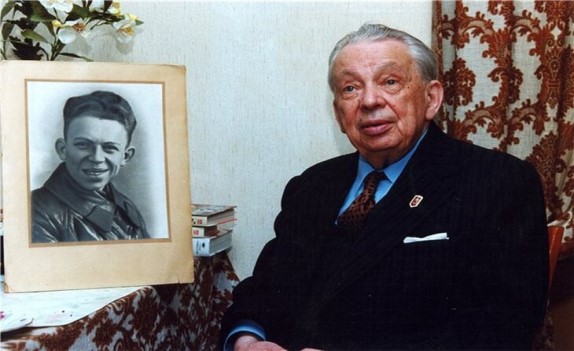
Here is a brief history of his partner, Gurevich, who was known as ‘Kent’. He was arrested too, but managed to avoid execution. While in prison, he developed a trusting relationship with his warden, SS Officer Panwitz. Towards the end of the war, when Germany’s defeat was real, Kent convinced Panwitz to help them both escape to Moscow, where Kent would be recognized as the rescuer of a Soviet spy. Kent added that if Panwitz went to the British or Americans, he would face the gallows. Panwitz agreed and arranged for them to escape to Moscow, where they were taken to the Lubyanka prison. The German was ‘credited’ with ten years in the Gulag, while Gurevich himself was given a longer sentence. He was released in 1955 under amnesty. He was arrested again three years later, but released two years after that. He was rehabilitated in 1991.
***
COMMENT.
Of all the nations inhabiting our planet, there is one whose representatives always badly impact a society’s mood when they settle in a country. They ridicule and reject local customs and traditions. They disobey the laws of the land and show no respect for them. They organize conspiracies, provoke riots and strikes, and call for the overthrow of the government. They are small in number, yet they are powerful due to their organization and the web they have woven around the world. They are a secret army whose legionnaires report to a single headquarters. All their activities are financed by a global network of bankers. They are invisible because they do not differ in appearance from the people among whom they live.
Leopold Trepper was one of the representatives of this group. Even before he had developed stubble, he had started participating in strikes. Disapproving of the social order in his homeland, he was blacklisted. He moved to Palestine, but even there he did not feel at home among his own people. Eager to spark a world revolution, he joined the Communist Party and the ‘Comintern’. He was imprisoned and deported for encouraging Jews and Arabs to strike.
Next was France, where Trepper also disliked the regime and began spying for the ‘Comintern’. After evading the French police, he fled to the USSR to learn espionage techniques. Returning to Europe under an alias, he began carrying out secret activities. During the war, he was arrested by the Gestapo and revealed the entire Soviet spy network in order to save his life. He was sent back to the USSR, where he served time in prison. Having lost faith in Soviet socialism, for which he had spied for many years, he left for Poland, his homeland.
However, he soon became uncomfortable there too, as the Polish government had accurately characterised the Jewish community as a fifth column of imperialism. Trepper then went to Switzerland, but he did not like it there either. So he went to Israel.
He would have travelled further afield, but his life was over.
He did not consider himself a patriot of any of the countries in which he had lived. So where did he enjoy living? Well, he enjoyed living among the people he was spying on. He enjoyed the social benefits of Belgium and received his education in France. He wore fine French suits, shaved with the finest German razors and relaxed in perfumed train carriages while enjoying exquisite Italian restaurant food and vintage wines. And spying…spying…spying…
What logic or paradox lies behind his actions? Was Trepper, a man who enjoyed everything society had to offer him, actually dreaming of destroying it? I don’t think so. The only possible answer is that he loved himself and money, selling his services to whichever masters he could find. Some people saw him as a traitor and tried to forget about him, while others called him a hero. Some people did not call him anything at all. What would you call him?
=== ===
Information from the diary of Gestapo chief SS General Müller was used as the main source. Read more about Müller and the secrets of the Third Reich in other publications on the site.
© Copyright: Walter Maria, 2020
Certificate of publication № 220122801353
Be First to Comment