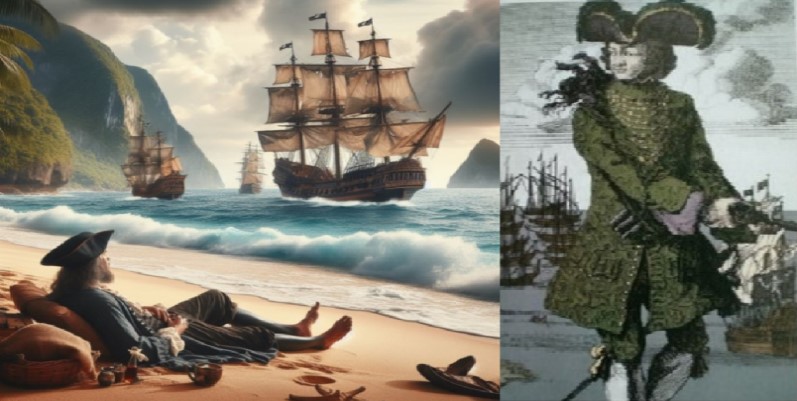
John Roberts was an assistant captain on the English slave ship ‘The Princess’, which transported slaves from Africa to the Americas. In June 1719, after loading slaves at the Guinean port of Anambu, ‘The Princess’ was preparing to sail for Barbados when it was attacked by pirates led by Howell Davis. Like Roberts, Davis was from Wales, and they quickly found common ground when Davis offered Roberts the position of first mate on his ship.
Aged 36, Roberts deliberately accepted the offer, noting in his diary that he wanted to ‘rid himself of the arrogant superiority of his superiors’. Older than Davis, their partnership combined the adventurous spirit of youth with the professionalism and maturity of age. The crew quickly recognized these leadership qualities. In order to escape his past, John changed his name to Bartholomew. A dark, statuesque man with thick, curly black hair, he immediately earned the nickname ‘Black Bart’. He accepted his appointment: “…if I have dipped my hands in the troubled waters of piracy, it is better to be a commander here than a mere sailor…”.
After the Portuguese governor’s soldiers shot the pirate delegation and killed Captain Davis, the crew unanimously elected Black Bart as their new leader, despite him having been with the pirates for less than two months. He had an impeccable reputation, and his orders were obeyed without question.
The first thing Black Bart did was to pay his debt to the island’s governor. The pirates burned and levelled the garrison’s buildings, killed all the soldiers, destroyed the fort, and threw the cannons into the sea. At sea, they robbed a Danish merchant ship and captured an English ship, whose entire crew joined them. After replenishing their water and food supplies, the pirates set sail for the Atlantic in two ships and reached the coast of Brazil within a month.
***
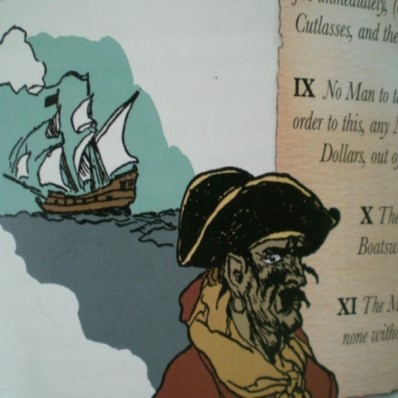
Pirates were among the first to practise democracy. The ship belonged to the crew, who elected the captain and officers by majority vote. The treasure was divided equally according to rank. Discipline was strict, with severe punishments for offenders, including death. Any pirate could leave once he had accumulated a certain amount of money; which was his ticket to freedom. During a boarding attack, the captain had absolute power including the right to kill a coward. However, after a failed attack, he could be criticised by the majority and removed from his position. The quartermaster was second-in-command after the captain. They were responsible for ensuring the crew’s compliance during boarding, enforcing the captain’s orders, settling disputes, and ensuring the fair distribution of treasure.
As a professional seaman, Black Bart knew that anarchy was the scourge of the fleet and would often lead to mutiny. Magellan faced mutiny and Drake faced conspiracy; the mutineers’ heads were chopped off. Therefore, Black Bart imposed strict rules on his ships and demanded unquestioning obedience. Here are some of them:
1. Everyone has one vote and an equal share in the distribution of food and drink.
2. Anyone who cheats his mates out of a share will be sent to a desert island.
3.It is forbidden to play cards or dice for money on board.
4.Candles must be extinguished by 8 pm. Anyone wishing to take a strong drink after this hour must do so on the open deck.
5. Weapons must be kept perfectly clean and ready for use.
6.Children and women are not allowed on board. Anyone who breaks this rule will be put to death.
7. Desertion during battle is punishable by death.
8. The captain and the quartermaster receive two shares, the bosun and the gunners one and a half shares, the officers one and a quarter shares, and the sailors one share.
9.The musicians may rest on Saturday; on the other days and nights, they must be ready for duty.
Similar rules, with slight variations, existed among other pirates.
***
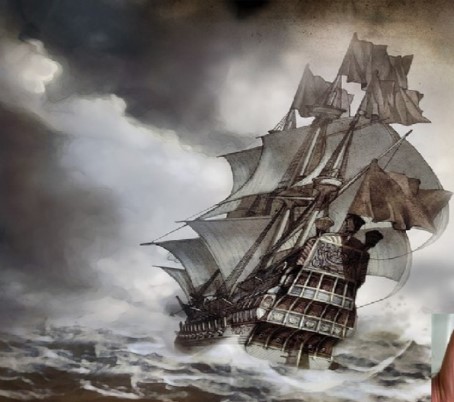
Black Bart spent a long time circling the Brazilian coast. One day, fortune finally smiled on the pirates. In All Saints Bay, they spotted a caravan. Forty-two Portuguese ships laden with colonial riches were waiting to be escorted across the Atlantic Ocean by two military frigates. In the darkness of the Brazilian night, the pirates crept up silently in their boats and boarded one of the ships. Black Bart ordered the captain to point out the richest ship in the convoy, threatening to kill him if he did not comply. The Portuguese captain had no choice but to comply pointing to a 40-gun galleon. It had a crew of 150 sailors and soldiers. However, Black Bart was undeterred by the enemy’s superior numbers. Their weapon was cunning, and that very night they boarded the galleon.
Amidst the confusion and panic that ensued on all the ships in the caravan, the pirates slipped out of the harbour with the captured galleon. Its hold was full of sacks of sugar, tobacco, and animal skins, and its chests were filled with gold moydors. The pirates also found 240,000 silver coins. Among the jewels they found was a golden cross set with diamonds — a gift to the King of Portugal. From then on, the cross belonged to Black Bart.
In November 1719, pirates who had sold some of their cargo to the locals on Devil’s Island off the coast of Venezuela spent their time drinking. One day, they spotted a sail on the horizon, so Black Bart and 40 pirates set off in pursuit in his light brigantine. He entrusted the treasure galleon and the flagship to his first mate, Kennedy. Kennedy was jealous and seized his chance. After inciting the crew, he fled with both ships and their treasures.
The pursued ship disappeared into the fog. When the pirates returned, they found that their comrades had escaped on a Portuguese galleon. For Kennedy, who had also escaped, his treachery had not been in vain. While pickpocketing in London, he was captured by soldiers who were recruiting men for warships. He ended up in the West Indies, where he joined Davis’s pirates. After stealing Black Bart’s two ships, Kennedy disposed of the galleon and took its valuable cargo. He then sailed north on the stolen Royal Hunter. Off the Bahamas, Kennedy’s pirates captured the New York ship ‘Eagle’, which was carrying rum. After waiting for the drunken crew to fall asleep, Kennedy and forty-eight of his accomplices fled on the captured ship with the money and valuables, determined to return to Ireland. However, Kennedy was a poor navigator and, in May, his ship ran aground in a storm off the coast of Scotland. The crew escaped, but pirates will be pirates. They hid in taverns and brandished knives. They were all arrested at the English border, tried, and hanged in Edinburgh. Kennedy himself escaped and made his way to London, where he resumed pickpocketing. He evaded capture for another year before being caught stealing and identified as a pirate. He was subsequently hanged.
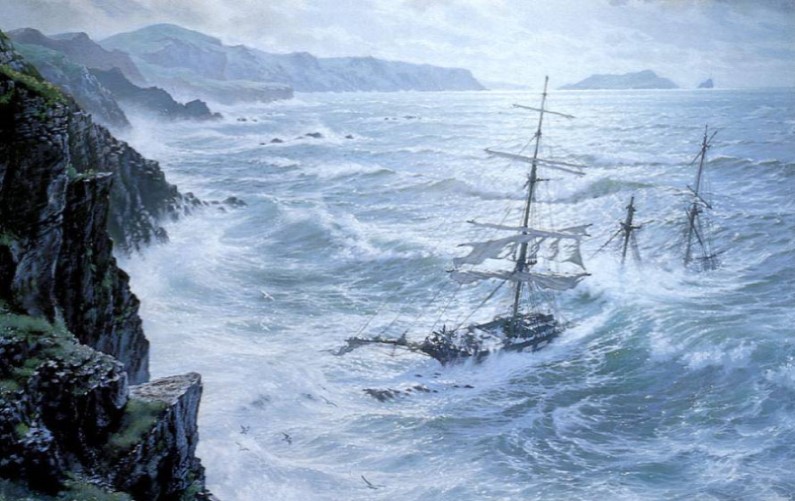
Black Bart was not overly concerned by his assistant’s betrayal. A week later, in January 1720, he seized a merchant brig off the island of Tobago. Over the next two months, he captured three more ships near Barbados and Martinique. The governors of these islands launched a hunt for the pirate, to which he responded by threatening to hang them both. However, the area was becoming too dangerous, so Black Bart decided to disappear for a while. He took his small fleet far north to Canada. There was no one waiting for him there.
In the waters off Newfoundland, they plundered and drowned everyone they captured. In June, Black Bart set his sights on his wealthy prey. Twenty-two merchant ships were anchored in Tripassi Bay, and the pirates attacked them. The crews jumped into lifeboats and fled for their lives. Black Bart had only one hundred pirates, yet they robbed, burned and drowned all the ships with twelve hundred sailors on board! Black Bart led the attacks with his sabre drawn, and his pirates, looking to their captain for guidance, fell into a bloody frenzy. After the massacre in the bay, Black Bart seized a 26-gun French ship and made it his new flagship, naming it the ‘Royal Luck’. This raid on Canadian waters resulted in the destruction of forty large ships, in addition to hundreds of smaller craft.
En route to the warm waters of the Caribbean, they captured and sank a further 15 English and French ships. They amassed so much treasure that Black Bart hid some of it in a secluded parts of the Cayman Islands. He knew that the islands were notorious for their giant crocodiles that attacked people. Now, the reptiles were guarding his gold. That autumn, Black Bart was circling near Martinique, where war had been declared against him, and where he had sworn revenge. He attacked and captured the governor’s 42-gun frigate. As promised, he hanged the governor on the mast of his ship. The pirate made the frigate his flagship and renamed it the ‘Royal Luck’.
Warships sent to capture the pirate were changing course when they saw his fleet’s sails. No one wanted to die. Newspapers wrote about the pirate, dubbing him the ‘Admiral of the Caribbean’. However, Black Bart himself was tired of the West Indies. He decided to go to Africa.
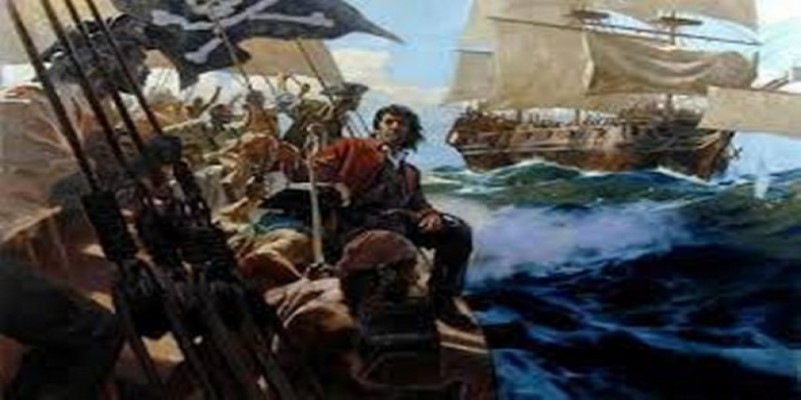
In April 1721, his ships were sailing off the coast of Africa. There, he seized several slave ships, including a 40-gun frigate belonging to the English-African Company. Black Bart wasted no time in replacing the worn-out ships with newer ones. He made the captured frigate his flagship and renamed it the ‘Royal Luck’. His second ship was the Great Hunter. In June, the pirates spent time with local women in a secluded cove off the coast of Sierra Leone. It was there that Black Bart learned that he was being pursued by two 50-gun English naval vessels. To cover his tracks, he sailed south, robbing and killing any witnesses who might have informed the English. During this period, the pirates captured the French frigate ‘Onslow’. Black Bart armed it with 40 cannons, renamed it the ‘Royal Luck’, and made it his new flagship. Seamen are superstitious, and Black Bart continued to name each of his subsequent flagships ‘Royal Luck’. He was more successful at piracy than anyone before him, capturing a dozen ships a month.
At the end of October, Black Bart’s ships appeared in the Bay of Calabar and seized three Bristol-registered slave ships. The pirates intended to sell their loot and replenish their supplies, but the local chiefs refused to trade with them. They raised an army of two thousand troops to fight the pirates. Black Bart was furious, and his men began to fight. The local army fled in panic, after which the pirates burned every house in the village before retreating to their ships and leaving the bay. They moved along the coast, selling their loot in small ports. In early January 1722, they captured several ships carrying slaves off the Ivory Coast. Black Bart then decided to sail to Whydah to sell them. The port was a popular destination for Portuguese trading ships its fort was always full coffers of gold coins. A bloody tale unfolded there.
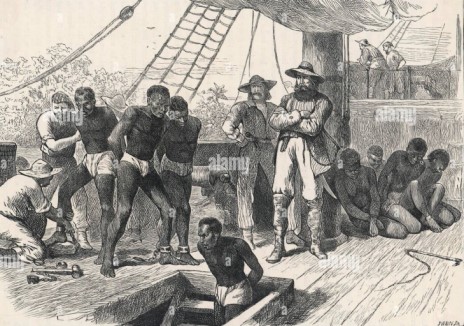
On 11 January, Black Bart appeared in the bay, where he found eleven ships at anchor. Upon seeing the pirate flags, the crews surrendered without a fight. According to harbour arhive records, the pirates were able to succeed because the ships had only been left with a watchmen while the captains and sailors were ashore buying slaves and attending to paperwork. Black Bart realised that the money had already been handed over to officials on land. Rather than searching the ships, he sent an ultimatum to the captains, demanding eight pounds of gold each and threatening to burn their ships if they did not comply. They all paid. Except Captain Fletcher, who refused the ultimatum. Black Bart decided to punish the stubborn man and ordered his ship to be burned. When the pirates climbed aboard, they found eighty slaves chained. Rather than trying to free them, the pirates simply set fire to the ship as they had been ordered to do. The survivors jumped overboard to flee the fire, but were eaten by sharks in the water. Those who were chained to the deck were burned alive.
***
Parrot Island is located off the Slave Coast, at the mouth of the Gabon River. Merchant ships took shelter there from storms, and pirates sometimes visited to rob them. Early in February 1722, Black Bart’s fleet was in the island’s bay. In the holds of the ships Royal Fortune, Great Hunter, and Small Hunter was a large cargo of rum from the last campaign. The pirates spent their time partying with local women who were attracted to the pirates’ gifts.
Black Bart had a pleasant meeting. He was visited by an old friend, Captain Hill, commander of the british ship ‘Neptune’. Over lunch they were reminiscing about old times when the sentries spotted a ship on the horizon. Mistaking it for another ‘sugar Portuguese,’ of whom they had caught a dozen in recent days, Black Bart had sent the ‘Great Hunter’ in pursuit.
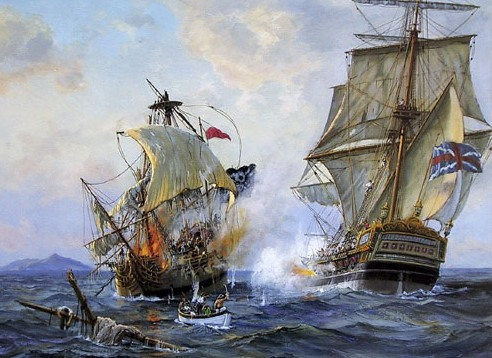
The pirates came across Captain Chalone Ogle’s warships. Upon seeing the pirate flag and the masts of the ships in the bay, Captain Ogle realized that he had found his quarry. He decided to cheat by pretending to flee from pursuer. He led the pirates over the horizon, planning to fire his cannons at them out of sight of Black Bart’s telescopes. The cannonballs broke the ‘Great Hunter’s’ mast. A dozen pirates were killed or wounded, and the rest raised the white flag. Some pirates tried to blow up the ship by firing at the powder keg. However, the resulting explosion only burned them — a single barrel of gunpowder was insufficient. Initially, Captain Ogle had intended to sink the captured ship, but then he had an idea. Over the next two days, his sailors repaired the damage to their new prize, after which they set sail for Parrots Island.
Black Bart watched the return of his ‘Great Hunter’ through the telescope. He mistook several approaching ships for prey. The ships sailed into the bay. The drunken pirates aboard the ‘Royal Fortune’ shouted as they greeted their returning comrades. By the time Black Bart realised he had been tricked, Captain Ogle’s ship was close by. It was too late to do anything about it, though; most of his crew had gone ashore to drink. The pirate had only minutes. He came on deck wearing his finest clothes, with a diamond cross around his neck and a sabre in his hand. Captain Ogle’s ship fired a volley of cannons, the shrapnel of which ripped open Black Bart’s chest. The pirates threw his body into the water as he had wished. Overwhelmed by the death of their idol, the pirates surrendered to the victors.
John Roberts, also known as ‘Black Bart’, disliked strong alcohol and only drank tea, which was unusual for a pirate. A dandy who liked to dress well, he knew from the outset of his career as a pirate that it would not last long. Wanting to avoid the gallows, he accepted the Captain Ogle’s ship cannon fire instead.
Of the two hundred pirates who surrendered, 152 were tried, and 54 were hanged. Fifty-two of the pirates were slaves and were returned to slavery. Many died in prison before they could be tried.
Black Bart plundered 400 ships during his three-year career as a pirate, and he is remembered as the most successful pirate of the golden age of Caribbean piracy. A ton of gold (2,000 pounds) belonging to the crew was found on one of his three ships alone.
EPILOGUE. “I CHOOSE THE SHORT LIFE…”
Today, pirates still rob, kidnap and kill in the Indian and Pacific Oceans. They use night-vision binoculars instead of telescopes, and machine guns and portable rocket launchers instead of boarding hooks and sabres. By encouraging privateers, kings seduced their vassals by taste of freedom. And the obedient vassals became daring pirates.
As long as inequality breeds envy and hatred, rebellions will exist on land and sea. This poses the greatest threat to kings, presidents and dictators.
Foreseeing his end, Black Bart once wrote: “Honest work pays little and hard work pays not enough. In this life, however, there are many freedoms and pleasures. Who would trade them for slave labour? I choose a short life full of pleasures!”
Or was he wrong?
© Copyright: Walter Maria, 2024
Certificate of publication №224010801691
What I don’t understand is how you aren’t much more popular than you may be now. You’re very clever. You know so much about this subject, which made me for my part imagine it from so many varied angles. Your content material is wonderful. Keep doing it all the time!
Thank you, I will answer your question because many readers ask me this. Popularity is a kind of virus that affects the brains of ambitious individuals, pinched egomaniacs, and narcissists, and many of them try to achieve it in various ways, often immoral. Their egos are irritated by the more successful ones, flickering on TV, living in gloss and comfort. I am not one of them. “Happiness is a state of mind,” said Aristotle. I am comfortable in my paradise where I can walk barefoot and have a bicycle as a means of transportation.
Thanks for sharing. I read many of your blog posts, cool, your blog is very good.